The Pleiades' Disappearance: UAE's Summer Signal
The Start of Summer from the Sky: What Does the Disappearance of the Pleiades Mean in the UAE?
Today, weather forecasting relies on satellites, sensors, and artificial intelligence, yet there are regions where the rhythm of nature is still interpreted through ancient celestial signs. In the United Arab Emirates, the onset of summer is not just marked by rising temperatures but is also associated with a spectacular astronomical event. The disappearance of the Pleiades star cluster has signaled the beginning of the hot, dry season for centuries, affecting not just the weather, but every aspect of life—especially in places like Dubai.
The Significance of an Ancient Astronomical Phenomenon
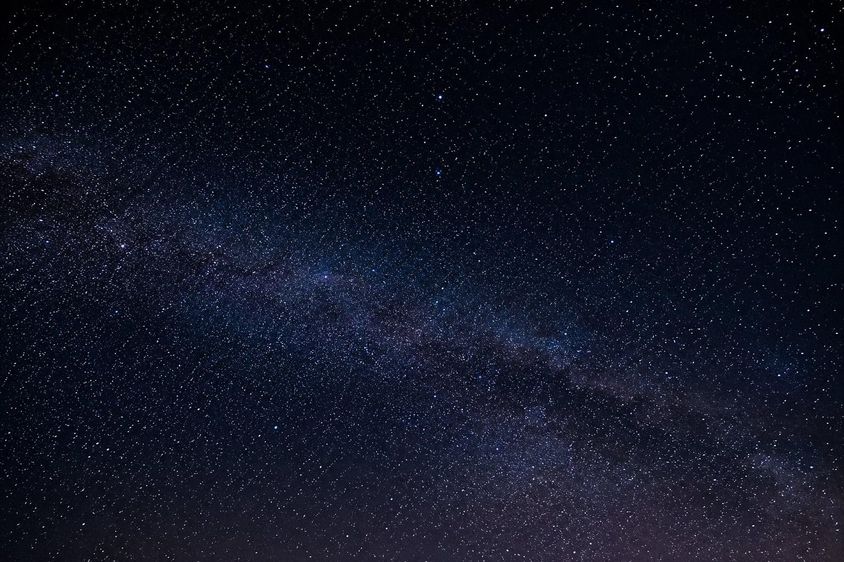
The Pleiades, also known as the Seven Sisters, is an easily recognizable star cluster in the night sky. Traditionally, it holds a significant position in the Arab world, as its movement was used to define seasons. When this star cluster comes close to the Sun, it gradually vanishes from the horizon. In the UAE, this period marks the start of summer, which in 2026 begins on April 28 and lasts until early June.
This roughly 40-day period is known by several names: "Al Kanna", "Al Ghuyoub", or simply the period of the Pleiades' disappearance. The phenomenon is not mystical but rather an accurate astronomical alignment: the Pleiades are positioned in the direction of the Sun, making them invisible during the day and not appearing in the night sky.
The Prelude to Heat
This period is not the peak of summer but rather its prelude. Temperatures begin to rise rapidly, humidity changes, and dryness starts dominating daily life. In desert areas, the harsh climate that later culminates in the "Al Qayz" peak season is already palpable.
In Dubai, this is particularly important as the city's infrastructure, tourism, and economic activities adapt to these cycles. The scheduling of construction, outdoor events, and even transportation systems respond to the intensifying heat.
Bulat Al Thuraya – When the Sea Signals Too
Associated with the disappearance of the Pleiades is a lesser-known but exciting phenomenon: "Bulat Al Thuraya". This term denotes sudden weather changes that usually occur about ten days before the star cluster vanishes.
For maritime communities, this was crucial. Generations of fishermen and sailors observed the changes in the sky to predict imminent winds, waves, or even dangerous weather shifts. Before modern meteorology, this was literally life-saving knowledge.
Traditions and Way of Life
The period of the Pleiades' disappearance was not just about weather, but lifestyle as well. Bedouin communities, for example, deliberately avoided strenuous activities during this time. They held no camel races, refrained from overworking animals, and even postponed certain medical procedures.
This approach was based not on superstition but on experience. The combination of heat and dryness is physically demanding and excessive exertion could easily lead to illness or exhaustion. If an animal fell ill, it was often explained as "exhausted during the Ghuyoub"—indicating a failure to adapt to nature’s cycles.
Modern World, Ancient Knowledge
Today, advanced meteorological systems operate in the UAE, yet it's interesting to see that traditional astronomical observations have not completely lost their significance. This knowledge lives on as cultural heritage, forming a bridge between the past and present.
In Dubai, for example, amidst modern urban life, such traditions are receiving increasing attention. They appear in tourism, education, and cultural programs, helping to understand how people lived and thought before modern technology.
Respecting Nature’s Rhythm
The disappearance of the Pleiades serves as a reminder that nature’s cycles still affect us, even if we often no longer notice it. In a world of air conditioning, artificial environments, and digital systems, it’s easy to forget that our environment fundamentally shapes our lives.
In the UAE, this is particularly true. The summer heat is not just an inconvenience, but a factor to which we must adapt—whether with modern technology or ancient wisdom.
Summary
The disappearance of the Pleiades is not just an astronomical event but part of a complex system of cultural and natural signals. It marks the beginning of summer, warns of the approaching heat, and reminds us that humans have always aligned with the rhythm of nature.
The example of Dubai and the UAE shows well that the modern world and traditional knowledge are not mutually exclusive. Rather, together they provide a fuller picture of how to adapt to an environment where summer is not just a season but a serious challenge.
If you find any errors on this page, please let us know via email.


