The Hidden Dangers of QR Code Scanning
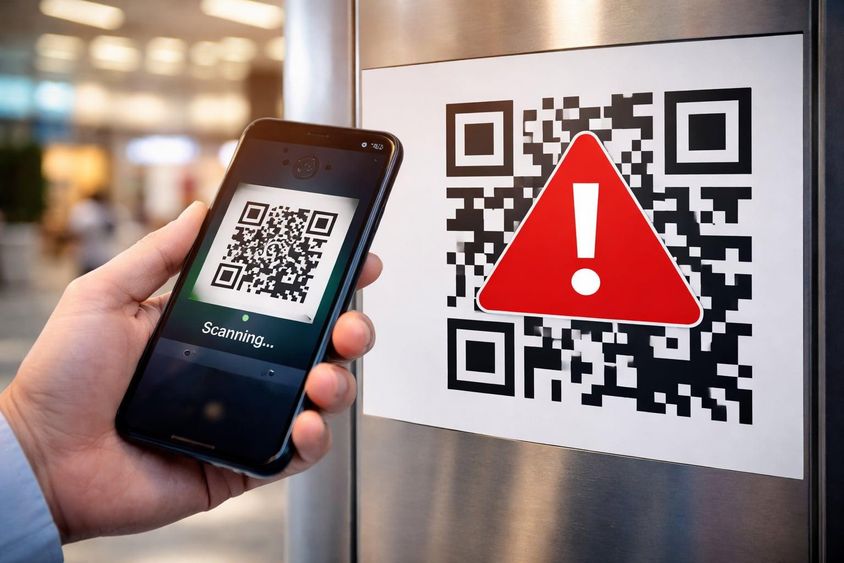
The Dark Side of QR Codes: When Simple Scanning Becomes a Serious Threat
In recent years, QR codes have become an almost unnoticed, yet fundamental part of everyday life. Restaurant menus, parking systems, tickets, payments—a single quick scan and we gain access to some service. However, convenience often comes with new types of risks, as seen increasingly clearly in the warnings from the Dubai authorities.
The Dubai Police recently conducted a campaign to highlight the rapidly growing dangers hidden behind QR codes. What initially seems like a harmless operation can actually be the first step in a well-constructed chain of fraud.
The Price of Digital Convenience
The popularity of QR codes is no accident. There's no need to type long web addresses, no need for searches—just a camera is enough to take us to our desired page. However, this speed is precisely what fraudsters exploit.
Most users do not verify where a QR code actually leads. There are no visual cues like a web address, where at least we could suspect something based on the URL. Attackers exploit this blind trust and are increasingly using sophisticated methods to integrate fake codes into everyday life.
How Does QR Code Fraud Work?
The method is simple yet extremely effective. Frauds create fake QR codes and distribute them through various channels. They can appear in emails, SMS, social media, or even physically—in the form of posters or placed in public areas.
The aim is always the same: to get the user to scan.
These codes often promise enticing offers. Prizes, exclusive discounts, urgent notifications, or limited opportunities—anything that encourages quick decision-making. The psychological pressure is crucial: the less time the user has to think, the higher the chance of success.
After scanning, the user often ends up on a fake website that looks strikingly similar to an official interface. Here, personal data, banking information, or login details are requested. In other cases, malicious software may be installed on the device in the background, later providing attackers full access.
What Happens Behind the Scenes?
Many people think that a QR code only contains a simple link, but the reality is more complex. In modern attacks, codes can direct to dynamically changing targets, making fraud even harder to detect.
The Dubai Electronic Security Centre also warned that, during such attacks, users' devices could be compromised. This does not only mean data theft but can lead to full access to the phone or computer.
This is particularly dangerous, as most people now store banking applications, email accounts, and business data on the same device. A single wrong decision can thus trigger a chain reaction.
Why Does This Method Work So Well?
One of the keys to the success of QR code fraud is human behavior. People tend to trust simple, quick solutions, especially when they are based on already familiar technology.
Another important factor is the environment. If a QR code appears in an official-looking location—such as on a parking machine or a store window—users automatically assume it is legit. Fraudsters exploit this trust, often replacing genuine codes with fake ones.
The Dubai Situation Is Especially Sensitive
Dubai is one of the fastest digitalizing cities in the world. A significant portion of services operates online or on a mobile basis, which provides tremendous convenience but also increases the attack surface.
Therefore, authorities place great emphasis on prevention. The purpose of the warnings is not to induce panic, but to increase awareness. An informed user is a much harder target.
What Can Users Do?
The most important rule is surprisingly simple: do not scan a QR code if you do not trust the source. In practice, however, this requires much more attention.
It is always worth checking the environment. If a code is in a suspicious place or offers something too good to be true, it's better to avoid it. The same applies to codes received in emails and messages.
It's also crucial never to provide personal or financial information on a site accessed via a QR code, especially if the link cannot be pre-verified.
Security is not just a technological issue but also a matter of awareness. A moment of inattention can have serious consequences.
The Challenge of the Future
QR code fraud is just one slice of the rapidly evolving digital threat environment in which we live today. As technology advances, attack methods are becoming increasingly sophisticated.
Dubai's example clearly shows that even with the most advanced systems, the human factor plays a key role. Ultimately, security not only depends on systems but also on how consciously users utilize them.
Summary
QR codes are convenient, fast, and efficient—but not without danger. The warning from Dubai authorities carries a clear message: in the digital world, trust alone is not enough.
Awareness, verification, and caution are now fundamental requirements. A simple scan can hide not just a website, but a serious risk.
If you find any errors on this page, please let us know via email.


