Surprisingly High Fares Between Dubai and India
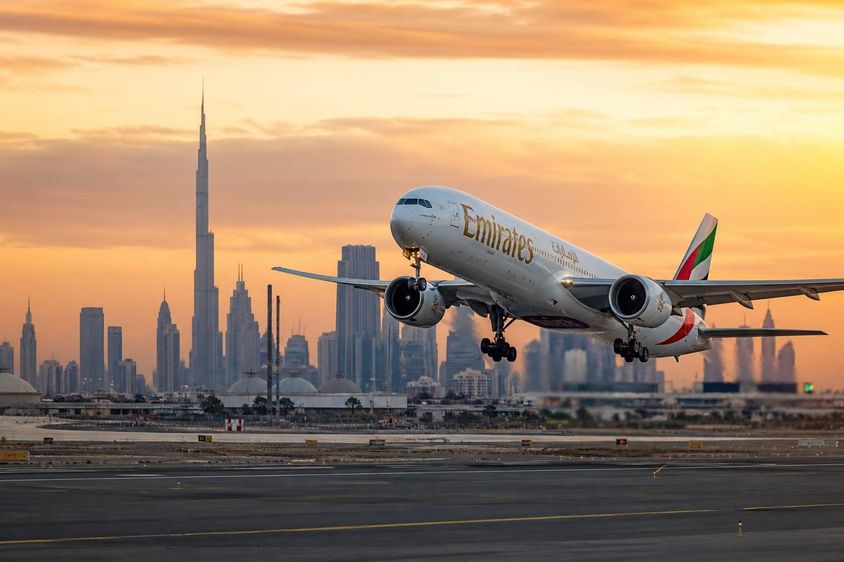
Surprisingly High Airfares Between Dubai and India: What's Behind?
Recently, a peculiar phenomenon has emerged in air travel between Dubai and India: as flights gradually return to normal operations, ticket prices have remained persistently high. This is especially surprising because this time of year is traditionally a period of lower demand, usually resulting in more favorable prices.
However, the reality now presents a different picture. In many cases, travelers are paying significantly higher prices than before, and this trend does not appear to ease in the short term.
Low Season, Still High Prices
April is traditionally a quieter month for travel between Dubai and India. There are no major holidays or school breaks to boost demand, so airlines generally offer more favorable prices.
Yet, compared to this, ticket prices are now 30–35 percent higher than usual. This means that during a period when one could previously fly for just a few hundred dirhams, now they must pay several times that amount for the same route.
This situation is not limited to a single route but can be observed more broadly, although certain destinations are more affected.
Causes Behind the High Prices
Several factors combine to influence the high prices. One of the most important is the increased fuel costs. The developments in the global energy market directly impact airline operating costs, and ultimately, passengers bear these costs.
Additionally, limited capacity plays a significant role. While the number of flights is increasing, it has not yet reached previous levels. This means fewer available seats for the same or even more travelers.
This is the classic demand-supply imbalance: if there are more passengers than available seats, prices rise.
Demand Not Dropping
Interestingly, despite the high prices, the travel enthusiasm has not diminished. The passenger flow remains strong in both directions: many travel from Dubai to India and vice versa.
This is partly because many trips cannot be postponed. Family visits, business trips, longer stays - these are all factors that prompt people to travel, even if prices are not ideal.
The stable demand further supports the high prices.
Drastic Price Changes in a Short Period
A few months ago, the situation was quite different. One-way tickets could be found on some routes for around 300–400 dirhams. Compared to this, the current price level shows a significant jump.
According to recent data, one-way ticket prices often range between 1300–1800 dirhams. This difference alone is substantial, but return tickets hit even higher levels.
Return Trip: Even More Expensive Surprises
For return tickets, prices have soared even more. On many routes, prices range between 2000–2500 dirhams, but at certain times, amounts well above this can appear.
The situation with South Indian routes is particularly noticeable. Notably Kochi, where ticket prices are among the highest.
It happens that a round-trip ticket can reach or even exceed 4000 dirhams, which is a significant expenditure even for regular travelers.
Not All Routes are the Same
It is important to highlight that not all Indian destinations are affected to the same extent. For larger cities, such as major business centers, generally more favorable prices can be found.
In contrast, South Indian destinations, particularly Kochi, are currently considered extremely expensive. This is partly due to the limited number of flights and partly to the specifics of local demand.
Full-Service Airlines at Advantage
Some passengers prefer more reliable, full-service airlines due to the uncertain situation. These flights typically offer more stable schedules and fewer changes, a crucial factor for many.
As a result, demand for these flights has increased further, pushing prices higher. It is not uncommon for economy seats to sell out quickly, leaving only higher-category tickets available.
What to Expect in the Near Future?
Based on current prospects, it is not advisable to expect a quick drop in prices. In fact, the situation may worsen as the summer season approaches.
During summer breaks, travel enthusiasm traditionally spikes, especially among families. This could place additional pressure on the already tight capacity.
According to professional opinions, ticket prices may rise again by early summer, particularly after mid-June.
What Can Travelers Do?
In this environment, one of the most important strategies is planning ahead. The earlier the booking, the greater the chances of finding more favorable prices.
Travelers should also be flexible with travel dates. A variation of even one day can lead to significant price differences.
It may also help for travelers to compare multiple routes and airlines before making a decision.
Summary
Currently, airfares between Dubai and India are moving at a level that deviates from the usual seasonal patterns. Despite the low season, we see high prices driven by fuel costs, limited capacity, and strong demand.
The situation is particularly noticeable on South Indian routes, where ticket prices can reach extreme levels. In the short term, there are no significant signs of relief, and further increases are conceivable as the summer season approaches.
Travelers therefore need to plan more consciously and be more flexible if they wish to optimize their expenses in this unpredictable environment.
If you find any errors on this page, please let us know via email.