Sudden Heat Surge in UAE: April's 40°C Wave
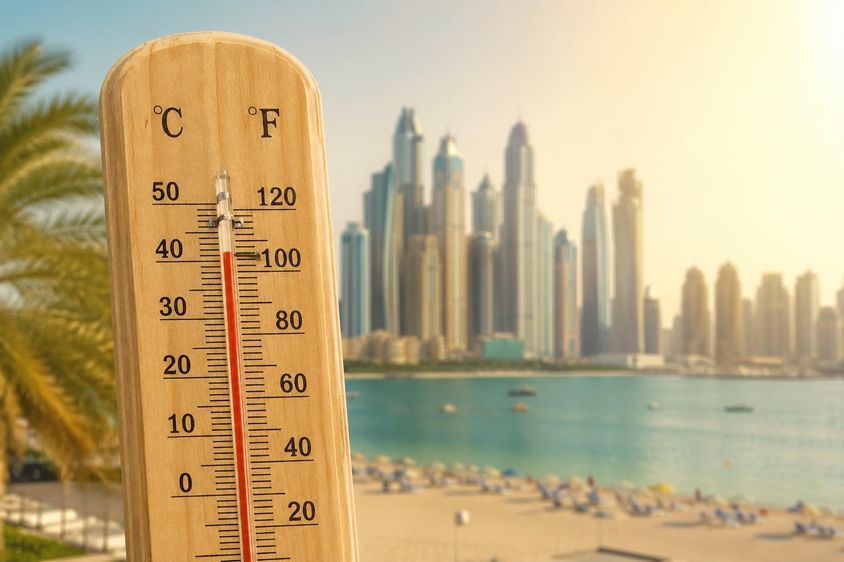
Early Summer in UAE: Why Temperatures Soared Above 40°C in April?
Sudden Shift: From Spring to Instant Summer
The weather in the United Arab Emirates has always been known for its extremes, but this April brought an especially dramatic turn. A few weeks prior, the region experienced rain, clouds, and relatively mild temperatures, then almost overnight temperatures soared above 40°C. This drastic change might seem extreme at first, but it is actually part of a completely natural process that is observed every year, although not always so dramatically.
The transition between spring and summer is one of the most dynamic periods in the UAE. During this time, atmospheric systems are constantly in motion, and temperatures can fluctuate significantly within days. This is why we can measure summer-like values in April, while according to the calendar, the peak summer period is still far away.
Wind Direction: The Key to Understanding Temperatures
One of the most important factors influencing temperature is wind direction. In the UAE region, the movement of air decisively determines what temperature conditions prevail. When southern or southwestern airflow arrives, hot, dry air masses are blown in from the desert areas. These air masses can easily elevate temperatures above 40°C.
On the other hand, if the northwestern wind dominates, the air becomes cooler due to the increased marine influence. However, this does not mean a drastic cooling: the difference is usually only a few degrees, meaning that values around 40°C may drop, for example, to 36–38°C. This is a noticeable change, but it does not bring real relief.
A Few Degrees Matter – but Don’t Bring Relief
One of the most interesting phenomena is that the temperature reduction is often barely noticeable. When meteorological data show a 2–3°C drop, it might seem significant to the layperson, but in reality, the heat sensation remains.
The reason for this is that for the human body, temperatures above 35°C already pose significant stress. Thus, when the temperature drops, say from 41°C to 38°C, it does not bring true comfort. That is why, despite temporary cool downs, people continue to experience summer conditions.
Temporary Cooling: A Brief Pause in the Heat
It is common during April for temperatures to moderate briefly. This usually happens when the wind direction changes and cooler air masses arrive. However, these periods are generally short-lived.
Meteorological forecasts suggest that such cooling lasts only a few days, after which the wind turns south again, and the heat returns. This cyclic alternation is one of the most typical patterns in this period and demonstrates how unstable weather can be in spring.
Why Is the Weather So Fluctuating?
Larger-scale atmospheric processes are behind the scenes. Various pressure systems constantly shape wind direction, which directly affects temperature. When a high-pressure system dominates, a more stable, warmer climate develops. If, however, lower pressure zones appear, the weather becomes more changeable.
This alternation is particularly pronounced in transitional seasons. In spring, the last effects of winter are still present, while the summer heat is already approaching. These two forces collide, resulting in rapid and often extreme changes.
Dry Air and Minimal Precipitation
While more intense rains can occur early in the year in the UAE, by the end of April, these have significantly subsided. The current weather is dominated by dry air, which further intensifies the feeling of heat.
Humidity remains low, especially in inland areas. This might initially seem favorable since high humidity would make the heat even more uncomfortable, but dry air heats up faster, contributing to high daytime temperatures.
The chances of rain during this period are minimal. At most, scattered, local showers may occur, mainly in northern or coastal areas, but these do not significantly affect the general weather pattern.
Differences Between Coastal and Inland Areas
Within the UAE, there can be significant temperature differences. In the inland, desert areas, temperatures are usually higher, often ranging between 36–41°C. In contrast, coastal regions are somewhat milder, with temperatures typically ranging between 33–39°C.
This difference is due to the maritime effect. Water heats up more slowly, thus somewhat moderating air temperature. However, this effect is not strong enough to provide real coolness—rather, it results in a difference of only a few degrees.
Not Unprecedented, Just Early
Although many feel that this April's heat is unusual, experts say this phenomenon fits perfectly into the pattern of recent years. It has happened before that values close to 44°C were measured during this period.
What seems more unusual now is the timing and speed. The temperature rise occurred over a short period, creating a stronger contrast with the previous cooler period.
What Does This Mean for the Coming Weeks?
Based on current trends, temperatures in the coming weeks will gradually rise. Temporary cool downs will become rarer, and prolonged warm periods will follow.
This means that summer has practically already begun, even if we officially talk about it only later. Temperatures above 40°C will become more frequent and soon stabilize.
Summary: Quick Transition, Predictable Pattern
The April weather in the UAE is a prime example of how quickly the region can switch from spring to summer. Changes in wind direction, movements of atmospheric pressure systems, and dry air collectively create this dynamic situation.
Thus, temperatures above 40°C are not extraordinary, they just arrived earlier than usual. In the coming period, steady, hot summer weather will increasingly become dominant in the United Arab Emirates.
If you find any errors on this page, please let us know via email.


