Staying Safe When Your Car Submerges
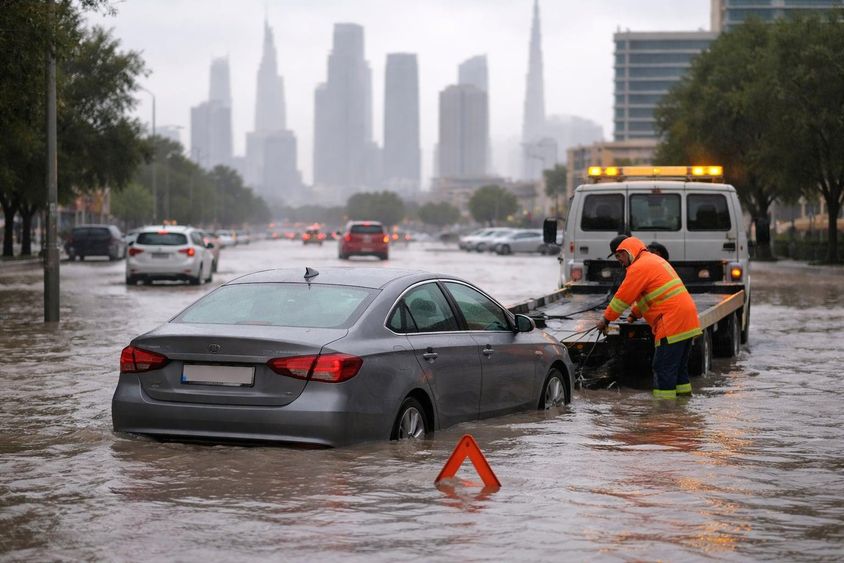
When Your Car Gets Submerged: Dos and Don'ts in the UAE
The recent volatile weather in the United Arab Emirates has once again highlighted the serious risks posed by rain and flooding to motorists, despite the desert environment. This is particularly true for cities like Dubai and other major urban areas, where the infrastructure is not primarily designed to handle large amounts of rainfall, and sudden downpours can cause significant disruptions and damage.
One of the most pressing questions in such situations is: what should you do if your car becomes submerged or stalls while driving on a flooded road? Experts say the most common mistake drivers make is trying to restart the vehicle, which can be disastrous.
What happens when a car gets submerged?
When a car gets submerged while parked, most owners' first reaction is to try starting it as soon as possible. This is understandable, as owning a functioning vehicle is essential. However, in reality, the best decision is not to touch the car at all.
Water can easily enter the exhaust system, air filter, and even internal engine components. Starting the car in this condition could cause water damage, as water cannot be compressed and may cause severe mechanical damage, known as hydrolock, which could lead to total engine failure.
The proper step is to wait until the water recedes and have the car transported to a workshop with the help of a professional. There, the water is typically drained from the system in a slightly tilted position, and all critical components are thoroughly inspected.
Car stalled in water? The most important rule
One of the most critical situations is when a car stalls while moving on a water-covered section of road. Most drivers instinctively try to restart in such instances, which is a grave mistake.
Experts stress that attempting to restart the motor is never advisable. Even a single attempt could further allow water into the engine and electrical system, greatly increasing repair costs.
The safest solution is to immediately leave the car behind and call for assistance. Particularly if the vehicle is stalled in the middle of a road, quick action is crucial, as waves created by passing cars can exacerbate the situation.
Disconnecting the battery: a small step, a big protection
Many people don’t realize that disconnecting the battery can be crucial in these situations. Water meeting an electrical system can cause significant damage, especially in modern cars filled with electronic components.
If safely feasible, cutting off the power supply can reduce the risk of short circuits and electronic failures. This is particularly important on Dubai roads, where fast-moving traffic can intensify water movement.
Interior and hidden damage
Many assume that if the car starts again, everything is fine, but this is a false conclusion. Water can affect not just the engine but the interior as well.
Seats, carpets, and other interior elements can absorb water, leading to mold, unpleasant odors, and even health issues. Therefore, all affected elements should be removed and thoroughly dried.
Hidden damages are particularly dangerous because they don’t appear immediately. An electrical fault, for example, can surface days or weeks later, complicating the tracing of its cause.
Lost license plate and administration
Floods not only threaten the vehicle's operation but also mundane yet vital elements like the license plate, which may be torn off by strong water currents.
In such cases, it's important for the owner to obtain official documentation of the incident. Dubai authorities offer a simple procedure for motorists to report such damages and acquire the necessary paperwork for replacement.
Interestingly, residents and volunteers often assist in collecting and returning lost license plates, showcasing community support during tough situations.
Prevention: the best protection
Although such situations often arise unexpectedly, adhering to some basic rules can significantly reduce risks.
It's important for drivers to monitor weather forecasts and avoid low-lying, water-prone areas. In Dubai's urban environment, there are many stretches of road where water can quickly accumulate.
Moreover, it's advisable to avoid driving through deep water even if other vehicles are doing so. What might be safe for a higher built vehicle can pose a serious threat to a smaller one.
Conclusion
Rain and floods in the UAE are not everyday occurrences, but when they do happen, they pose significant challenges for drivers. The primary lesson is clear: if your car gets into water, do not start it.
Quick yet thoughtful decisions, adherence to expert advice, and proper post-treatment can mean the difference between minor inconvenience and a serious, costly breakdown.
Dubai and the entire region continue to develop, but adapting to weather extremes remains crucial. Motorists are responsible for being aware of the risks and reacting properly when nature intervenes unexpectedly.
If you find any errors on this page, please let us know via email.


