Smart Feeding Stations for Stray Animals
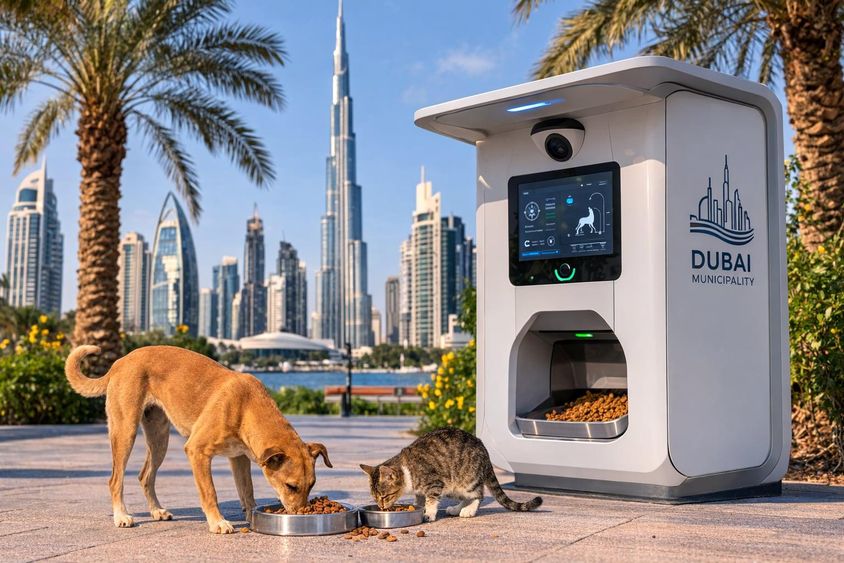
Smart Feeding Stations Debut on Dubai Streets for Stray Animals
One of the most rapidly developing cities in the United Arab Emirates, Dubai, has drawn attention in recent years with numerous innovative initiatives. The city administration regularly employs new technologies in areas such as transportation, urban planning, public safety, and environmental protection. Now, a very special project has launched: feeding stations operated by artificial intelligence have been installed for stray animals.
The aim of the initiative is not just to care for the animals but to establish a sustainable and organized system that improves public health, supports the balance of the urban ecosystem, and reduces random, uncontrolled feeding practices.
Technology in the Service of Animal Protection
The system initiated by the Dubai municipality is based on the so-called 'Ehsan' feeding stations, which are intelligent devices using artificial intelligence to monitor their surroundings and recognize animals.
Equipped with sensors and cameras, the system can identify stray animals nearby. When an animal approaches the feeder, the device analyzes the movement and image to decide whether the animal truly needs feeding. If so, the station automatically dispenses the appropriate amount of food.
This technological solution is important from several aspects. Firstly, it ensures that the food truly reaches the animals and is not used for other purposes. Secondly, it helps feeding occur in a controlled manner, avoiding excessive food accumulation or environmental pollution.
Artificial intelligence also collects data. Stations can record information about the movement, number, and behavior of animals. These data can later aid in managing the urban animal population and developing animal protection programs.
Program Starts in Experimental Phase
The project is currently in an experimental phase. Initially, the city has placed twelve feeding stations at various locations. Ten devices are placed in public parks, while two are installed in facilities operated by a major Dubai corporate group.
The goal of the pilot program is for experts to observe the system’s operation in a real environment. In the coming months, the efficiency of animal recognition, the amount of food consumed, and the animals’ reaction to the new technology will be analyzed.
Based on the collected experiences, it will be decided whether to expand the network in the future. If the program proves successful, it is conceivable that Dubai will install dozens or even hundreds of such feeding stations across the city.
Locally Developed Technology
Interestingly, the feeding stations were entirely designed and manufactured in the United Arab Emirates. The project employed advanced engineering solutions that facilitate durable operation even in the desert environment.
The devices withstand high temperatures, sand, and humidity, which often pose serious challenges to outdoor technological systems. Additionally, they have been designed to be easily maintainable and provide sustainable operation in the long term.
This fits well with Dubai's strategy, which increasingly relies on locally developed technological solutions.
Organized Approach to Stray Animal Management
Managing stray animals is a significant challenge for major cities worldwide. Traditional solutions often do not prove lasting as they do not address the root of the problem.
Dubai has already launched several programs to manage the number of stray animals. One of the best-known methods is the capture-neuter-release program, considered an effective and humane solution worldwide.
The essence of the program is to capture stray animals, provide them with veterinary care, neuter them, and then release them back to their natural habitat. As a result, the animal population gradually decreases while individual animals live healthier lives.
In certain cases, animals also receive vaccinations to reduce the risk of infectious disease spread.
Temporary Shelter and Adoption Opportunities
The city also operates a temporary shelter where captured animals receive basic care. Here, their health status is checked, and treatment is provided if necessary.
Some of these animals later become adoptable. City authorities regularly encourage residents to adopt animals from shelters. This not only saves the animals' lives but can also reduce the size of the stray population.
Adoption is becoming increasingly popular in the city, especially among those who want to keep a pet responsibly.
Community Responsibility and Awareness
The city administration emphasizes that technological solutions alone are not enough. The responsible attitude of the population also plays a crucial role.
Pet owners are asked to take care of their pets, especially when traveling or leaving home for extended periods. Irresponsible pet ownership often leads to animals ending up on the streets.
Residents are also encouraged to report endangered or injured animals and any problematic situations they encounter.
Supporting Nature in the Urban Environment
In addition to animal protection programs, Dubai has launched another interesting initiative. Known as 'Sources of Mercy,' the project aims to provide drinking water to birds and other wildlife.
Plans include installing fifty special drinking fountains. Of these, twenty-five will be located in urban areas, and another twenty-five will be found in the desert environment.
The fountains are designed to meet environmental expectations and operate sustainably in the long term.
A Forward-looking Urban Model
The emergence of smart feeding stations clearly demonstrates the direction Dubai is moving towards. The city seeks not only technological innovation in developing infrastructure but also new solutions in environmental and animal protection.
Applying artificial intelligence in animal protection is a relatively new area and could serve as inspiration for many cities. If the program proves successful, it is conceivable that other countries will adopt the model.
Thus, the project can not only improve the quality of life for stray animals but can also contribute to making the urban environment more harmonious and sustainable.
Dubai thus once again proves that modern technology and social responsibility together can create new solutions for a rapidly growing metropolis.
If you find any errors on this page, please let us know via email.


