Silver Steals the Spotlight from Gold
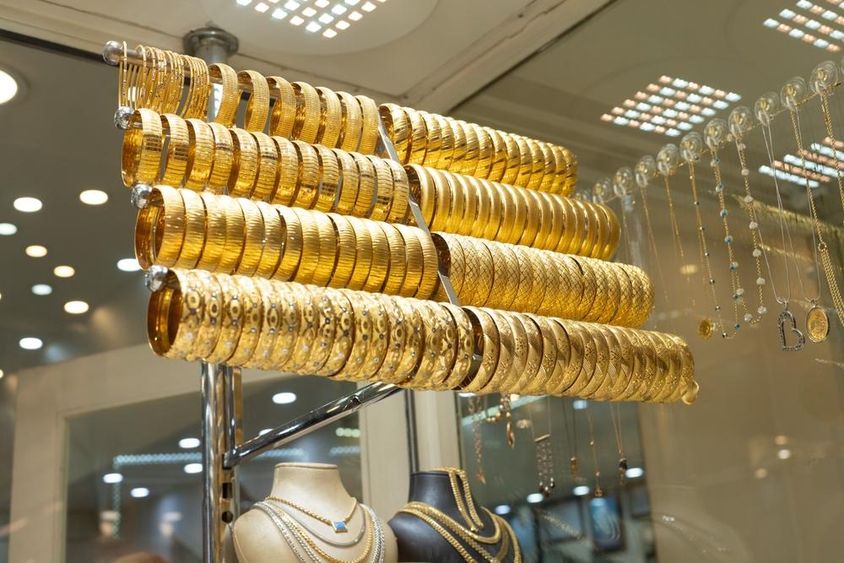
Silver Outshines Gold in Dubai
The gold and silver markets portrayed an exciting picture again on Friday morning during Dubai trading hours. While investors focused on international geopolitical developments, particularly the US-Iran negotiations, price movements clearly indicated that this time silver took the spotlight. Gold remained stable, showing a slight rise, but in the early hours of the day, silver outperformed the yellow metal with a spectacular jump of over three percent.
The spot gold price stood at $1,986.9 per ounce, representing a 0.18 percent increase, while silver was trading at 330 dirhams, equivalent to $89.86 per ounce, with a surge of over three percent. On the Dubai jewelry and physical gold market, 24-karat gold opened at 624.50 dirhams per gram, which is 2.25 dirhams higher compared to the previous evening's closing. The 22-karat gold was at 578.25 dirhams, the 21-karat at 554.5 dirhams, the 18-karat at 475.25 dirhams, and the 14-karat at 370.75 dirhams per gram.
Balanced Gold Market Under Geopolitical Shadow
Gold prices continue to hover at high levels, but the momentum of the rise is moderate. The market’s current state reflects a kind of balance: while demand for safe-haven assets remains strong, expectations for easing geopolitical tensions are hampering aggressive buying waves.
The US-Iran nuclear negotiations, taking place in Geneva, are at the center of attention. Past rounds of talks haven't brought any significant breakthrough. This uncertainty is enough for investors not to completely turn away from gold, yet it does not generate a panic demand that would initiate a new sustainable bull market.
Gold is thus moving in a kind of high-priced consolidation zone. Investors are biding their time, weighing options, and will only react more forcefully if the geopolitical situation worsens or improves clearly.
Institutional Capital Return
From a market flow perspective, a notable signal came from one of the largest gold ETFs, which bought nearly 19 tons of gold over three consecutive trading days. This quick and concentrated institutional influx suggests that hedge demand remains strong.
Institutional investors typically make decisions along longer-term risk management strategies. Such a volume of purchase indicates that major players continue to consider political, economic policy, or macroeconomic uncertainties. This provides a stable foundation for gold’s current price levels, even if short-term breakout chances are limited.
From this perspective, the physical market in Dubai is particularly sensitive. The region is traditionally a strong consumer of gold, so international spot prices quickly reflect in local gram prices. Thus, the slight rise is supported not only by speculative but also by physical demand background.
Silver's Surprise Outperformance
While gold shows lateral movement, silver drew attention with a more spectacular rise. The over three percent jump suggests that some investors are positioning based on relative value. The gold-silver ratio has been at high levels recently, which means silver appeared historically cheaper compared to gold.
Such situations often result in portfolio restructuring. When gold has already undergone significant appreciation, investors may turn to alternative precious metals that offer higher percentage yield potential. Additionally, silver is not only an investment vehicle but also an industrial raw material, so expectations of improving economic prospects can also support it.
On the Dubai market, silver's price was at 330 dirhams per ounce, indicating a strong daily increase. This dynamic suggests that in the short term, silver's volatility is greater than gold's, while the potential yield can be notably more impressive.
Interest Rate Environment as a Constraint
One of the most important constraining factors on gold prices currently is the interest rate environment. In the United States, inflation remains above the central bank's target. This makes rapid monetary easing, which typically favors gold, challenging.
In a higher interest rate environment, non-yielding assets like gold can be at a relative disadvantage compared to yield-offering investments. Unless monetary policy clearly moves towards a looser direction, gold’s breakout can remain limited, even if its safe haven role persists.
This factor, however, is less of an explicit constraint on silver, as industrial demand and technological applications also play an important role in its pricing.
Where Next for the Precious Metals Market?
The current price movements indicate that a fine balance has been established in the precious metals market. Gold steadily hovers at high price levels, supported by institutional demand but without a strong breakout. Conversely, silver is more dynamic in the short term, with greater volatility and a more spectacular daily rise.
The Dubai market continues to respond sensitively to global developments. Local prices quickly follow international trends, while the region's strong physical demand exerts a specific stabilizing effect.
The key question for the coming weeks will be what direction the geopolitical negotiations take and how central bank communications alter interest rate expectations. If uncertainty persists, gold may remain at strong price levels. However, if new momentum arises from a risk-averse mood, silver might further increase its advantage in the short term.
What is certain is that Dubai trading on Friday morning sent a clear message: there is no room for boredom in the precious metals market, and occasionally silver can steal the spotlight from gold.
If you find any errors on this page, please let us know via email.


