Sharjah's Sensory Urban Innovations Unveiled
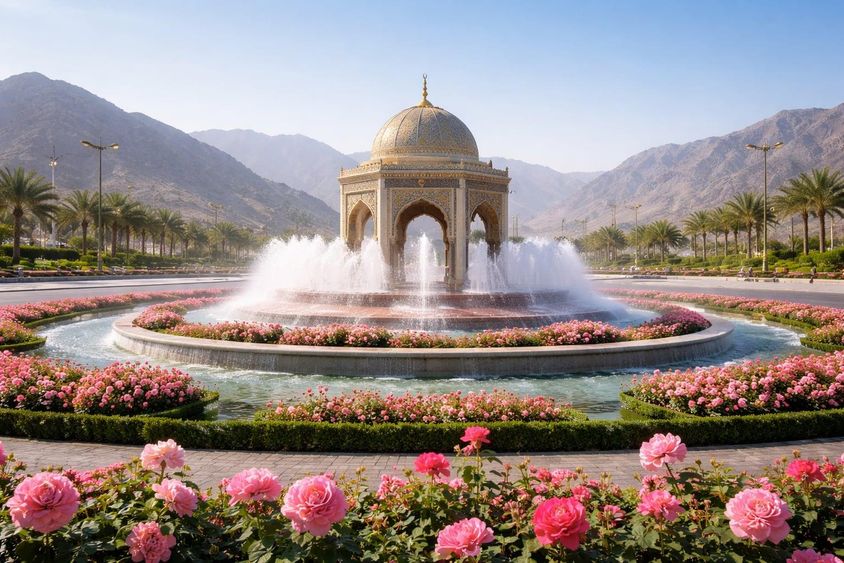
Fragrances, Shade, Architecture: New Sensory Developments on Sharjah's Eastern Coast
Middle Eastern cities have undergone remarkable transformations over the past decade, but a new trend is emerging: not just constructing tall buildings and infrastructure, but creating experiences. One of the emirates of the United Arab Emirates is launching projects that not only catch the eye but also stir the senses of visitors. These developments focus on three key elements: a rosewater fountain, an iconic clock tower, and an innovative city cooling green program.
This direction not only matters locally but aligns with the broader trend started by Dubai years ago: redefining the urban experience.
A Roundabout, Not Just a Traffic Hub
For most people, a roundabout is a practical but ordinary traffic element. However, the new project gives a whole new meaning to this concept. Visitors arriving in the city of Kalba will be greeted by a roundabout centered around a unique fountain.
This fountain doesn't use ordinary water; it operates with rosewater. The fine mist is not only visually appealing but also fragrant, making entering the city a sensory experience. The scent subtly wafts through the air, creating an instantly soothing and pleasant atmosphere.
This solution goes beyond traditional urban planning. It does not only determine how a place looks but also how one feels there. Such a first impression can be decisive in the long run for tourists.
Safety and Experience Hand in Hand
In designing the roundabout, both aesthetics and functionality played a role. Visitors can approach the fountain's center through an underground tunnel, allowing them to enjoy the fragrant environment safely and completely separated from the traffic.
This solution is both innovative and practical. There is no need to compromise between safety and experience, which is especially important in a region where the use of public spaces is increasingly becoming a communal experience.
The Birth of a New Icon on the Coastline
The developments don't stop at Kalba. In the coastal city, a new architectural attraction is also in the works, which will define the city's image upon arrival. The new clock tower will not only serve as a timekeeping device but also as a symbol.
The design of the building evokes classical elements of Islamic architecture: domes, arches, and decorated surfaces define its appearance. This style pays homage to tradition while giving a modern character to the city.
Such structures play a larger role than one might initially think. An iconic point can provide identity to a place, become a photography spot, and long-term be a key element of tourism.
Natural Cooling: A Response to Climate Change
The third project is perhaps the most interesting, as it focuses not on appearance but on effect. A large-scale tree planting program is being launched, aiming to reduce the city's temperature.
The concept involves planting specially selected plants that provide shade and contribute to improving the microclimate. This is particularly important in a region where summer temperatures can be extremely high.
Increasing green spaces not only improves thermal sensation but also positively impacts air quality. Additionally, from the perspective of community life, it's crucial: more shady spaces mean more usable public areas and more opportunities for relaxation.
Experience-Driven Urban Development: A New Direction in the Region
Looking at these projects together, a new strategy emerges clearly. The goal is not just infrastructure development but experience creation. Fragrance, visuals, temperature—are all factors that are consciously incorporated into urban planning.
This direction is well-known in Dubai's case. There, the combination of luxury, attractions, and technology has led to success. However, a new dimension appears: the conscious use of sensory experiences.
The rosewater fountain, for example, is not just an attraction but a memorable experience. The clock tower is not just a building but a visual identity. The tree planting program is not just greening but creating a more livable urban environment.
Tourism and Quality of Life Hand in Hand
These developments aim not only at tourists but also at improving the quality of life of local residents. A city truly becomes attractive if it's not only good to visit but also to live in.
A more pleasant microclimate, safe public spaces, and an aesthetically pleasing environment all contribute to the well-being of both residents and visitors.
This dual focus—tourism and quality of life—is becoming increasingly important in the region. The competition isn't just about attractions but also about which city can offer a better life experience.
The Future City: Perceptible Differences
The newly announced projects clearly show that the next level of urban development is no longer just about buildings. The focus is on the experience; what one sees, feels, and what memories they take away.
This direction could fundamentally transform the image of cities in the long run. The most important thing will not be which place has the tallest tower, but where people have the best experience.
In the eastern region of Sharjah, a model is now taking shape that centers this way of thinking. And while these developments seem local, their impact reaches further.
Future cities will not only be spectacular but tangibly better. And in this new era, fragrances, shade, and experiences will play as important a role as steel and glass.
If you find any errors on this page, please let us know via email.


