Sharjah Waives Road Tolls for Omani Trucks
Sharjah's New Logistics Boost: Free Road Tolls for Omani Trucks
The economic collaboration between the United Arab Emirates and Oman has taken another important step, as Sharjah has announced the waiver of road tolls for trucks coming from Oman at specific border crossings. This measure aims to strengthen the region's logistical and commercial ties, significantly reducing transportation costs and speeding up cargo flow in the Arabian Gulf region.
The decision primarily affects transportation routes that function as part of the logistics corridor established between Sharjah and Oman. The new system is designed not only to support carriers but also to make Sharjah more attractive for international freight transport and regional trade.
Two Key Border Crossings in Focus
The toll exemption applies to trucks passing through two strategically important border crossings. One is the Khatmat Malaha crossing, which is extremely close to one of Oman's most significant ports, Sohar Port. The distance between these two points is about 70 kilometers, allowing fast movement of goods between the port and the United Arab Emirates.
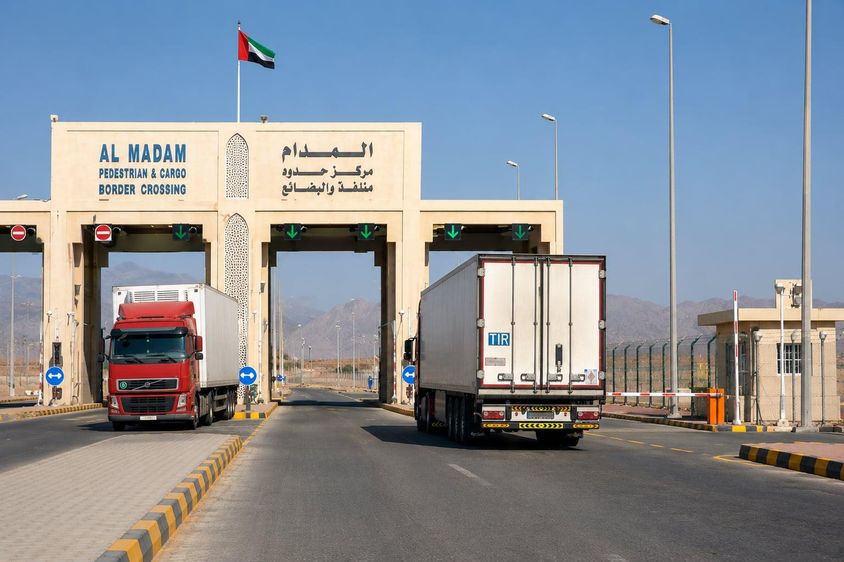
The other highlighted location is the Al Madam crossing, situated at the junction of several major traffic routes. This crossing is crucial not only from an import and export perspective but also plays a key role in re-export activities. The route provides a direct connection to Mahdha in the Al Buraimi Governorate of Oman.
The significance of the region may further increase in the coming years, especially with the development of the Al Rawdah economic zone. Industrial and logistics investments are expected to attract new companies and warehouses to the area.
Sharjah Emerging as a Major Logistics Hub
In recent years, Sharjah has consciously built its role as one of the Middle East's leading logistics hubs. The city government has recognized that in global trade, fast customs clearance, lower transportation costs, and efficient cargo flow are becoming increasingly important.
The current toll exemption fits well into this strategy. For carrier companies, every saved cost is an important factor, especially at a time when the international shipping market faces significant competition.
However, the discount does not automatically apply to all trucks. Shipments must meet certain conditions and the routes must be part of the approved logistics corridor system. This ensures that the discount truly supports the integrated logistics network.
Customs Processing Directly at the Border
One of the biggest advancements is the direct customs processing system. Previously, cargo transport often took place through multiple stations, increasing wait times and costs.
The new logistics corridor allows customs processes to be handled directly at the border crossings. This significantly simplifies the entire transport chain.
As part of the system, fast lanes have been established for shipments, and preliminary data processing is also utilized. This allows goods to move much faster between the two countries, while customs oversight remains ensured.
This is especially important for time-sensitive shipments, such as food, pharmaceuticals, or fast-moving consumer goods.
Ports of Sohar, Duqm, and Salalah Also Involved
The logistics corridor established between Sharjah and Oman is not built on a single port. The system connects several Omani maritime gates with the United Arab Emirates.
Part of the network is Sohar Port, one of the most significant industrial and logistics centers in the northern region. Additionally, Duqm Port, located in Oman's southern part and built around one of the country's largest development projects, plays a role.
Furthermore, Salalah Port is also connected to the corridor. Its strategic location makes it an important transit point in trade between Asia, Africa, and the Middle East.
This multi-port model allows carriers to plan their routes more flexibly and work with alternative maritime connections if necessary.
Regional Trade Could Reach New Heights
Infrastructure development among the Gulf countries has accelerated significantly in recent times. New highways, ports, rail links, and logistics zones are being developed to connect the region economically.
Sharjah's new measure clearly shows that competition is now not only between ports but also in the efficiency of the entire logistics chain. A region becomes attractive for international trade where customs clearance is fast, costs are low, and infrastructure is stable.
For shipping companies, speed and predictability are crucial. If there is less waiting time and simpler administration at a border crossing, it can provide a significant advantage in the long run.
Significant Cost Reductions Expected for Carriers
The abolition of road tolls may initially seem like a minor step, but in the logistics industry, these costs quickly add up. A larger carrier company can move several dozen vehicles between the two countries daily.
Such concessions can lead to significant savings in the long term, which companies can invest in further development, fleet expansion, or service improvement.
The cost reduction can also affect the final price of goods, which can have a positive impact on the region's trade competitiveness.
Sharjah Plans for the Long Term
The current decision clearly indicates that Sharjah is thinking long-term in developing the logistics sector. The emirate aims not just to be a transit station but a regional center that connects ports, industrial zones, and land transportation networks.
The cooperation established with Oman can create new opportunities in trade, warehousing, and re-export. All this can contribute to Sharjah becoming an even stronger player on the Middle Eastern economic map.
For carriers and logistics companies, faster border crossing, simplified customs processing, and toll exemption can all mean a favorable change in everyday operations.
If you find any errors on this page, please let us know via email.


