School Bus Services on Hold in UAE Transition
Classroom Education Resumes in UAE Without School Buses: A Temporary Measure During Sensitive Times
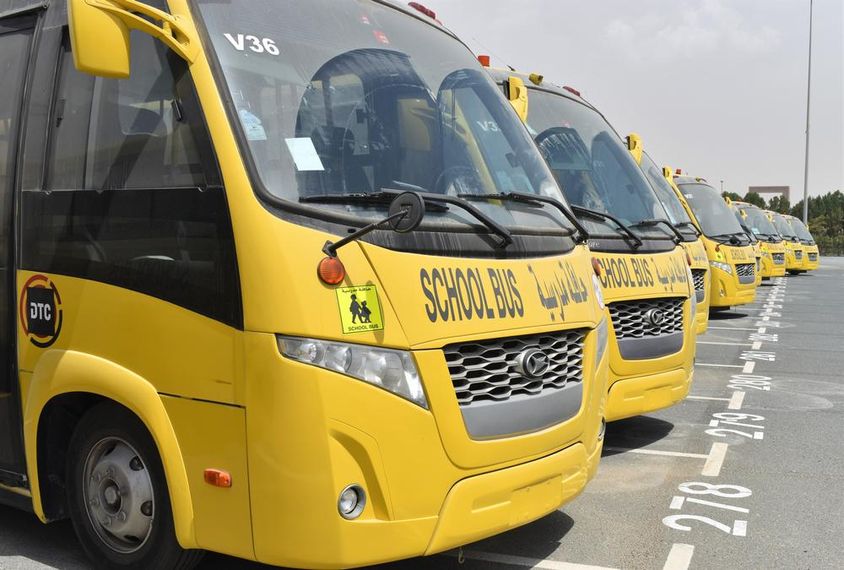
A new phase begins in education in the United Arab Emirates as authorities announce that students will return to classrooms, but the school bus services will not restart for now. This temporary measure signifies a gradual, controlled return to normal operations while maintaining a strong focus on safety and operational readiness.
The decision comes after an extended period of over a month of distance learning, justified by geopolitical tensions in the region. As a result of the conflict, educational institutions swiftly transitioned to digital platforms. Now, as the situation stabilizes, the shift back is beginning, though not all elements are returning simultaneously.
Gradual Return to Classrooms
The restart of education is not happening overnight. While students are attending classes in person again, the suspension of school buses indicates that authorities are proceeding step by step. This approach allows institutions and related services to individually prepare for full-capacity operations.
Operating school buses is a complex logistical task involving multiple players: vehicles, drivers, routes, safety protocols, and daily coordination are needed. Restarting such a system during a particularly sensitive time can only occur if every detail is properly coordinated.
Why Are School Buses Delayed?
According to official communication, the measure aims to ensure operational readiness. This is not just a technical issue but is crucial from a safety and organizational perspective as well. During the distance learning period, many systems were halted or transformed; hence, checks, testing, and fine-tuning are required before reactivation.
This is especially true for school buses, as they involve the daily transportation of thousands of students. Even a small error could cause significant disruptions, so authorities have opted for caution.
Concurrently, parents and students need to find alternative solutions temporarily. This could mean short-term inconvenience but may lead to a more stable, safer system in the long run.
Weekly Review: Flexible Decision-Making
One of the most important elements of the measure is that the decision is not final. Authorities will review the situation weekly and decide on restarting school bus services based on this evaluation.
This flexibility is crucial in an environment where external factors can change rapidly. Weekly assessments provide the opportunity to make decisions based on current safety, logistical, and operational conditions.
Communication plays a crucial role: all updates are announced through official channels, helping avoid misunderstandings and ensuring all parties are informed in time about changes.
Distance Learning Experiences
The distance learning introduced in early March was a significant challenge for the education system. Rapid adaptation to digital platforms was required while maintaining educational continuity and quality.
However, the period also brought valuable experiences. Institutions developed their digital infrastructure, teachers mastered new methods, and students encountered more flexible learning formats.
Now, as classroom education returns, these experiences are not lost. Moreover, they could contribute to developing a hybrid, more modern educational system in the long term.
Dubai's Role in the System
dubai plays a particularly important role in the UAE's education ecosystem. The emirate hosts numerous international schools, and a vast number of students rely on school buses for daily commuting.
Therefore, the suspension of school buses can particularly affect families here. However, dubai's infrastructure and organization enable a relatively smooth handling of the transition period.
The city has previously proven its ability to quickly and effectively adapt to changing circumstances, whether in transportation, education, or security measures.
What Does This Mean for Parents and Students?
The greatest challenge during the transition period is reorganizing daily logistics. Parents need to find their own solutions for getting their children to school, which requires time and energy investment.
However, this period also provides an opportunity for families to gain better insight into daily routines and possibly develop long-term solutions.
For students, the most notable change is the return to personal presence. The community experience, interactions, and traditional learning environment become available again, which can be motivating for many.
Balancing Safety and Operations
The UAE's decision exemplifies how to balance maintaining safety and operations. Restarting classroom education is a crucial step, but the postponement of school buses indicates that authorities are not rushing the process.
This strategy can result in a more stable system over the longer term that is more resilient to unforeseen challenges.
Summary
The temporary suspension of school bus services is not a regression but a conscious decision as part of restarting a complex system. The example of the UAE and dubai demonstrates that gradualness and flexibility are key in such a transitional period.
In the coming weeks, how the situation unfolds will determine when normal operations can fully resume. Until then, the clear objective is to provide a secure, stable, and sustainable environment for all students and educational institutions.
If you find any errors on this page, please let us know via email.


