Revolutionary Robots Transform UAE Rehabilitation
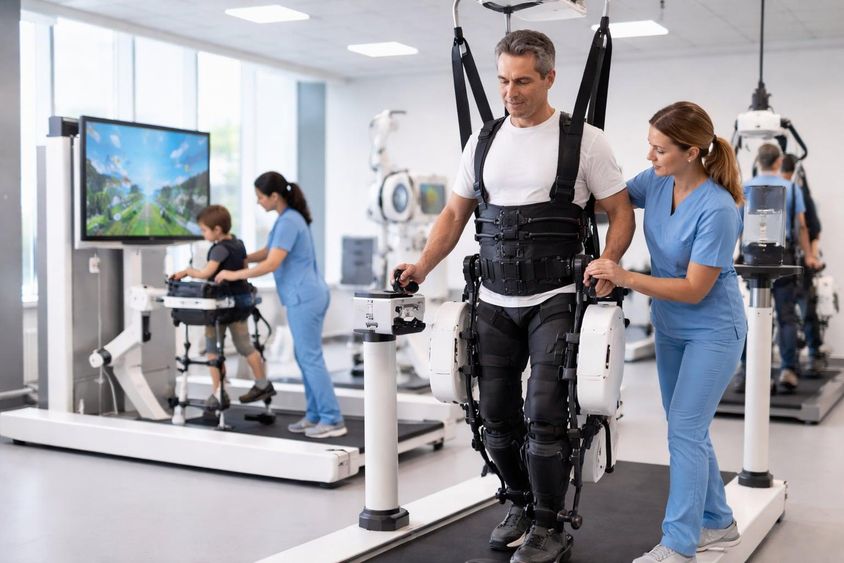
Towards Recovery with Robots: Revolutionizing Rehabilitation for Brain and Spine Injuries in the UAE
The development of healthcare technology opens new horizons for those on the road to recovery. In the United Arab Emirates, a breakthrough is occurring that offers new hope to those who have suffered strokes or spinal injuries. A major healthcare group, a leader in the development of rehabilitation care, is introducing more than twenty new-generation rehabilitation robots over the year. These robots not only aid in relearning how to walk but also help rebuild damaged brain connections.
Technology that May Restore the Joy of Movement
After a stroke or spinal injury, many patients face the daunting reality of having lost their previous mobility. Alongside traditional physiotherapy, a new opportunity emerges: FDA-approved rehabilitation robots aim to rebuild brain neural pathways and recover lost motor functions. These robots do not replace medical treatment or physical therapy but work with them, acting as intelligent, precise, tireless helpers.
The system is based on the brain's neuroplasticity, which is the capacity for the brain to form new neural connections. The robots provide targeted movements and feedback, thus stimulating the brain to rebuild "faulty" or interrupted connections.
For Children: The First Pediatric Rehabilitation Robot in Dubai
Rehabilitation robotics does not solely focus on adults. By the end of the year, the world's first rehabilitation robot for children will be introduced in the UAE. The system aims to help children struggling with behavioral and developmental issues, such as ADHD or other neurodevelopmental disorders.
This pediatric robot combines brain mapping, virtual reality-based therapy (VR immersion therapy), and targeted stimulation. This technology not only gives new tools to therapists but could also transform how we talk about child psychology, behavioral development, and learning disabilities.
Expansion of Healthcare Infrastructure: More Hospitals, More Beds
Alongside the development of robotics, the healthcare provider group is also undergoing significant infrastructure expansions. Dubai will host two new multi-specialty hospitals, one in Studio City, the other in the Discovery Gardens area, expanding the care capacity, which is currently about 920 beds in the country, by more than 250 new hospital beds.
Furthermore, the Aster Hospital located in Al Qusais is also expanding, creating 122 new patient beds. The rise in healthcare needs is not justified by increasing disease rates, but by UAE residents living longer. Caring for the aging population demands new types of medical capacities, thus the role of geriatrics has notably increased in recent years.
Geriatric Perspective and the Impact of Longer Life
Local experience shows that more retirees are choosing the UAE as their final home, posing new healthcare challenges. The needs of older patients differ from those of younger generations, so the healthcare provider had to adapt to this demographic change. A separate geriatric medical team works to maintain the quality of life and independence of older patients.
Monitoring Biomarkers and Preventive Healthcare
Health preservation should not end with treating symptoms. The new Thrive system offers comprehensive health assessments by examining 100 different biomarkers. These include blood counts, heart function, metabolism, hormonal balance, inflammatory markers, and nutritional status.
The goal is to identify potential imbalances or diseases before symptoms appear. The system is compatible with all major wearable devices and will be accessible within the myAster app. This allows doctors to monitor patients' data in real-time and provide proactive advice for prevention and health optimization.
A New Era: Rehabilitation That Can Bring Miracles
Robotic-assisted rehabilitation, preventive diagnostics, and elderly care all point in one direction: patient-centered long-term health preservation and quality of life improvement. The UAE is on this path, setting a new standard in global healthcare.
The new robotic systems not only help the human body get moving again but also restore hope to those who might have given up. For technology evolves, just like human belief does, in the possibility of recovery – even through new neural pathways.
If you find any errors on this page, please let us know via email.