Return to Classrooms: A New Educational Era Begins
Return to Classrooms: A New Educational Era Begins
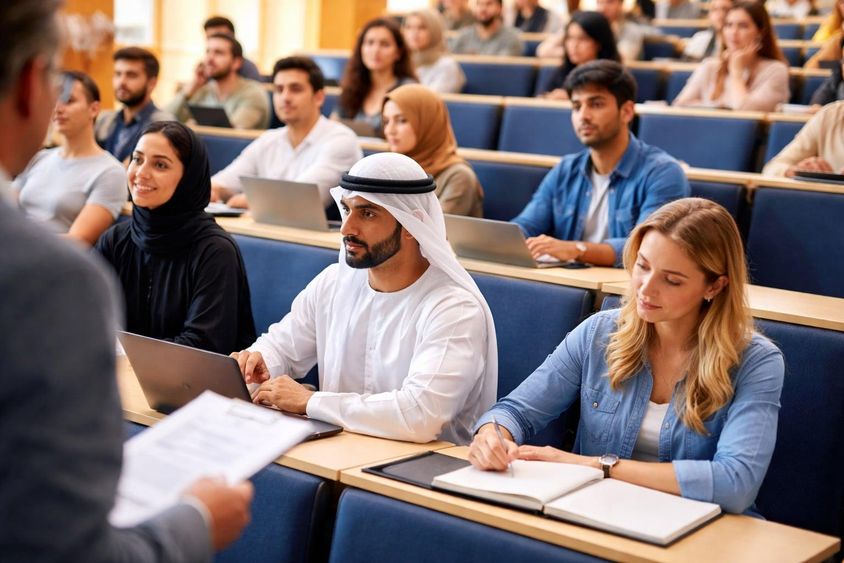
The educational system of the United Arab Emirates has reached another important milestone: institutions have announced that from April 20, in-person education will resume at both universities and schools. This move is not just an administrative decision, but the end of a longer adaptation period during which digital and remote education solutions became dominant due to the uncertain situation in the region.
The past period has shown that education can quickly respond to external challenges. Now, a new question arises: how can we return to the classic classroom functioning without losing the digital experiences gained?
Preparedness Behind the Decision
The restart of in-person education didn't come about overnight. The relevant authorities and institutions went through a comprehensive preparation process aimed at creating a stable and safe environment. Universities and schools underwent detailed inspections, reviewed their infrastructure, and updated operational protocols.
This preparation was not only technical. Educators and administrative staff also participated in training to aid the transition. The emphasis is on ensuring that students do not experience a sudden change, but a well-organized, predictable return.
The Hybrid Model Isn’t Disappearing
While in-person education is returning, digital learning forms will not completely fade into the background. Some institutions will continue to maintain the option for hybrid or even fully online education if their operation or student needs justify it.
This is especially important for those who have become accustomed to flexible learning forms in recent times. The hybrid model allows some students to be physically present while others join online. This is not just a matter of convenience but a part of a new educational philosophy that prioritizes accessibility and flexibility.
Crisis Impact on Educational Approach
Recent events have significantly transformed the perception of education. During the forced introduction of remote learning, many institutions discovered that digital tools are not just emergency solutions but can be valuable supplements to learning in the long term.
Both students and educators acquired new skills. The use of online platforms, more independent learning structures, and digital communication are elements that are now integral parts of the education system. The return to in-person education is therefore not a step backward but rather a step towards a hybrid future.
Flexibility as a Strategic Advantage
One of the most important lessons for educational institutions was that flexibility is crucial. The ability to quickly switch from one operational form to another is no longer extra but a basic expectation.
Therefore, the current reopening does not mean that the system becomes rigid. Institutions are still prepared to return to online or hybrid solutions if necessary. This readiness ensures the continuity of education, even if the external environment changes again.
Redefining Student Experience
One of the biggest advantages of in-person education is the community experience. Personal connections, immediate feedback, and campus life are all factors that are difficult to replace online. The reopening is thus significant not only academically but also socially for many students.
However, due to the experiences of the past period, student expectations have also changed. Nowadays, it is taken for granted that educational materials are digitally accessible, lectures can be re-watched, and administration can be handled online. Institutions must adapt to this new set of expectations.
Schools and Universities: Parallel Reopenings
Not only higher education but also primary and secondary institutions are returning to in-person operations. This is particularly important for younger age groups, where personal presence plays an even greater role in development.
In schools, besides the community experience, a structured schedule and teacher presence are of paramount importance. The return can thus not only improve the quality of education but also have a positive impact on students' mental and social well-being.
Establishing a New Balance
The April 20 reopening is not the end of an era but rather the beginning of a new balance. The educational system is no longer the same as before: it has become more flexible, more digital, and more resilient.
The future likely won't be solely about in-person or online education but a conscious combination of the two. The challenge for institutions now is to find the ratio that best serves the interests of the students.
What is certain is that education in Dubai and the entire region has stepped up to a new level. Adaptability, technological openness, and continuous development have become core values that will determine the system's operation in the long term.
If you find any errors on this page, please let us know via email.


