Resilient Communication Amidst Middle Eastern Tensions
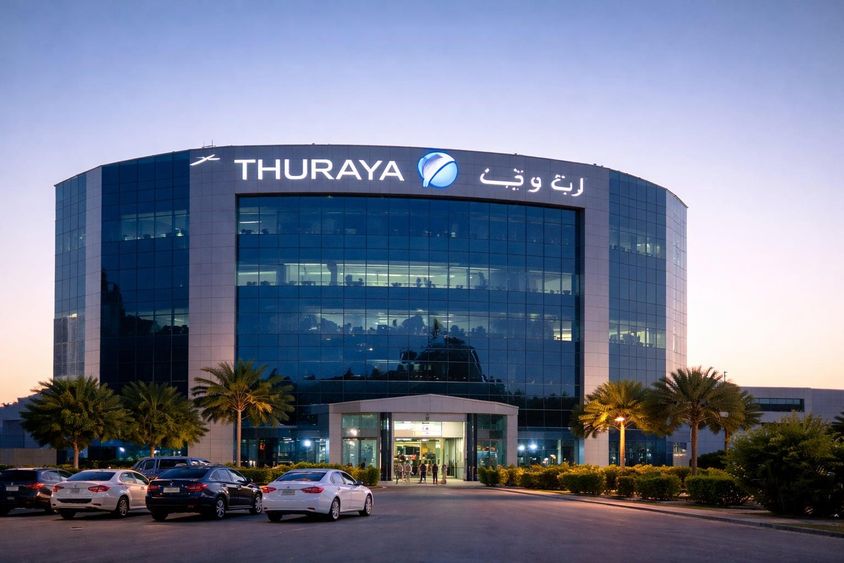
Precision and Stability in a Tense Region
One of the most intriguing paradoxes of the modern Middle East is that even as geopolitical tensions periodically reach critical levels, the continuity of infrastructure operations remains almost uninterrupted. One of the freshest examples of this is the rocket attack on the telecommunication facility in Sharjah, which also affected the Thuraya network. At first hearing, the events suggest severe disruption, yet the opposite happened: the system remained stable, and services continued uninterrupted.
This event is not just one of many incidents, but an important indication of how the region's technological resilience is built. The name Thuraya today is not just a satellite service provider, but a critical communications backbone capable of maintaining connections even in extreme situations.
The Attack and the Immediate Reaction
The attack occurred on a Tuesday afternoon when an Iranian missile targeted the Sharjah building. Although two civilians were injured as a result of the incident, the situation was quickly brought under control, and the affected individuals were immediately taken to the hospital. However, the most important aspect was that critical systems never stopped for a moment.
Space42 confirmed that all services are operating normally, and neither the infrastructure nor the services provided to customers suffered interruptions. This quick and decisive communication played a key role in preventing panic.
One of the cornerstones of modern crisis management is not only technology but also the rapid and credible transmission of information. In this case, both worked excellently.
Thuraya's Role in Global Communication
Thuraya's system occupies a special place in the world of telecommunications. We are not talking about a traditional mobile network, but a satellite-based infrastructure that can ensure communication under the most challenging conditions.
This is particularly important in regions where terrestrial networks are vulnerable or hard to reach. From maritime transportation to desert logistics and disaster management, many areas rely on this technology.
When such a system remains stable even after a missile attack, it is not only a technological success but also a strategic message: communication cannot stop.
Not an Isolated Case: Increasing Pressure in the Region
The events of recent weeks clearly show that it is not a one-off attack. Previously, a drone also hit one of Thuraya's administrative buildings, and other telecommunication facilities have also become targets.
Air defense systems are on constant alert, and the numbers speak for themselves: hundreds of ballistic missiles and thousands of unmanned devices had to be neutralized. This volume is no longer just a military issue, but also an economic and technological challenge.
In such an environment, every stable service operation is backed by significant engineering and strategic work.
Infrastructure That Doesn't Stop
The most interesting lesson is that modern telecommunication systems are no longer vulnerable at a single point. Redundancy, meaning the multiple built systems, ensures that a local attack does not cause a global shutdown.
This is especially evident in the case of Thuraya. The satellite background, the distribution of ground stations, and continuous monitoring together form a protective layer capable of withstanding even extreme conditions.
This is the kind of infrastructure on which the modern economy is built – and without which the financial system, logistics, and everyday communication would not function today.
What This Means for Dubai and the Region
Dubai's economic model heavily relies on stability and predictability. Such an incident could initially undermine this image, but the reality reflects the opposite.
The rapid recovery and seamless service operations send a message to investors and partners that the system works. It's not perfect, not invincible, but capable of handling crises.
This is the difference between a developing and a truly mature economy.
The Human Factor and Real Risk
No matter how advanced technology is, the human aspect cannot be ignored. The case of civilians injured during the incident reminds us that real people are in the background.
The number of injuries and the victims of previous events show that the conflict does not remain without consequences. However, it is also clear that the systems' goal is not only to maintain operations but also to minimize human losses.
Together, these provide true resilience.
On the Threshold of a New Era
The current events make it clear that the future infrastructure must not only be fast and efficient but also resilient. The systems related to Thuraya represent this future.
The question is no longer whether attacks happen, but whether the systems can operate despite them.
The answer is increasingly yes.
Summary: Stability Under Pressure
The Sharjah attack and the response to it clearly show that modern telecommunications infrastructure has reached a new level. The Thuraya system not only survived the incident but continued to operate unchanged.
This is not just a technological success, but also a trust foundation. In a world where uncertainty becomes more common, such stable points are gaining in value.
And perhaps this is the most important message: communication cannot stop – even when everything else becomes uncertain.
If you find any errors on this page, please let us know via email.


