Rescue Robots Ensure Beach Safety in Dubai
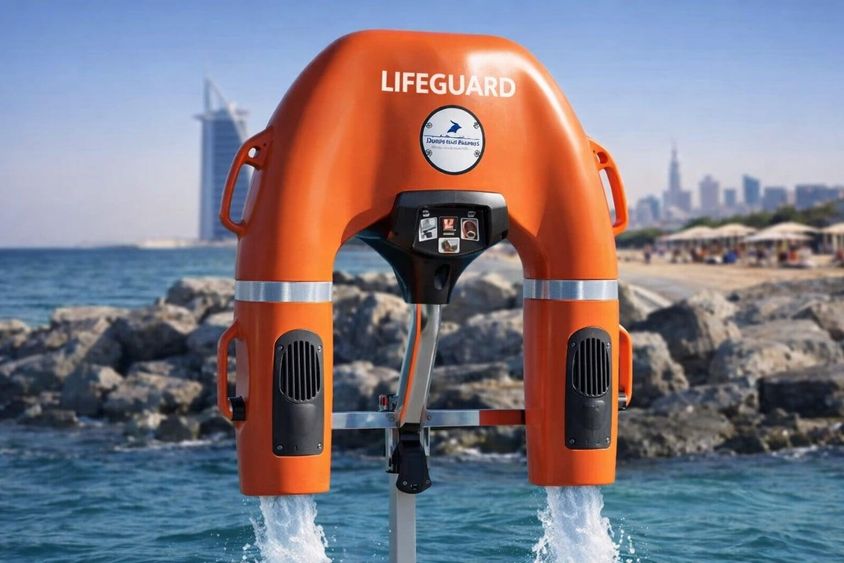
Technological Breakthroughs on Dubai Beaches
Dubai's beaches are renowned worldwide for their crystal-clear waters, long sandy stretches, and modern infrastructure. The city is not only aiming to stay at the forefront of tourism experiences but also leads in public safety and beach supervision. A fresh example of this is the technological development where AI-supported water rescue robots and aerial rescue drones are being deployed on Dubai's public beaches.
This solution debuts in the region in such a complex form. The goal is to establish an integrated safety system that can respond more rapidly to emergencies, support lifesavers, and enhance the safety perception of beachgoers. The development is more than a technological experiment; it's part of a comprehensive strategy that employs modern technology to improve everyday life quality.
The Water Rescue Robot: Speed and Stability Among the Waves
A central element of the system is the so-called water rescue robot, specifically developed for marine rescue tasks. This device functions via remote control and can independently navigate on water, significantly faster than a traditional rescue swimmer.
The robot can reach swimmers in distress up to five times faster than a human lifesaver, which is a critical advantage in situations where quick reaction is determined by minutes or even seconds. Its design allows it to operate stably even amid stronger waves or challenging sea conditions.
The rescue robot's range can extend up to one kilometer within visual distance, crucial for long and open beach stretches. Additionally, it has substantial load capacity, being able to tow up to 500 kilograms, enabling it to assist in rescuing multiple individuals.
One of the device's greatest advantages is reducing the physical risk for lifesavers. In stormy water or strong currents, the robot can reach the person in distress first, providing a stable floating platform until the rescue team arrives.
Rescue Drones from the Air
In addition to water robots, another key tool appearing on Dubai beaches is the drone capable of water rescue. These aerial devices play an important role in situational awareness and rapid response.
Rescue drones can fly over water at high speed, transmitting real-time visuals to the beach supervision center using their cameras. This enables lifeguards to immediately see what's happening in the water and assess the emergency more accurately.
One standout feature of the drones is their ability to descend directly to the water surface if needed. At such times, they provide a flotation device or floating rescue unit for the person in distress. Thus, they are often referred to as "flying life buoys."
This function is particularly useful in cases where the rescue team is still en route, but immediate assistance is required. The buoyancy provided by the drone can help the injured or exhausted swimmer stay afloat until the rescue is fully completed.
Integrated Safety System on the Shores
Robots and drones don't function independently but are part of a complex, coordinated system. Dubai's beaches already operate a well-organized lifesaving service, now supplemented by modern technology.
The system comprises several elements: trained lifeguards, continuous coastal monitoring, central management, and a combination of water and aerial rescue tools. This integration enables rescue operations to be faster, more precise, and efficient.
The central management system continuously monitors the beaches' state, weather conditions, and sea conditions. Should an emergency arise, the nearest rescue units can be immediately alerted, with drones and robots already on their way to the scene.
This is especially important on high-traffic coastal areas, where thousands of people may be near the water simultaneously. Technology assists in covering larger areas and responding to incidents faster.
The Role of Artificial Intelligence
One of the most intriguing elements of the system is the application of artificial intelligence. Intelligent monitoring systems can analyze movements in the water and detect potentially dangerous situations.
For instance, if a swimmer remains motionless for an extended period, or waves carry them out of the designated swimming zone, the system can automatically send alerts to the lifeguards. This allows for preventive intervention before a more serious problem develops.
The combination of data analysis and camera systems not only speeds up the rescue processes but also aids in prevention.
Dubai Beaches as an International Example
Dubai has long strived to set a global example with its infrastructure and services. Modernizing the beach safety system is part of this effort.
The city's beaches receive millions of visitors annually, including both tourists and local residents. In such an environment, it's critical that the safety system can rapidly respond to various situations.
The use of robots and drones can elevate beach safety to a new level. Technology allows rescue processes to be more precise, faster, and safer, while lifesavers' work becomes more effective.
The Beaches of the Future
The Dubai initiative shows that the beaches of the future are becoming increasingly technology-supported environments. Intelligent monitoring, autonomous devices, and rapid communication together create a system capable of adapting to the demands of modern urban life.
This not only enhances safety but also improves visitors' experiences. People can enjoy the sea more peacefully, knowing an advanced rescue system stands ready.
The robots and drones introduced on Dubai's beaches are not merely technological novelties. These tools point towards a future where public space safety, digital innovation, and human well-being are closely interconnected.
If you find any errors on this page, please let us know via email.