Reopening UAE Schools: A New Beginning
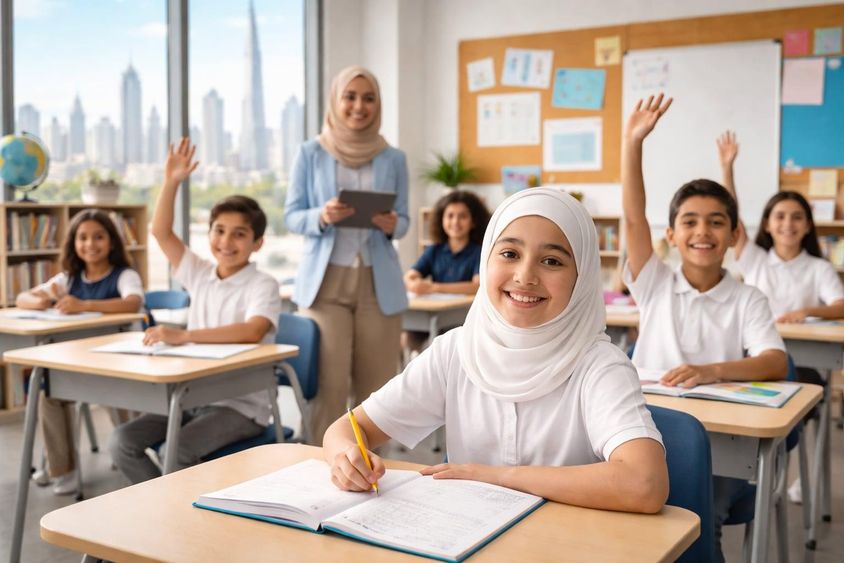
Back to School: Resuming In-Person Education in the UAE
One of the biggest questions in the UAE in recent times has been when education can return to its usual course. While the remote learning implemented as a safety measure provided a stable solution in a critical situation, it became evident over the long term that there is no true substitute for in-person education. Now, it seems a turning point is near: a significant educational group has officially requested the reopening of schools, which could initiate the return as early as March 30.
The Background and Significance of the Decision
The suspension of in-person education was not a random step. The authorities' clear goal was to ensure the safety of students and their families during an uncertain regional period. The swift implementation of online education demonstrated that the UAE's system is flexible and capable of immediate adaptation.
However, experiences from recent weeks have highlighted that digital learning cannot fully replace the classroom environment. Personal presence is crucial for students' attention, motivation, and social development. This initiative to reopen school doors thus gains particular significance.
What Would the Return Mean in Practice?
If authorities approve the request, thousands of students could return to schools in Dubai and Abu Dhabi. This is not merely an administrative decision but the beginning of a complex logistical and organizational process.
Schools must prepare for a gradual and controlled return. This could mean maintaining hybrid systems, where online and offline education operate simultaneously, and the implementation of strict health protocols within institutions.
Parents will also need to adapt to this change. Many families have already settled into home-based learning, so the return will not only bring relief but also require a reorganization of daily routines.
The Role of Authorities and the Approval Process
The decision is not in the hands of a single organization. It involves the evaluation by multiple key authorities, ensuring that all relevant aspects are considered. Educational institutions will carefully assess whether current conditions allow for a safe reopening.
This multi-step approval process guarantees that no hasty decisions are made. The UAE's previous crisis management also showed that gradualism and caution play key roles in every strategic move.
Challenges and Opportunities After Digital Learning
Prolonged online education has not passed without leaving a mark. Students' learning habits have transformed, teachers have acquired new methods, and schools have also advanced technologically.
One of the biggest challenges of the return will be how to integrate this knowledge into traditional education. The future of education is unlikely to fully revert to its previous form but will see a kind of hybrid model that combines the benefits of digital and personal learning.
This is especially true in Dubai, where innovation and rapid adaptation have always played a significant role in the development of the educational system.
Social and Psychological Impacts
The psychological significance of in-person education should not be underestimated either. For students, school is not just a place of learning but also a community space where friendships are formed, and important social skills are developed.
In the online space, these connections can only function in a limited manner. Therefore, the return will mean not just a resumption of learning but a restart of community life for many students.
For teachers, the resumption of in-person education might also bring relief, as direct communication and immediate feedback make the teaching process more effective.
Economic and Social Impacts
The reopening of schools affects not just the educational system but also has broader economic and social consequences. Parents may find it easier to work, daily routines become more stable, and society as a whole can return to a more predictable operation.
In the cases of Dubai and Abu Dhabi, this stability is especially important, as the cities' economic dynamism largely depends on a well-functioning infrastructure, of which education is an integral part.
Thus, restarting education is not just a question for one sector but part of a broader normalization process.
What If the Plan Doesn't Get the Green Light?
It is also important to ask what happens if the authorities do not approve the resumption of in-person education. In this case, online learning will continue, meaning that schools and students will keep operating in this system.
This wouldn't mean a collapse, as the system has already proven itself, but in the long term, it would place increasing burdens on students, teachers, and families.
Therefore, the current decision is crucial, as it may determine the educational direction for the coming months in the UAE.
Summary: A Step Towards Normalcy
The possibility of returning to in-person education is clearly a positive signal. It indicates that the UAE has managed to stabilize the situation and is ready to gradually return to usual operations.
For students in Dubai and Abu Dhabi, this can be a new beginning that is not only about learning but also about the return of community experiences, personal development, and daily routines.
The final decision is still in the hands of authorities, but the direction is already visible. If everything goes as planned, classrooms could soon fill up again, and education could return to the form that is most effective and human-centered in the long run.
If you find any errors on this page, please let us know via email.