Record Rainfall in UAE: Causes and Lessons
Record Rainfall in UAE: Causes and Lessons Learned
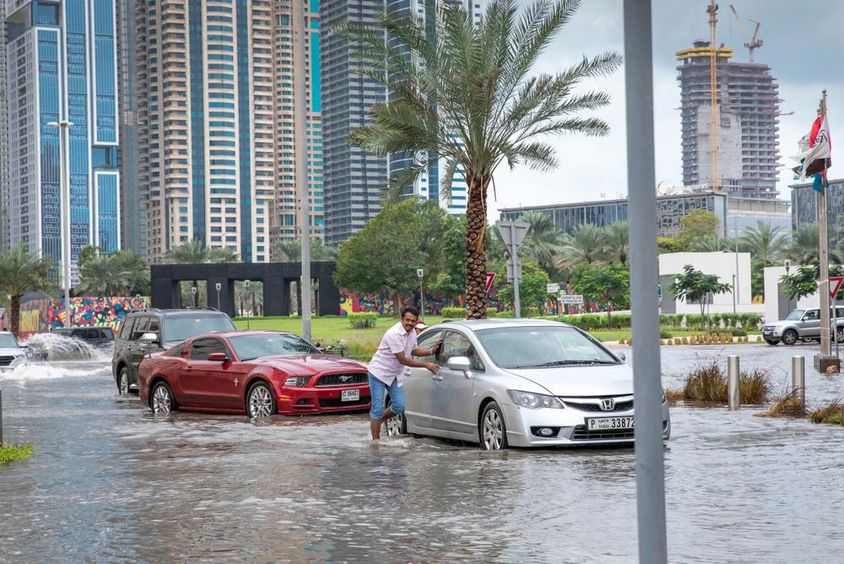
On April 16, 2024, the United Arab Emirates experienced one of the most significant rainstorms in its history. According to the National Centre of Meteorology (NCM), the amount of rainfall surpassed the annual average in many regions—all in a single day. In Al Ain city, for example, 254 mm of rain was recorded, while in Dubai, 142 mm fell, compared to the national annual average of 140–200 mm for the entire year. Normally, only 8 mm of rain falls in April. This extreme phenomenon not only caused chaos on the roads and in drainage systems but also raised new questions about weather warnings, adaptation, and the efficiency of forecasting systems.
What caused this extraordinary downpour?
To find the answer, researchers from NYU Abu Dhabi turned to satellite observations and computer models at the Mubadala ACCESS research center. Their study clearly identified the main cause: the sea surface temperature in the region was extremely warm in the days leading up to the rainfall. This warmer seawater significantly increased the atmospheric humidity, leading to powerful convective storms over the Arabian Gulf.
According to the study, if the ocean had been cooler, the moisture-laden air would have condensed not over the UAE, but rather over Iran's Zagros Mountains, meaning the rain would have fallen elsewhere. Thus, the heated seas have a substantial impact not only on the amount of precipitation but also on its geographical distribution.
Regional Consequences and Lessons
The event particularly affected the populations in the Dubai and Al Ain regions, as well as businesses reliant on infrastructure, logistics, or outdoor activities. The rapid flooding of roads, closure of schools and workplaces, and the overwhelming of emergency services demonstrated that even a country with a developed infrastructure is not entirely prepared for such rare but devastating natural events.
There is a growing call to rethink how weather forecasts are communicated, the capacity of urban drainage systems, and emergency response protocols. The increasing frequency of extreme weather events signals that the label "rare" does not mean they can be "ignored."
Scientific Significance of Ocean-Atmosphere Interaction
The researchers, including Basit Khan and Olivier Pauluis, highlighted that ocean temperatures not only shape global climate trends but also cause specific and rapidly occurring weather events. The so-called ocean-atmosphere coupling plays a crucial role in determining where, when, and with what intensity precipitation zones appear.
The Mubadala ACCESS research center aims to uncover such relationships. Their work could improve predictive models for the region, allowing not only more accurate predictions of rainfall intensity but also its spatial distribution and timing.
Future Forecast: Preparation or Reaction?
The UAE government and meteorological agencies have been striving for years to understand and address the impacts of climate change. The April 2024 rainfall served as a clear warning: extreme weather events are not just "distant future threats" but real, present challenges. Such a storm can cause significant disruptions not only in urban transportation but also in energy infrastructure, education, healthcare, and property security.
Therefore, one of the most important messages of the research is not only scientific but also practical: more precise and detailed forecasts are necessary for urban planning, disaster management, and everyday decision-making. Timely and reliable warnings can save lives and significant economic value.
Conclusion: More Than a Storm Cloud in the Sky
The April 16, 2024, rainfall in the UAE not only broke meteorological records but also set new directions for climate science, urban planning, and disaster management. Such events are not isolated, but part of a larger global pattern. The research and ensuing actions could mitigate the impacts of similar future events—provided the results are not only published but also applied in practice.
This extraordinary rainfall serves as a reminder: nature's changes will not wait for us, so we must adapt to them swiftly, consciously, and preparedly.
If you find any errors on this page, please let us know via email.


