Record Heat Arrives in Dubai
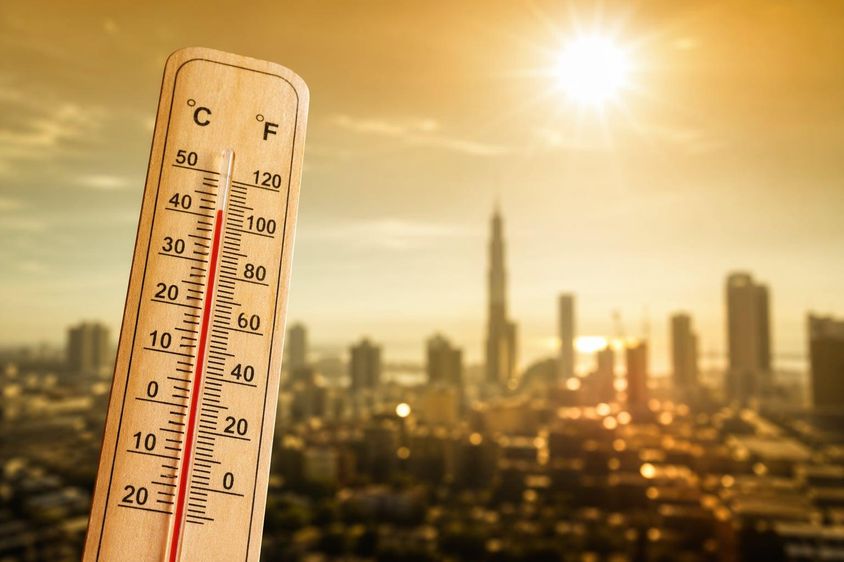
Record Heat Looms: Unusual Spring Ushers Dubai Summer
This year's spring in the United Arab Emirates brought unusual twists that surprised and offered temporary relief to the region's inhabitants. While the calendar clearly indicates the approach of summer, the weather long defied its usual pattern. Mornings were cooler and afternoons milder than typically experienced in April. However, this 'extended winter' now seems to abruptly come to an end.
On April 21st, the highest temperature of the year so far was recorded: 42.9°C in an inland area of the western region at 2 pm. This measurement not only represents a sharp increase compared to the cooler days of the recent past, but is also a clear signal that summer is just around the corner. In comparison, just a few days earlier, on April 15th, the highest temperature was only 35°C at a different measurement point.
Unusual Transition Between Seasons
One hallmark of Dubai's weather has always been the seemingly unnoticed transition from spring to summer. However, this year proved to be an exception. The breezy mornings and subdued daytime warmth experienced in recent weeks have been reminiscent of the winter months for many. This was particularly noticeable for those who have lived in the region for a longer time and are accustomed to the April heat.
Complex atmospheric processes are at work in the background. The meeting of different air masses, changes in wind directions, and cloud formation all contributed to a more changeable weather pattern than usual. Dry, dusty winds occasionally appeared more strongly in inland areas, while on other days, cloudiness and humid air dominated.
This dynamic situation illustrates well that the Dubai climate is not just a simple 'hot desert weather,' but a constantly changing system that sensitively responds to global and regional impacts.
The Threshold of Summer: What to Expect?
Although the current temperature peak is merely a precursor of what's to come, the trend is clear: sustained heat will gradually return in the coming weeks. Alongside rising temperatures, increasing humidity will also become more prominent, particularly in coastal areas such as Dubai.
According to current forecasts, some variability may still persist in the near future: cloudy periods, brisk winds, and even occasional light rain may occur. However, these are more likely transient phenomena that cannot prevent the stable establishment of the summer season.
For the populace, this period always requires adaptation. Timing outdoor activities, maintaining proper hydration, and protection against heat all become crucial as daytime temperatures consistently rise above 40°C.
A Global Factor: El Niño Could Return
Further complicating the situation is the potential return of a global climatic phenomenon, which could significantly impact not only Dubai's weather but also the climate worldwide. Current forecasts suggest that the so-called El Niño phenomenon could develop again by the summer of 2026.
This climatic cycle involves changes to the thermal conditions of the Pacific Ocean, triggering global effects. Even now, warming of deeper ocean layers and weakening of trade winds, which are all precursors to the formation of El Niño, can be observed.
Estimates suggest the event might begin between May and July and continue through the end of the year. If the process intensifies, a more severe phase could develop, further increasing global temperatures.
Regional Impacts: More Humidity, Changing Precipitation
El Niño's effects are not uniform everywhere, but they could have noticeable consequences in the Middle East as well. In the region, mainly increased humidity and altered precipitation patterns are expected. Due to changes in monsoon systems, some of the moisture may shift westward, affecting the Arabian Sea region and surrounding countries.
This means that more moisture could appear in the air by the end of summer and early autumn, making it even harder for Dubai residents to endure the heat. High humidity significantly worsens perceived heat, even if the actual temperature does not rise to extreme levels.
Balancing Extremes
This year exemplifies how unpredictable the weather can be even in a region known for generally stable patterns. The abrupt heat following cooler spring weeks created a sharp contrast and highlighted the increasing role of climate change and global atmospheric processes in determining daily weather.
In the case of Dubai, this is particularly crucial, as the city's infrastructure, economy, and lifestyle are closely linked to climatic conditions. Air conditioning, urban planning, and energy consumption are all factors that directly react to temperature changes.
Preparing for the Coming Months
As summer approaches, conscious preparation increasingly comes to the forefront. Based on current data and trends, a hotter and more humid season is emerging, which may bring serious challenges. Nonetheless, technological advancement and well-established infrastructure allow the region to effectively adapt to these conditions.
Thus, the current record temperature is not just a statistical figure, but a warning as well. It serves as a reminder that the Dubai summer is not only approaching but may also become increasingly intense due to global processes.
In the coming weeks, the changeable weather could still hold surprises, but the big picture is already clear: the heat is returning, ushering in another season filled with challenges in the United Arab Emirates.
If you find any errors on this page, please let us know via email.


