Ramadan Shopping in UAE: Supply and Strategies
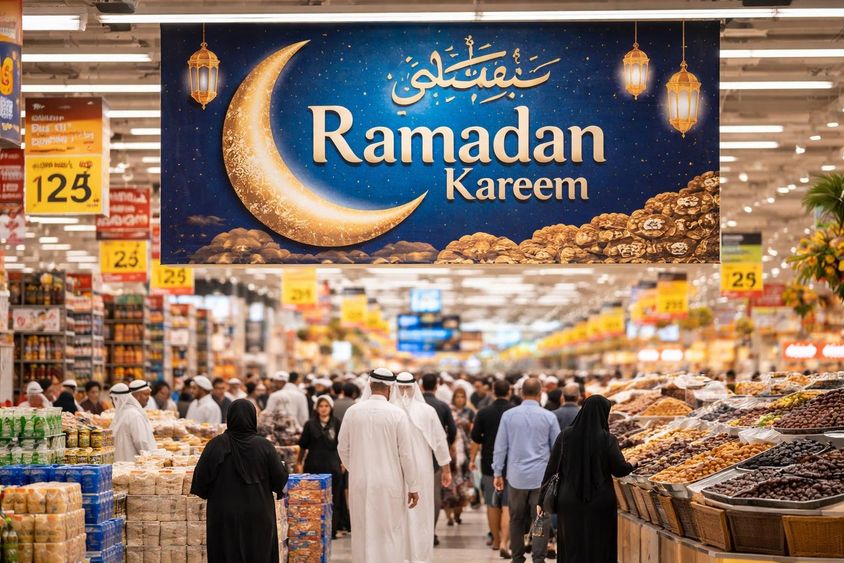
As Ramadan approaches in the UAE, the same questions surface every year: will there be enough staple food, will prices spike, and what should consumers consider if they want to avoid overspending? According to official statements, the country's strategic food reserves are at a high readiness level, and continuous supply is assured in the long term. This message is not only reassuring but also serves as guidance: the aim during Ramadan is to maintain stable supply and prevent unjustified price surges.
Ramadan reshapes daily routines: people shop at different times, home meals become more significant, and demand for certain products increases. The increased traffic brings its own risks: pricing and promotions can become less transparent, especially if consumers focus only on the "total amount" rather than how much they are actually paying per unit.
Strategic stocks and continuous resupply: why is this important during Ramadan?
The term "high stock level" may sound generic, but the essence is simple: the UAE does not rely solely on the current store shelf inventory but maintains a multi-layered supply security. This includes strategic warehouses, logistical capacity, and import and domestic distribution systems. During Ramadan, this is critical because consumer habits change suddenly: certain products are consumed more (e.g., ingredients for home cooking), and many try to "stock up" in larger quantities all at once.
If the market senses continuous resupply, the chances of panic buying decrease. Panic buying itself can drive up prices: stocks deplete faster, demand fluctuates, and consumers end up paying more because they hurried. Thus, the official message is not just information but also a kind of request: shop wisely because the supply is in order.
Mandatory unit pricing: clearer shelves, fewer tricks
In the UAE, consumer protection has increasingly focused on unit prices in recent times. The rule stipulates that in stores with a floor area exceeding 1,000 square meters, the unit price of products must be clearly and legibly displayed. This principle extends to digital commerce, ensuring that prices are presented transparently not only on physical shelves but also on online platforms.
Unit pricing is crucial because during Ramadan, promotions, package deals, and "promotional end prices" are particularly abundant. These may initially seem favorable, but it is often the case that between two similar products, the cheaper-looking one is actually more expensive when measured per liter, kilogram, or piece. Unit pricing organizes this confusion: it standardizes the selection to the same metric, making decisions genuinely comparable.
What does the consumer gain from unit prices?
Unit pricing is not just about "shopping smarter." It has three specific effects that are especially valuable during Ramadan:
The first is spending control. When consumers make decisions based on unit price, it is much harder to slip into the "just a few extra things" spiral, as it reveals the actual cost of items.
The second is the rationalization of consumption. Family meals and hosting during Ramadan often lead to overbuying, resulting in waste. Unit pricing helps plan more logically: the largest package is not automatically the best, and the most colorful promotion is not the most advantageous.
The third is fairer competition. Unit pricing makes products comparable under the same principle, so competition is not just about appealing discounts but also about real value for money.
Prices of basic products: what happens if someone raises them unjustifiably?
One cornerstone of price stability during Ramadan is that unjustified price increases for certain basic consumer goods are prohibited or cannot occur without prior approval. This typically includes everyday foods and ingredients that regularly make it into households' shopping baskets.
In practice, this means authorities monitor price movements, and if an increase cannot be justified by reasonable market reasons, they can intervene. This not only protects consumer wallets but also maintains market trust: during Ramadan, it is integral to the general mood that basic livelihood products remain accessible and predictable.
Complaint handling and enforcement: the consumer is not alone
Regulation does not stop at paperwork. Authorities have the right to check whether physical and digital retailers comply with unit price rules and pricing regulations. Consumers also have the opportunity to lodge complaints if they encounter irregularities, such as missing unit prices, misleading displays, or price changes suspiciously "timed for Ramadan."
This aspect is vital as Ramadan is particularly busy: more purchases, more promotions, more misunderstandings. If there is a way to report issues and monitoring rights exist, they serve as a deterrent. The focus is not on punishment but on maintaining order in the market.
Sales, discounts, "bundle deals": how not to be misled by promotions?
During Ramadan, many stores compete with discounts. This is good news, but only if consumers don't lose their bearings. A typical trick in promotions is highlighting the total cost while changing the package content or configuration. Again, the unit price serves as a guide: the logic works the same way as during normal periods, only that during Ramadan, there are far more stimuli and decisions are made faster.
It's also important to verify that the discount truly applies to the products you regularly purchase or just to a new, "limited" package that ends up costing more. The message about stable supply helps here too: there's no need to rush, so promotions cannot easily "force" poor decisions on you.
Mindful Ramadan shopping: less stress, less waste
For many, Ramadan is about mindfulness, and this can extend to shopping too. If supply is assured and prices are monitored, the best strategy is generally planning. Weekly menus, realistic portions, thoughtful lists – these are not merely catchy tips but genuine financial and mental relief.
It also helps to make several smaller, targeted purchases instead of one big shop: food stays fresher, less ends up in the trash, and spending is more easily controlled. During Ramadan, charitable giving is also more frequent, so it is especially painful if a household loses out due to waste: mindful shopping is not just about saving money but is a mindset.
What does all this signal to the market and daily life?
The pre-Ramadan official message has a dual essence: firstly, the UAE is prepared, the stocks are available, supply is ensured. Secondly, consumer protection seeks to preserve the fairness of prices and promotions with tangible regulations and monitoring, particularly by mandating the display of unit prices by larger retailers.
From this, consumers can draw a simple conclusion: even during Ramadan, it is possible to make calm, well-planned decisions based on transparent information. If the unit price is displayed on the shelf, if the pricing of essential products is supervised, and if the market is monitored, then the greatest advantage is that your mood doesn’t shop for you, you’re in control. Ramadan in Dubai and the UAE can thus also be about predictability, not just hustle and bustle.
If you find any errors on this page, please let us know via email.


