Rain Aftermath: Swift, Effective System Response
Precipitation Aftermath: Swift and Effective System Response
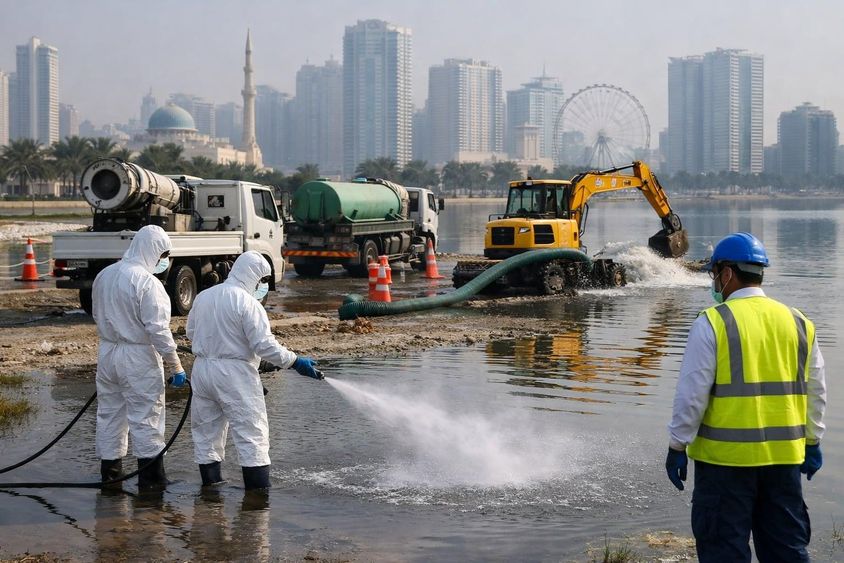
The unstable weather in recent days has posed another challenge to the cities of the United Arab Emirates, especially in areas where sudden downpours are not a usual occurrence. However, the response has once again been swift and organized: the Sharjah Municipality launched a large-scale disinfection campaign to manage stagnant rainwater. The goal is clear: to prevent public health issues and minimize the risks following rainfall.
This step illustrates that the region is not only prepared to handle extreme weather conditions but also the secondary effects, which often pose as much of a threat as the storm itself.
Stagnant Water: Invisible but Serious Risk
The water left behind after heavy rains may seem harmless at first glance, but it can actually be the source of significant problems. Stagnant water provides an ideal environment for mosquitoes and other pests to breed, which not only cause inconvenience but also play a role in spreading diseases.
One of the main aims of the current measures is to reduce this risk. During the disinfection campaign, authorities will target areas where water may remain for extended periods, such as low-lying areas, parking lots, construction sites, or near clogged drainage systems.
This type of rapid intervention is particularly important in a region where infrastructure is primarily optimized for dry weather, so any sudden large amount of precipitation can pose a considerable burden.
Organized Action: Engineers, Technology, and Continuous Monitoring
The campaign is not simply a cleaning operation but a complex, well-organized procedure. Special teams comprised of engineers, technicians, and trained workers are working on site. They use modern tools and machines to monitor water accumulations and take immediate actions.
The substances used during disinfection are safe, posing no threat to humans, yet effectively reduce the presence of microorganisms and pests. This is especially important in residential areas, where interventions must be both quick and safe.
Such operations demonstrate that cities do not merely react to events but work according to pre-established protocols. This level of preparedness is one key to ensuring the system remains stable even during extreme weather situations.
Public Role: It's Not Just Up to Authorities
While authorities mobilize significant resources, the role of the public is equally important. The Abu Dhabi Public Health Center has also emphasized that prevention is key at an individual level.
Simple steps make a difference: removing or emptying any container or surface where water can accumulate is essential. Water tanks should be properly covered, drains and air conditioning systems kept clean, and uncovered items left outside should be avoided.
Experts particularly emphasize that stagnant water should be removed within 24–48 hours, as this is the time window in which mosquitoes can begin to breed. This is a small but critical detail that can have a significant long-term impact on public health.
Weather Background: Why the Situation Developed
The current situation is due to a low-pressure system that has brought unstable weather to the region. According to the National Center of Meteorology, cloud cover is variable, and the formation of convective clouds could lead to intense precipitation in several areas.
Such weather is particularly unpredictable: in some areas, only light rain falls, while in others, significant amounts of precipitation can fall in a short period. This is why authorities do not focus on individual cities but manage the situation on a regional level, including the areas of Dubai, Abu Dhabi, and Sharjah.
The combination of forecasts and real-time monitoring allows for swift and targeted responses.
Infrastructure Challenges and Lessons
Such events always highlight the limitations of infrastructure. Although the cities in the United Arab Emirates have advanced systems, extreme weather conditions create new challenges.
The current campaign is not just about addressing the immediate problem but also serves as a test: how effective are the existing systems, where are the weak points, and what developments may be needed in the future.
Based on experiences, it is expected that greater emphasis will be placed on developing drainage systems, digital monitoring, and refining forecasting models in the future.
Joint Defense: Authorities and Public Together
One of the most important messages of the current situation is that defense can only be successful through joint efforts. The swift response of the authorities and the conscious attitude of the public together ensure that risks are minimized.
This type of collaboration is not only important in solving current problems but also determines the resilience of cities in the long term.
Summary: Preparedness in a Changing Environment
The disinfection campaign exemplifies how the United Arab Emirates manages weather challenges: rapid response, organized operations, and public involvement. The aim is not just to address the current situation but to maintain a system capable of adapting to changing circumstances.
As the weather becomes more unpredictable, the significance of such measures continues to grow. The current actions demonstrate that the region does not wait for problems to worsen but acts proactively, protecting both people's health and the environment.
If you find any errors on this page, please let us know via email.


