Primark's Bold Entrance in Dubai's Uncertain Times
In the world of global retail, making a decision that is bold, strategic, and risky in terms of timing is rare. We are witnessing exactly such a move now: a well-known international fashion chain has decided to enter the Dubai market, even amidst geopolitical tensions and uncertainties in the region. This decision is not only interesting from a business point of view, but also illustrates how major brands are thinking about long-term growth.
A Launch Beyond Itself
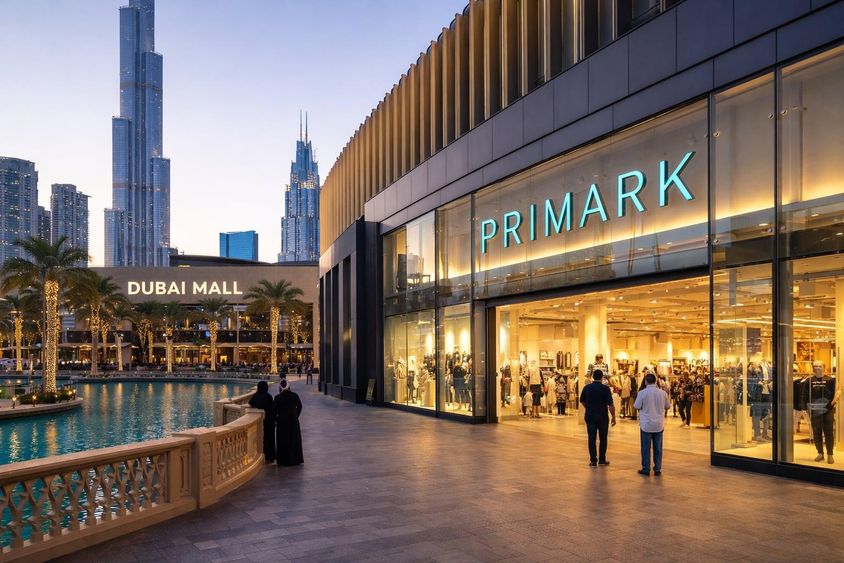
The Dubai Mall is not just any shopping center. It is one of the world's most renowned retail hubs, where presence alone signifies a certain status. Entering this location means that a brand takes the Middle Eastern expansion seriously on a global level. This opening is especially intriguing as it does not happen during a stable, predictable period, but rather in a situation where the region's tourism has declined, visitor numbers have decreased, and many companies prefer to wait.
Thus, this step is not just about opening a store, but a statement: long-term potential is more important than short-term uncertainty.
Crisis and the Transformation of Consumer Behavior
Recent events have significantly affected shopper traffic in Dubai's shopping malls. The decline in tourism had an immediate impact on the retail sector. Fewer visitors, less impulse buying, and general caution characterize the market.
However, it's crucial to note that Dubai is not a classic tourist city. It is a global business hub with a significant expat community with stable incomes and ongoing consumption needs. This means that while tourist numbers may decrease, internal demand can remain strong.
The question is not whether there is a market, but who dares to exploit the opportunities created by the temporary downturn first.
Why Now? The Logic of Strategic Timing
Many companies hold back expansion, cut costs, and wait during such times. However, those capable of thinking long-term often exploit these periods. Lower rental fees, greater negotiation room, and less competition are factors that create an ideal entry point.
In Dubai, an unusual dynamic is observed: the city is capable of bouncing back very quickly. What appears as a downturn today can become a record turnover in a few months. In such an environment, the key to timing is not the current situation but forecasting the next wave.
Expansion Does Not Stop at One Store
The opening in the Dubai Mall is only the first step. Plans indicate that more stores will open shortly in other key shopping centers across the city. This shows that it is not a test run, but a well-thought-out, multi-phased market entry strategy.
Covering multiple locations at once allows the brand to quickly build recognition and reach various customer segments. A different audience visits the Dubai Mall than, for example, a family-friendly shopping center, so diversification is crucial.
Regional Ambitions and Long-Term Goals
Entering the Dubai market is not an isolated goal but part of a larger regional strategy. The Middle Eastern market has long appealed to international brands, but entry is not simple. Cultural differences, differing consumer habits, and strong local competition characterize the region.
The fact that the brand is planned to be present in other countries indicates an attempt to build a scalable model. In this system, Dubai acts as a test market, a showcase that demonstrates how the concept works in the region.
What Does This Mean for Competitors?
The appearance of a new player always reshapes the market. Particularly true if it involves a brand that relies on strong value for money. This puts pressure on existing players, who need to respond by adjusting pricing, offerings, or customer experience.
Dubai's retail market has already been highly competitive, but such entries further intensify competition. For consumers, this generally means more choices and better offers.
The Role of Brand Building in a Saturated Market
Such a step is not just a logistical or financial question but also a strongly brand-building decision. In Dubai, it's not enough to be present—you must also be visible. The Dubai Mall plays a key role in this, as attention is concentrated here.
The first impression is particularly important. Opening a new store is not just about the products but also the experience: what the store looks like, the service quality, and the feeling it gives to the customer. These are the factors that determine long-term success.
Dubai as a Global Retail Laboratory
Few cities in the world combine diverse cultures and consumer habits so intensely as Dubai. From this perspective, Dubai is a true testing lab. What works here often works elsewhere too.
That's why every such entry is important: it has significance not just locally but also provides global insights. How do consumers respond? Which products sell better? What pricing strategy works? These are questions to which Dubai offers quick and clear answers.
Conclusion: Risk or Opportunity?
At first glance, the current opening may seem risky, but it is actually part of a deliberate, long-term strategy. Those who are capable of acting in uncertainty often gain an advantage over those who wait.
Dubai continues to be one of the world's most dynamically growing cities, and while there may be short-term downturns, long-term trends are clear. The question is not whether it is worth being present here, but rather who takes the step and when.
This decision precisely illustrates that the future should not be awaited but built.
If you find any errors on this page, please let us know via email.