Planes Turn Back Amid Middle East Airspace Ban
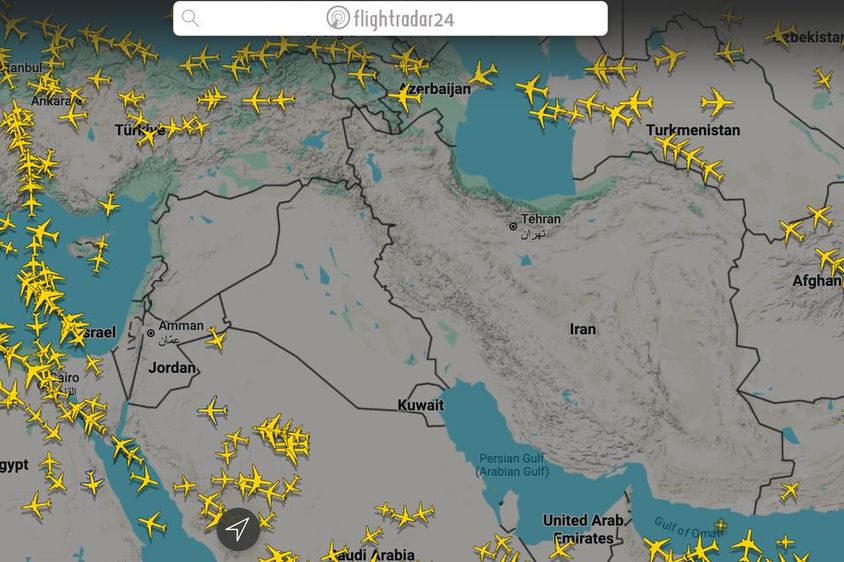
Complete Airspace Closure Over Iran, Iraq, Israel – Planes Turn Back in Row
One of the most significant events in Middle Eastern air travel in recent days is the complete airspace closure over Iran, Iraq, and Israel. The decision is not just of regional importance but has global implications: dozens of intercontinental flights are forced to take detours, while numerous aircraft already airborne have been instructed to turn back. Unusual patterns have emerged on flight maps: long lines of planes are turning back towards Europe, Asia, and the Persian Gulf, including several flights initially heading towards Dubai or other Middle Eastern hubs.
The complete airspace closure is not merely an administrative measure. Such a decision is only made when the safety of the airspace can no longer be guaranteed. For civil aviation, predictability and a controlled environment are paramount. When these factors waver, authorities immediately close the affected zone. In the current situation, the airspace of three strategically important countries has become inaccessible, effectively cutting through some of the traditional Europe-Asia air corridors.
Decisions Made in the Air
One characteristic of modern aviation is that most flights operate on routes lasting several hours. A plane traveling from Europe to Asia crosses the airspace of multiple countries. When a sudden airspace closure occurs, the decision cannot wait until landing. Pilots, in coordination with air traffic control, must immediately seek alternative routes or, if necessitated by fuel levels and safety protocols, return to the originating airport.
In the current scenario, numerous flights received notifications halfway through their journeys. Flight apps clearly show planes turning in arcs or diverting southward to find new, safe corridors. This situation not only causes scheduling disruptions but also poses significant logistical challenges for airlines. Redirecting a single long-haul flight can cost hundreds of thousands of dollars, and its ripple effect can be felt for days.
Dubai as a Regional Hub
As one of the most important transit hubs in the Middle East, Dubai, due to its geographical location, plays a key role on the Europe–Asia–Australia axis. The current airspace closure especially impacts flights that would normally pass over Iran or Iraq before reaching the Emirates. The detour routes extend flight times, increase fuel consumption, and narrow the available air corridors.
Dubai Airport, however, is prepared for traffic rearrangements. Air traffic control and airport operations work within a flexible system capable of handling sudden extra pressures. Nevertheless, the domino effect is inevitable: if a plane arrives late, it departs late, resulting in further delays across the global network.
Economic and Touristic Consequences
The complete airspace closure affects not only passengers but also commercial freight. A significant portion of air cargo traffic also traverses this region. The detour routes increase delivery time and costs, which could impact supply chains. This is particularly problematic for time-sensitive goods such as electronic devices, pharmaceuticals, or premium consumer products.
Tourism also reacts to such events. Some travelers postpone or alter their trips, especially if the situation's duration is uncertain. However, in Dubai, experience shows that the city quickly adapts to regional challenges. The solid infrastructure and a strong commitment to safety maintain travelers' trust in the long term.
The Fragile Balance of Air Travel
The current event highlights how sensitive the global aviation system is. The world's flight network is a tightly interconnected structure where a regional conflict immediately has global consequences. Airspace closure is not an isolated measure but part of a safety chain reaction aimed at protecting human lives.
Modern aircraft are technologically advanced, navigation is precise, and communication is real-time. Yet, if safety over a particular area cannot be guaranteed, a complete closure is the only responsible decision. This precaution causes short-term inconveniences, but in the long term, it maintains trust in aviation.
What Awaits in the Coming Days?
The duration of the airspace closure is crucial. If it is short-lived, airlines will quickly reorganize routes, and schedules will return to normal within a few days. However, if it prolongs, significant route adjustments may be needed, resulting in substantial additional costs and longer flight times.
For passengers, the most important advice is flexibility. Airlines typically offer options for rebooking or changing tickets. In Dubai and other regional hubs, traffic restructuring is ongoing, meaning travel plans might change, but travel does not completely halt.
In the Shadow of a Region
The complete airspace closure over Iran, Iraq, and Israel is not just aviation news but a geopolitical signal. The retreating routes in the skies are visual imprints of uncertainty. Aviation has always been a symbol of globalization: connecting continents, cultures, and economies. When such a crucial region is closed, the whole world feels its impact.
In this equation, Dubai continues to function as a stable hub, but the rearrangement of the region's airspace serves as a reminder of the fragility of global mobility. The events of the next days and weeks will decide if this episode remains a temporary disruption or sparks lasting changes on the flight route map.
Planes are now turning back, diverting, or waiting. The air is in motion, decisions are made every minute. One of the most complex systems of the modern world is adapting to a new situation – and with it, the plans of millions of passengers are also charting new courses. img_alt: Complete airspace closure over Iran, Iraq, Israel.
If you find any errors on this page, please let us know via email.


