One-Stop Security: Transforming Aviation in UAE & Bahrain
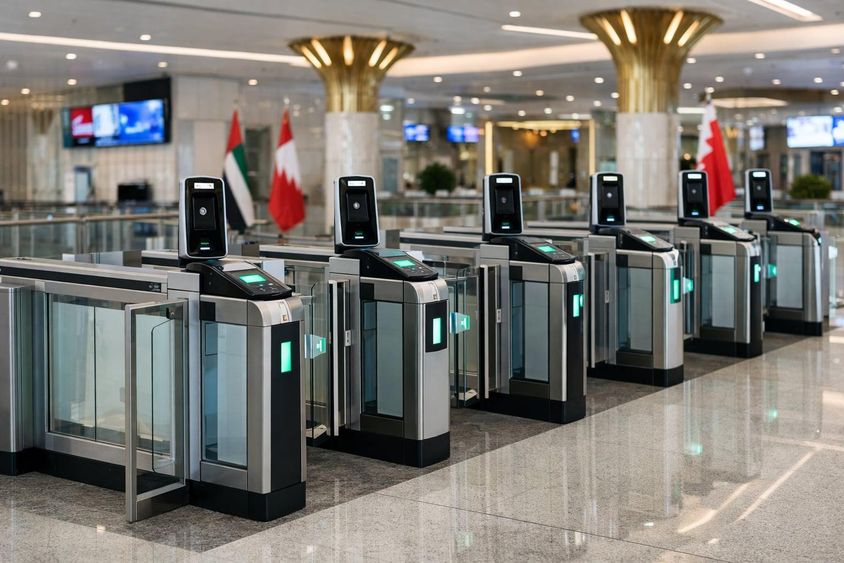
A New Era in Aviation: One-Stop Checkpoint Between UAE and Bahrain
The UAE and the Kingdom of Bahrain have ushered in a new chapter in regional aviation history with the launch of the “One-Point Air Travellers” project. The initiative aims to significantly reduce airport transfer and arrival waiting times while enhancing passenger experience and security. The pilot phase began on February 16, 2026, initially implemented at the Zayed International Airport in Abu Dhabi and the Bahrain International Airport.
The essence of the system is that passengers undergo the necessary entry checks for the destination country at the departure airport. This means there is no need for further passport or entry procedures at the destination. Travel thus becomes truly seamless: boarding in one country and directly exiting the terminal upon arrival.
How does the one-stop checkpoint system work?
The project is based on electronic interconnectivity, biometric identification, and the use of automated e-gates. At the departure airport, passenger data is transmitted in real-time to the destination country’s authorities. Biometric checks, such as facial recognition, allow passenger movement and documents to be authenticated even before arrival.
This solution saves time and reduces terminal congestion. In the traditional system, passengers wait in long lines for passport control after arrival. In the new model, this process becomes virtually “invisible”: administration takes place during the journey.
The integration of e-gates and data exchange systems ensures that authorities operate at the highest security level. Data protection and accuracy are crucial elements of the project, as electronic data flow can only be effective if system collaboration is seamless.
Balancing Security and Convenience
The initiative is backed by the respective authorities of the UAE and Bahrain’s interior ministries under the Persian Gulf cooperation framework. The project is not merely a technological innovation but a strategic step towards regional integration.
Through preliminary data processing, authorities can verify passengers’ eligibility and documents before the journey even begins. This enhances security while speeding up passage. For passengers, this means a more convenient and predictable experience.
In modern aviation, time is one of the most valuable factors. For business travelers, saving even half an hour can make a significant difference. In tourism traffic, smooth arrival contributes to a positive perception of the country.
Regional Integration and Economic Impact
The project goes beyond simplifying airport processes. Closer cooperation between the UAE and Bahrain strengthens economic ties, promotes tourism, and eases business travel. The two airports could become strategic hubs in the region, attractive not just as starting points but as transit gateways as well.
The system can potentially extend to other Gulf countries in the longer term. If the pilot phase proves successful, the model can be implemented at a regional level, resulting in a more unified, intelligent transportation space.
This is particularly important at a time when global aviation increasingly relies on digital solutions and automation. Biometric systems, pre-departure data verification, and integrated IT platforms are fundamental components of future airports.
Technological Advantage and Competitiveness
The UAE has already been a leader in smart solutions, whether in digital government services or intelligent infrastructure. This project strengthens this strategy in the field of aviation as well.
Direct data connectivity between airports enables secure and fast information exchange. The system not only makes passenger traffic management more efficient but also supports the integration of customs and security checks.
Such innovations increase the region’s global competitiveness. For international travelers, a quick and convenient passage is one of the most important factors. An airport where arrival doesn’t involve long waits automatically gains an advantage over other destinations.
The Future Model of Travel
The concept of “one-point” checking could be a precursor to a new era. The traditional border control model could gradually transform into a pre-travel, digitally-based system where passenger data is validated before travel.
This approach is particularly relevant for short-haul regional flights, where travel time is often shorter than post-arrival waiting. With the new system, the total travel time can be optimized.
The project sends a clear message: technology is not a self-serving development but a means to improve quality of life. Faster processing, reduced administration, and enhanced security together create a travel experience that meets 21st-century expectations.
The joint initiative of the UAE and Bahrain is not just about introducing a new airport protocol but a strategic step towards deepening regional cooperation and strengthening global competitiveness. If the pilot phase results are positive, the model could easily become a template for other countries as well.
The future of aviation increasingly revolves around invisible, digital backend systems. The passenger experiences only faster progress, less waiting, and a sense of security. This is exactly what the new system offers: less time standing in lines, more time truly enjoying the journey.
If you find any errors on this page, please let us know via email.


