Oman's Adventurous Pull on UAE Residents
The Allure of Oman by Car: Why UAE Residents Hit the Road Again and Again
For UAE residents, Oman isn’t just a neighboring country perfect for a long weekend escape. It is an experience where the journey is as important as the destination. The roads leading to the border, serpentine paths winding through the mountains, the turquoise waters of the wadis, the misty landscapes of Salalah, or the desert tranquility all convey the feeling of traveling to a completely different world within a few hours.
It is no coincidence that Oman is especially popular among UAE residents. According to the National Center for Statistics and Information, over 55 percent of visitors to Oman hail from the UAE. This is not a sporadic trend but a strong travel habit that repeats year after year. During long weekends, school holidays, public holidays, and cooler months, numerous cars set off from Abu Dhabi, Dubai, Sharjah, and other emirates.
Anyone who has visited a popular wadi in Oman can easily understand this allure. Places like Wadi Bani Khalid often feel like an entire community from the UAE has relocated for the weekend. Families settle on the flat rocks, children wade in the shallow, crystal-clear waters, and cars from Abu Dhabi, Dubai, and Sharjah line the parking lots. The location serves not only as a tourist attraction but as a communal escape from the urban pace.
The Journey That is an Experience in Itself
What makes Oman special is that the journey isn’t just about arriving. For many, the car journey from the UAE is already part of the adventure. The landscape along the routes quickly changes: at one moment the car travels through flat, arid areas, and soon after steep mountainsides, rocky valleys, or coastal roads surround the travelers.
This transition offers a strong experience, especially for those departing from urban daily life. After the modern skyscrapers, wide avenues, and fast pace of Dubai, Oman’s more natural, quieter, slower world is almost immediately perceptible. Crossing the border changes not only the landscape but also the traveler’s internal rhythm. One becomes less rushed, more observant, and more in tune with the environment.
Many therefore say that a driving trip to Oman is not just relaxation but also rejuvenation. The long roads, mountain bends, stops, local villages, and the proximity to nature provide an experience that a city tour by plane rarely replicates. In Oman, one not only sees something but also experiences the journey leading to it.
The World of the Wadises: Water, Rocks, and Tranquility
Oman’s greatest attraction is its wadis. These valleys are unique natural formations where, amidst the dry, rocky landscape, water, palms, and swimming-friendly pools suddenly appear. For arrivals from the UAE, this is particularly appealing, as a few hours' drive can lead to places completely different from the usual urban environment.
Wadi Bani Khalid is among the best-known and easily accessible locations. Due to its clean water pools, date palms, and family-friendly environment, many choose it as the destination for their first Omani excursion. The families resting by the water, children swimming, and visitors strolling among the rocks make the place both a nature-centric and communal experience.
Wadi Shab offers a different kind of adventure. Here, after a short boat crossing, you proceed on foot through the limestone gorges. The route is more active, requiring more movement, but for many, this makes it more memorable. The water pools and the view enclosed by the rocks at the end of the hike provide a special reward for those who undertake the walk.
Wadi Tiwi is also popular, especially among those who love scenic coastal routes. The turquoise water, steep walls, and green patches together present one of Oman’s most beautiful faces. The Bimmah Sinkhole provides an entirely different experience: a natural pool where freshwater and saltwater mix, about 120 kilometers from Muscat. For many, this can be a shorter stop on a longer itinerary.
Mountains, Cool Air, and Summer Escape
The UAE’s summer heat prompts many to seek cooler places. In this aspect, Oman offers a special opportunity. The Jabal Al Akhdar area, at about 2,000 meters altitude, provides a more pleasant climate even during the hotter months. With mountain air, terraced lands, villages, and viewpoints, this region is not only suitable for relaxation but also for a slower, more nature-centric travel experience.
Jabal Shams, Oman’s highest peak, is also on many UAE travelers’ bucket lists. Often referred to as Oman’s “Grand Canyon,” the area’s deep gorges and massive rock walls offer dramatic vistas. Those who enjoy hiking, camping, or simply appreciate grand vistas will find Jabal Shams particularly rewarding.
These mountainous destinations are important because Oman is not just a winter destination. Although the weather is ideal from October to March for exploring wadis, cities, and hiking trails, higher altitudes can be attractive in summer as well. This makes Oman an all-year escape opportunity for UAE residents.
The Unique World of Salalah and the Khareef
In southern Oman, around Salalah, the country shows a very different face. From June to September, the khareef season turns the landscape green, misty, and cooler. Fog, rain, lush vegetation, and waterfalls present a stark contrast to the UAE’s hot, arid summer.
For this reason, many choose Salalah as a summer destination. While in the UAE the temperatures can be extremely high, around Salalah travelers can expect a very different atmosphere. The green hillsides, foggy roads, and natural watercourses provide an experience considered rare in the region.
It is no coincidence that tourism developments in Salalah receive significant attention. In July 2025, the Abu Dhabi Development Fund committed 764.5 million dirhams for an integrated tourism complex in Salalah. This shows that the tourism connection between the UAE and Oman is gaining importance not only in spontaneous car trips but also in long-term developments.
Cities and Culture: Nizwa, Musandam, and Muscat Areas
Oman is not just a natural destination. Nizwa, for instance, is one of the most well-known historical cities, where the ancient fort and traditional souq provide a special insight into the country's past. The market atmosphere, local crafts, spices, silverware, and the old city layout make Nizwa for many an authentic example of Oman.
Musandam offers a completely different experience. The peninsula, located close to the UAE border, is known for its dramatic fjords, making it ideal for a shorter trip. With its steep mountains, sea bays, and boat excursions, Musandam is particularly popular among those who don’t want to embark on a long journey but seek spectacular natural experiences.
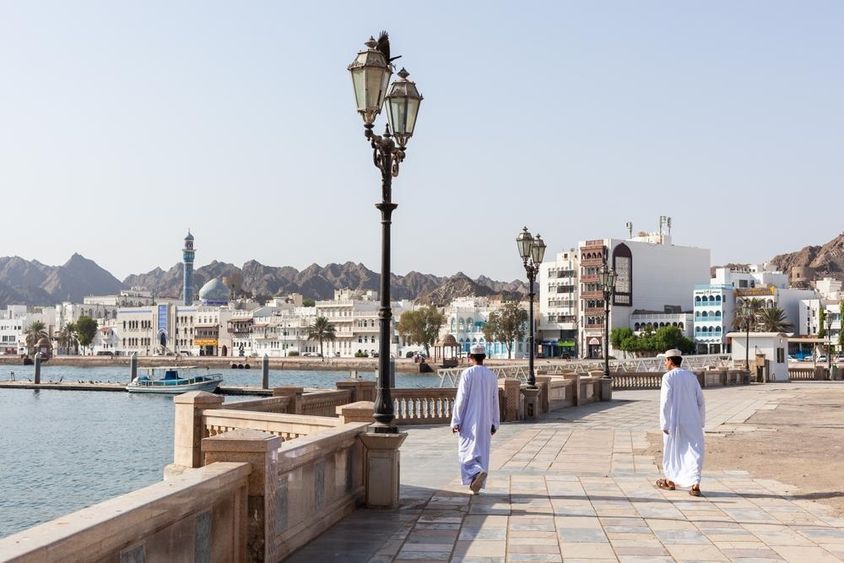
Muscat and its surroundings also offer a variety of programs: seaside, old town areas, mosques, markets, ports, and nearby natural attractions complement each other. For arrivals from the UAE, Muscat is often a central stop on a longer tour, from where wadis, coastal roads, and inland areas are easily accessible.
Omani Hospitality, Which Becomes a Memory
One of the most frequently mentioned parts of traveling in Oman is the hospitality of the locals. Travelers often report receiving help even when they didn’t expect it. Whether it’s directions, technical issues, a flat tire, or simple advice, locals often turn to strangers with natural kindness.
This approach is especially important for car trips. On a longer Omani road trip, one might pass through more sparsely populated areas, stray onto mountain roads, or encounter technical issues due to the heat. In such cases, local help is not only practical but a profound human experience as well. For many UAE travelers, it’s these unexpected encounters that make the journey truly memorable.
What’s Worth Tasting?
Omani cuisine is also part of the experience. Shuwa is one of the most famous festive dishes: a slow-cooked, spice-laden lamb that is traditionally prepared underground. It’s not just a dish but a cultural experience often connected to family and festive occasions.
Omani halwa is likewise a must-try. This sweet prepared with rosewater, saffron, and spices, often served with kahwa, is a symbol of hospitality. Those who enter an Omani home, shop, or traditional setting can easily encounter this pairing.
When Is It Worth Leaving?
From October to March, most Omani destinations offer ideal weather. During this time, the wadis, hikes, city tours, and camping are more comfortable. March and April are special times in the Jabal Al Akhdar area when the rose harvest gives a special atmosphere to the mountain villages. From June to September, Salalah comes to the forefront, as the khareef transforms the southern landscape into greenery.
For UAE residents, Oman is a practical choice because many places are accessible by car. The proximity, diverse scenery, family-friendly programs, and relatively easily organized trip make Oman an almost natural long weekend destination. There’s no need to necessarily board a plane, no complicated route planning, yet travelers are met with an experience that completely takes them away from everyday life.
Why Do They Return Again and Again?
The charm of Oman lies not in a single attraction. It isn’t just the wadis, not just the mountains, not just Salalah, not just the souqs, and not just hospitality that makes it special. The whole experience works together. The car journey, the landscape change, the tranquility, the friendliness of the locals, the simple foods, the closeness to nature, and the rare feeling that one can truly slow down.
This is why UAE residents return again and again. Oman isn’t merely a destination on the map but a kind of counterpoint to city life. After the hustle of Dubai, Abu Dhabi, and Sharjah, Oman offers a quieter, more natural, more human pace. A journey that gives not just images on a phone but memories that last a long time.
For many, an Omani car trip truly changes something. Not necessarily in a big, spectacular way, but in small details: in a morning departure, a mountain view, a wadi's cold water, a cup of kahwa, unexpected help, or in the moment when one realizes that sometimes the best trips don’t start in airports but rather with a fueled car, an open map, and the feeling that it’s finally possible to escape the habitual world.
If you find any errors on this page, please let us know via email.


