Oil Price Surge: Could It Hit $200?
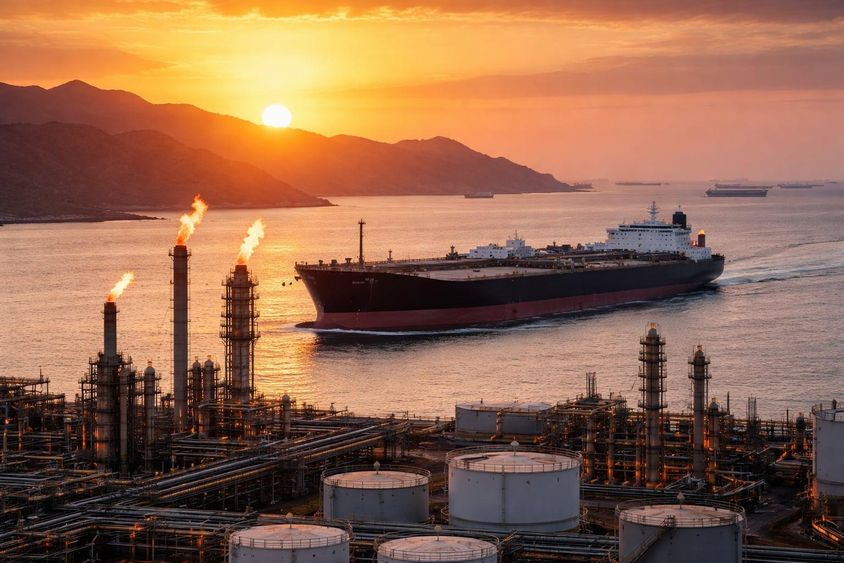
Oil Market Shock: Approaching the $200 Price?
In the energy market, it's rare for investors to price in not just risk but actual supply disruption. Recent events have moved global oil and gas markets in exactly this direction. Coordinated attacks in the Middle East have generated not only geopolitical tension but directly targeted energy infrastructure, elevating uncertainty to a new level.
The market's reaction was swift and clear. The price of US benchmark oil surged above $100 in a short span, while international benchmarks saw substantial jumps. The natural gas market was not left unaffected: European prices suddenly shot up, indicating that one of the most critical pillars of the global energy system is in jeopardy. This is not a usual price movement but a potential sign of a systemic shock.
Energy infrastructure in the crosshairs
The key difference between the current situation and past crises is the change in the nature of the conflict. While previously, political messaging and sanctions shaped the market, direct attacks are now occurring against key facilities. Damage to a major gas field and a globally significant LNG terminal alone is enough to trigger a chain reaction in prices.
This type of physical risk opens up a completely new dimension. When infrastructure becomes a target, it does not just signify temporary disruptions, but also the possibility of prolonged outages. Investors are therefore considering not only what might happen but what is happening right now.
Strait of Hormuz: one of the world's crucial choke points
At the crisis's center is a sea route through which a significant portion of global oil trade passes. If this narrow corridor is even partially disrupted, it would have immediate and drastic effects on supply. A large share of world oil production relies on this route, thus any disturbance here has global consequences.
Market participants are increasingly considering the scenario where shipping starts to falter or may come to a complete stop. In such a situation, prices can rapidly escalate to extreme levels in a short time.
The $200 oil price no longer theory
Some financial institutions are openly discussing the possibility that oil prices could reach the $150–200 range. Previously considered an extreme scenario, it now appears as a realistic possibility in more and more analyses. The key factor is that the current situation is not driven by demand but by a supply shock.
If the extent of the loss reaches several million barrels per day, it's nearly impossible to compensate for it in the short term. Even if there are reserve capacities, mobilizing them is time-consuming, and the logistical and security environment can significantly restrict actual access.
Gas market domino effect
The natural gas market is particularly sensitive to current developments. The damage to a key exporter immediately impacts Europe and Asia. Due to the uncertainty around LNG shipments, buyers are seeking alternative sources, further increasing prices and intensifying competition for available supplies.
This process doesn't occur in isolation. The prices of oil and gas often move together, creating significant inflationary pressure worldwide with concurrent increases.
Global economic consequences
High energy prices directly affect every segment of the economy. Transportation, industrial production, and food supply all react sensitively to energy costs. When oil prices remain high consistently, inflation strengthens, and economic growth slows down.
Regions that are major energy importers are particularly vulnerable. Rising energy costs worsen the trade balance and pressure national currencies. This can trigger a spiral where inflation and economic slowdown occur simultaneously.
Dubai and the region's role
The region, including Dubai's economic environment, plays a key role in the global energy system. Although Dubai is not the largest oil producer, its strategic location and logistical role mean it is directly affected by every regional tension.
Stability in the region has so far been a fundamental factor in the functioning of the global energy market. If this stability is shaken, it not only affects prices but also investor confidence. The longer-term effects could even lead to a realignment of investment decisions.
Market nervousness and volatility
One of the most notable features of the past few days has been extreme price movements. Markets react extremely sensitively to every new piece of news, whether it's another attack or a sign of potential easing. This volatility poses a challenge not only for traders but also for companies and governments that need to adapt to the rapidly changing environment.
Due to the uncertainty, many players choose to wait, further decreasing liquidity and increasing price swings.
On the threshold of a new energy market era
Current events suggest that energy policy and the functioning of the energy market could enter a new era. In previous years, demand, technological development, and regulation were the main drivers. Now, physical security and infrastructure protection have come to the forefront.
This change may remain with us in the long term. Investors, governments, and companies alike will have to rethink their strategies in a world where supply security is no longer a given.
The coming weeks and months will be crucial. If tension persists and supply routes remain jeopardized, the scenario could indeed unfold, which so far was discussed only theoretically: a global energy shock that fundamentally reshapes economic power dynamics.
If you find any errors on this page, please let us know via email.


