New UAE Rules: Life of Workers Transformed
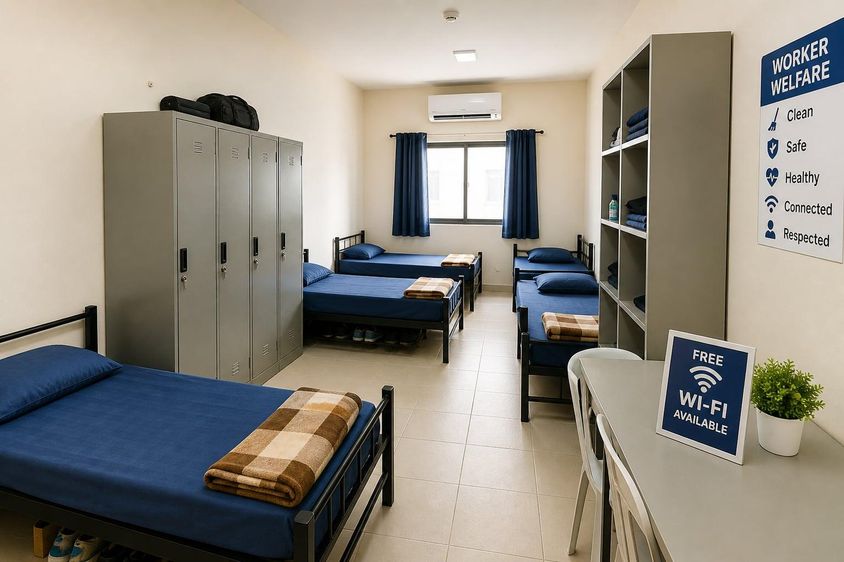
New UAE Labor Accommodation Rules: A Daily Life Shift
In the United Arab Emirates, new regulations have taken worker living conditions to a new level. The fresh guidelines have a clear objective: to provide a safer, cleaner, and more humane environment for those who form one of the economy's vital pillars. This change is particularly important for rapidly developing cities like Dubai, where a significant portion of the workforce resides in collective accommodations.
This regulation is not just a minor adjustment but a comprehensive reform impacting nearly every area of daily life—from internet usage and hygiene standards to healthcare provisions.
Connected at a New Level: Free Internet is Mandatory
One of the most noticeable changes is that free internet must be provided at all labor accommodations. While this initially appears to be a technical detail, it actually signifies a substantial upgrade in quality of life.
For workers employed abroad, staying in touch with family is crucial. Internet access isn't just a communication tool but also provides access to online administration, education, and even financial services. This regulation acknowledges that digital connectivity is now a fundamental need.
Dignified Living Conditions: No More Compromises
The new stipulations clearly define what a room in a labor accommodation must include. The new system unequivocally excludes previously common solutions.
Each worker must have:
Their own bed, eliminating the possibility of sleeping on the floor, individual storage space and a lockable cabinet, clean bedding, and basic furniture.
Moreover, increasing comfort levels is prioritized. Adequate ventilation and air conditioning are mandatory, curtains ensure privacy, while the precise definition of minimal space per person prevents overcrowding.
Another important change is that cooking is prohibited in rooms. This is not to be seen as a restriction but a justified step from hygiene and safety perspectives, reducing the risk of fires and contamination.
Cleanliness and Hygiene: A Daily Expectation
One of the strictest aspects of the new regulations concerns cleanliness. Labor accommodations must be cleaned daily and operate a proper waste management system.
This includes:
Regular waste removal, pest control and extermination programs, and disinfected common areas.
The maintenance of bathrooms, kitchens, and dining areas is also subject to strict regulations. The number of facilities must correspond to the number of residents, avoiding overcrowding and subsequent hygiene issues.
Providing clean drinking water is a fundamental requirement, accompanied by ongoing checks. This is especially crucial in climates where heat and humidity pose increased health risks.
Health and Safety: New Priorities
The regulations place significant emphasis on healthcare and safety. For larger accommodations housing more than a thousand residents, basic services are no longer sufficient.
It has become mandatory to:
Establish first aid rooms, provide isolation rooms for sick residents, and develop epidemic prevention protocols.
In certain cases, 24-hour medical services are required. This is particularly important for the prevention and treatment of infectious diseases, and ensures quick intervention.
Fire safety is also given significant attention. Functional fire alarm systems, clearly marked escape routes, and regular safety checks are mandatory. These are not just regulations, but life-saving measures.
Handling Violations: No More Loopholes
A vital element of the new system is the transparent and strict control mechanism. Authorities categorize infringements clearly and prescribe immediate action for serious issues.
These include, for instance:
Overcrowding, inadequate ventilation, lack of drinking water, fire safety deficiencies.
This framework allows authorities to respond quickly without delay in solving problems. The goal is not punishment but ensuring continuous compliance.
Improvement in Daily Life: Tangible Benefits
The changes are not theoretical but have direct impacts on daily life. Free internet facilitates communication, a clean environment reduces the risk of diseases, and proper resting conditions enhance workers’ performance.
Structured communal areas provide opportunities for relaxation, which is mentally important after a long workday. Thus, the new system improves quality of life not only physically but also psychologically.
Employer Obligations: Responsibility and Monitoring
The regulation makes it clear that the responsibility lies with the employers. Companies must either provide adequate accommodation or offer housing assistance.
Companies employing a large number of lower-income workers face especially stringent requirements. Maintaining accommodations is not a one-off task but a continuous obligation requiring regular checks.
This approach benefits companies in the long term, as satisfied and healthy workers ensure more stable and efficient operations.
Summary: A New Era for Labor Accommodations
The new labor accommodation regulation sends a clear message: economic development cannot be separated from improving human quality of life. With this step, the United Arab Emirates sets an example not just regionally, but also globally.
The measures are particularly significant in hubs like Dubai, where the diversity and population size of the workforce make housing issues of high importance.
The effects of these changes will be felt in the short term, leading to a more stable, healthier, and sustainable work environment in the long run. This direction benefits not only the workers but the entire economy.
Source: Modern Labor Accommodation Interior
If you find any errors on this page, please let us know via email.


