New Rainy Weather Hits the UAE
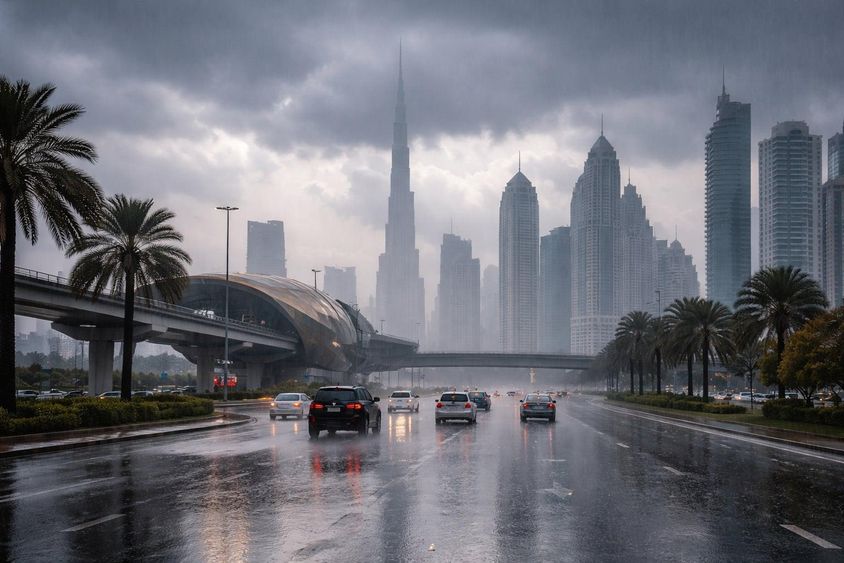
More Rain Expected in UAE with A Shift
Recent weeks in the UAE have been marked by unusually intense rainfall, causing significant disruptions in many places. Roads were submerged, traffic slowed down, and even the traditionally stable infrastructure faced serious strain. Now, a new weather system is approaching, which, although bringing rain again, will be quite different in nature from the earlier ones.
The difference not only lies in the amount of rainfall but also in its distribution and intensity. This change clearly indicates that the weather in the UAE is becoming increasingly unpredictable, especially during transitional periods.
Stabilization Followed by Another Wave
According to the latest forecasts, the rainy system from the previous period has already left the area, and the weather has stabilized for a short period. However, this only signifies temporary calm.
In the coming days, a weaker system is expected to bring more rain. An important distinction is that this system contains much less moisture, thus not as much precipitation is expected as was experienced earlier. This is more of a "fade-out" of the previous weather cycle, rather than the start of another extreme event.
When to Expect Rain?
According to current forecasts, rain could occur in various parts of the UAE on March 31 and April 1. Cloud cover will increase periodically, and light to moderate precipitation may develop sporadically.
This means it is not a uniform, nationwide rainfall but rather local phenomena. Some areas might receive rain, while other regions could remain completely dry.
This is particularly important for everyday life, as past experiences show that many tend to interpret a single forecast as a national event, when in fact, it is only about scattered showers.
Where Will Most Rain Be Expected?
Forecasts suggest that mainly the inner, southern regions have a higher likelihood of precipitation. Areas around Al Ain and the country's inner, more desertous parts could be particularly affected.
This is no coincidence, as these areas are more sensitive to such types of weather systems. The orographic conditions and atmospheric movements here more easily lead to cloud formation and precipitation.
On the contrary, coastal cities like Dubai are likely to see only temporary cloudiness and milder showers.
Temperature Drop and Pleasant Weather
The most noticeable change may not be the rain itself, but the drop in temperature. A particularly marked cooling is expected in the western regions, lasting several days.
This could be a particularly pleasant change for many, especially those accustomed to rapidly rising temperatures. Such cool periods are rare during the spring, so it's worth seizing this transitional, milder period.
In Dubai, this change can be especially noticeable since the city generally feels a temperature rise faster than other parts of the country.
Wind, Dust, and Reduced Visibility
While rain won't be extreme, the strengthening wind could have a more serious impact on daily life. Wind gusts could reach speeds of 40–45 km/h, causing dust clouds in desert areas.
This could be especially dangerous for drivers, as visibility could significantly decrease. In such situations, driving requires heightened attention, even if the rain itself does not pose a serious obstacle.
The combination of dust and wind often causes bigger problems than the precipitation itself, especially in open, less built-up areas.
Sea Conditions and Coastal Effects
Sea conditions might also deteriorate under the influence of the weather system. In the Arabian Gulf region, the water surface could become highly turbulent, impacting shipping and marine traffic.
This is particularly important for those who regularly use sea routes or plan water sports. For coastal residents, it is more of a temporary change, but it could have more serious consequences in open waters.
Should There Be Concern?
According to authorities, there is currently no cause for particular concern. The impending weather system is weaker, and no precipitation or extreme events on the scale of earlier ones are expected.
However, this does not mean that the changes can be completely ignored. The weather can change rapidly, and local phenomena – such as an isolated intense shower – can cause inconveniences in a short time.
The most important thing is awareness: it is advisable to keep an eye on current forecasts and plan daily activities accordingly.
What Happens After the Rain?
According to forecasts, dry weather is expected to resume from April 2, but the cooler air will persist. This could bring a more stable, balanced period, after which warmer weather is expected to gradually return.
An interesting phenomenon could be the formation of morning mist and fog, especially in coastal and inner areas. This could also affect traffic, particularly in the early hours.
The New Face of Weather in UAE
The events of recent periods have clearly shown that the UAE's weather is changing. Previously rare rainfalls are becoming more frequent, and although most are not extreme, they still bring new challenges.
Dubai and the rest of the country have entered a period where the weather can no longer be considered entirely predictable. This doesn’t necessarily pose a problem, but it requires adaptation.
The coming days will serve as a good example of this: it's not about extreme events, but about a subtle yet noticeable change. A period where rain, wind, and temperature together shape the everyday life.
And while this system will be weaker than the previous one, it still serves as a reminder that the UAE's weather is no longer what it used to be.
img_alt: Rainy day on Dubai streets
If you find any errors on this page, please let us know via email.