Navigating Air Restrictions: UAE Residents Stranded
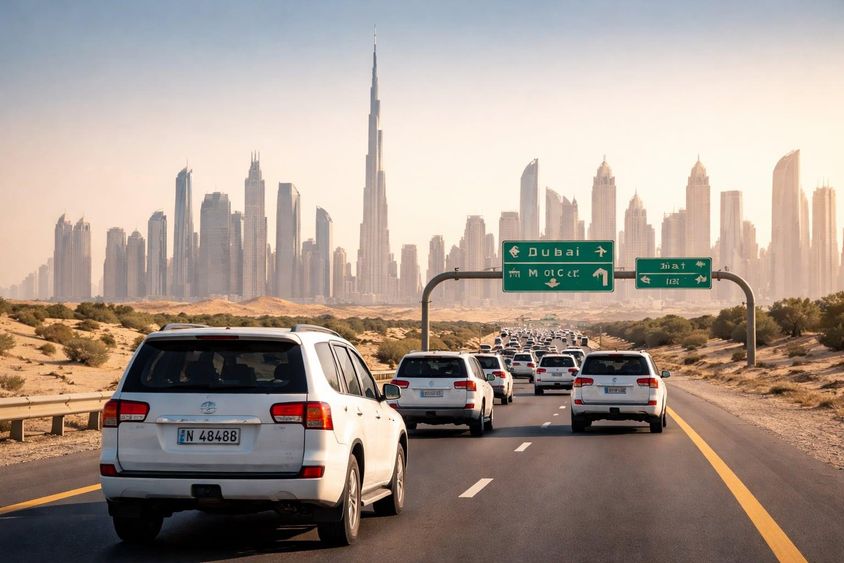
Land Routes and Organized Return: How UAE Residents Get Back to Dubai Amid Air Restrictions
When Air Travel is Disrupted
In the modern world of travel, flights are a familiar and rapid connection between continents and countries. However, when airspace is restricted due to geopolitical tensions or security measures, ordinary travel routes can disappear in an instant. In such situations, travelers and residents of the region are forced to seek alternative solutions to reach their destinations or return home.
Recent regional tensions have led to several air travel restrictions in the Middle East. This has created a particularly difficult situation for UAE residents who were overseas at the time. For them, returning home no longer simply means buying a flight ticket; it involves a complex logistical process that often spans several countries.
Unexpectedly Prolonged Journeys
Many travelers initially planned only short visits to their families or for business meetings. However, the situation quickly changed as conflict in the region intensified and certain airspaces were closed or restricted.
In such circumstances, a short trip of a few days can easily become weeks of uncertainty. Travelers suddenly find themselves facing canceled return trips, and the usual flights are no longer available. In these situations, the key question becomes: what alternative route can be taken to get home?
Dubai holds a special place for residents of the region, as it represents home, work, and the center of life for many expatriates. When returning becomes uncertain, it suddenly becomes clear to people how important this city and the established life there are to them.
The First Step is Always Information
In crisis situations like these, the initial reaction is often not to organize an immediate evacuation. Rather, gathering information takes precedence. People try to understand what's happening in the region, which routes are operational, and what options are available.
Companies and international organizations often employ specialized security teams to continuously monitor the situation. These teams help assess the circumstances and advise whether it is worth starting out immediately or if it would be safer to wait.
In many cases, travelers first want to know if their current location is safe and when a potential opportunity for further travel might open up.
The Value of Land Routes
When air travel is unavailable or restricted, attention turns to land routes. In the Middle East, road connections between countries are often well-developed, permitting alternative transportation.
In practice, this means travelers first reach a neighboring country by car or organized convoy, and continue their journey by plane from there. This method is much more complex than a direct flight, but in a crisis, it is often the only viable solution.
One of the most frequently used routes is between Dubai and Oman, especially through the Hatta border crossing. From there, travelers can reach airports like Muscat, from where more international flights are accessible.
The Role of Regional Hubs
In such situations, certain cities become key components in the travel chain. Muscat, Riyadh, or Dammam can become regional transport hubs where travelers temporarily stop before continuing their flight.
In these cities, demand for accommodation, transportation services, and flight tickets increases. Travelers often spend several days here while finding suitable flights to their final destination.
These transit stations are extremely important logistically since they allow stranded individuals to gradually return to their homes.
The Complex Process of Organized Return
Organizing such a journey is much more than simple transportation. A detailed plan is carried out in the background, taking numerous factors into account.
The process usually starts with compiling a list of travelers, followed by checking passports and visas. This is particularly important as different rules often apply to land border crossings.
Next is organizing road transportation, coordinating border crossings, booking accommodations in transit cities, and securing onward travel.
Communication also plays a key role. Travelers need continuous information about when the convoy departs, what documents are required, and what rules apply at the given border crossing.
When the Best Decision is to Wait
Not everyone can begin their journey immediately. In some cases, experts advise travelers to remain where they are until the situation stabilizes.
This is especially true when border crossings are overcrowded, or the safety of routes is uncertain. During these times, continuous information and following official updates are crucial.
Such periods can be nerve-wracking for travelers as no one knows exactly when the next opportunity to return home will arise.
Dubai as the Final Destination
These crisis situations also highlight one important aspect: for many expatriates, Dubai is not just a workplace or a temporary residence, but a real home.
When people work through numerous countries, travel land routes, and transit airports to get back, they are ultimately headed toward their home.
This experience reinforces the sentiment for many that the UAE, and particularly Dubai, is a stable and safe base in the region. Due to the city's economic opportunities, international community, and modern infrastructure, many plan to stay long-term here.
A New Travel Reality
The current situation also sheds light on how vulnerable global mobility can be. A single geopolitical event can be enough to upend regular travel systems.
At the same time, it shows how quickly the international community can adapt. Alternative routes, land corridors, and organized support all demonstrate that solutions exist even in the most difficult circumstances.
For those who are currently navigating long and complicated journeys to get back to Dubai, every mile brings them closer to a place they call home.
If you find any errors on this page, please let us know via email.