Musaffah's New Parking System Sparks Debate
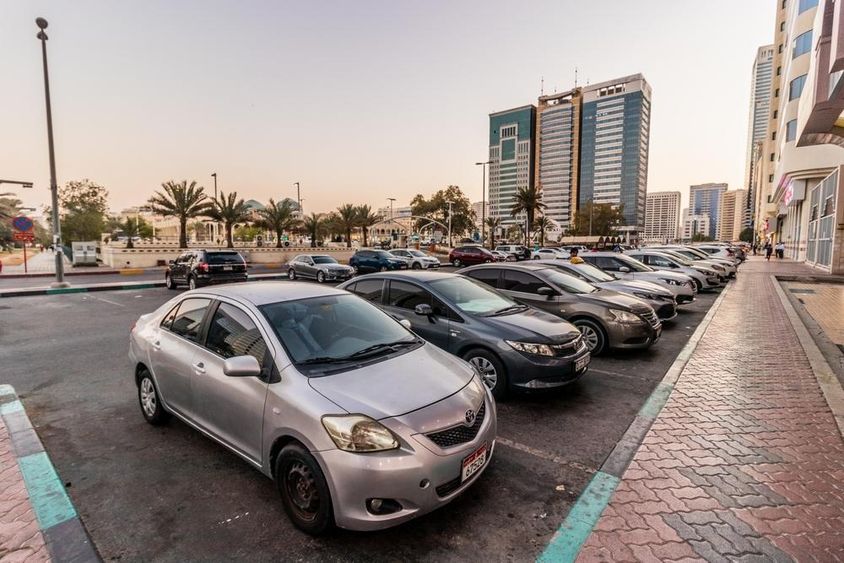
New Parking System in Musaffah: Organization or Added Cost?
In recent years, Abu Dhabi has been increasingly restructuring its transportation and urban infrastructure, especially in high-traffic industrial and commercial zones. The latest step in this process is the introduction of a new paid parking system in the Musaffah area, which will take effect from April 20th. The decision is unsurprising, as the region is one of the busiest business centers where the scarcity of parking spaces has long been a major issue.
However, the change does not merely involve the introduction of a new fee, but is part of a broader strategy aimed at increasing transportation efficiency, reducing chaos, and supporting economic operations.
The Reality of an Overloaded Industrial Hub
Musaffah is not a classic residential neighborhood but a heavily functioning industrial and commercial area. Every day, thousands of workers, delivery vehicles, and visitors arrive, placing continuous pressure on the traffic infrastructure.
Parking has become a particularly critical point. In recent times, violations in parking rules, double parking, and situations where vehicles obstruct traffic or entrances have become increasingly common. This not only causes inconvenience but has a direct impact on economic operations as well.
In such an environment, parking is no longer just a matter of convenience but a logistical and business factor.
The Logic of Introducing a Paid System
The basis of the new parking system is simple: the use of standard parking spaces is tied to a fee of 2 dirhams per hour. Payment can be made in various ways, including digital applications, SMS, and on-site machines.
This model is not new in the region, but in the case of Musaffah, it is particularly important because the goal is not to maximize revenue but to regulate use. One of the most important impacts of paid parking is that it eliminates the problem of long-occupied, "occupied" parking spaces.
When parking has a price, drivers are more likely to use the spots for a shorter time, increasing turnover and making the same infrastructure more accessible to more people.
Sectoral and Gradual Introduction
This step is the second phase of a program launched in early 2026. The new system affects more than ten thousand parking spaces spread across various sectors. This gradual approach is no accident.
A change of this magnitude only works effectively if users can gradually adapt to it. Based on the experiences of previous phases, the system is fine-tuned so that the current implementation builds on a more mature model.
Special attention is also given to providing dedicated parking spaces for users with special needs, an increasingly important element of urban planning.
Related Developments and Expansions
The parking reform is not happening in isolation. In recent months, several significant developments have taken place in the area. Thousands of new parking spaces have been created, including multi-story parking garages that significantly increase capacity.
These investments show that decision-makers not only want to limit parking, but also offer alternatives. This is crucial because a well-functioning system does not punish, but directs and creates opportunities.
Optimizing parking and transportation is closely linked to economic performance. If an area is easier to park in, movement is faster, and logistics are more predictable, it directly increases business efficiency.
Impact on Day-to-Day Operations
The introduction of the new system will undoubtedly require adaptation in the short term. Workers, businesses, and visitors will need to change their habits. This may initially provoke resistance, particularly among those who have been using public spaces for free.
In the longer term, however, the effects may clearly point in a positive direction. More organized parking reduces congestion, speeds up traffic, and creates a more predictable environment.
This is especially important in an area where time and efficiency are directly measured in financial results.
Role of Digital Solutions
A key element of modern parking systems is digitization. The fact that payment is available through multiple channels significantly eases usage.
The applications not only offer a payment option but can also provide real-time information on available spaces, further reducing search time. This is particularly important in a crowded industrial environment where every minute counts.
Digital integration also means that the system can later be expanded and fine-tuned based on data-driven decisions.
Part of the Transportation Strategy
The parking reform is not an isolated measure but part of an overall transportation strategy. The goal is to create an urban environment where traffic is continuous, rules are clear, and infrastructure supports economic growth.
In this context, paid parking is not seen as a burden but as a tool. A tool that helps eliminate chaos and create a more structured operation.
What Does This Mean for the Future?
This current step is likely not the last. The trend is clear: in high-traffic areas, regulated, paid systems are increasingly replacing previous, less controlled solutions.
This is especially true in rapidly evolving urban environments like Abu Dhabi, where the pace of growth requires continuous adaptation.
Musaffah's example clearly shows that the issue of parking goes beyond itself. It is not just about where a car stops, but about how an entire urban system operates.
Summary
The introduction of the new parking system in Musaffah is a necessary response to a long-standing problem. Although it may bring challenges in the short term, in the longer term, it can result in a more organized, efficient, and sustainable transportation environment.
The question is not whether such measures are needed, but how quickly and efficiently users can adapt to them.
The future of urban transportation is clearly heading towards regulation, digitization, and conscious planning. Musaffah has now reached an important station on this journey.
If you find any errors on this page, please let us know via email.


