Midnight Missile Alarm: City’s Immediate Reaction
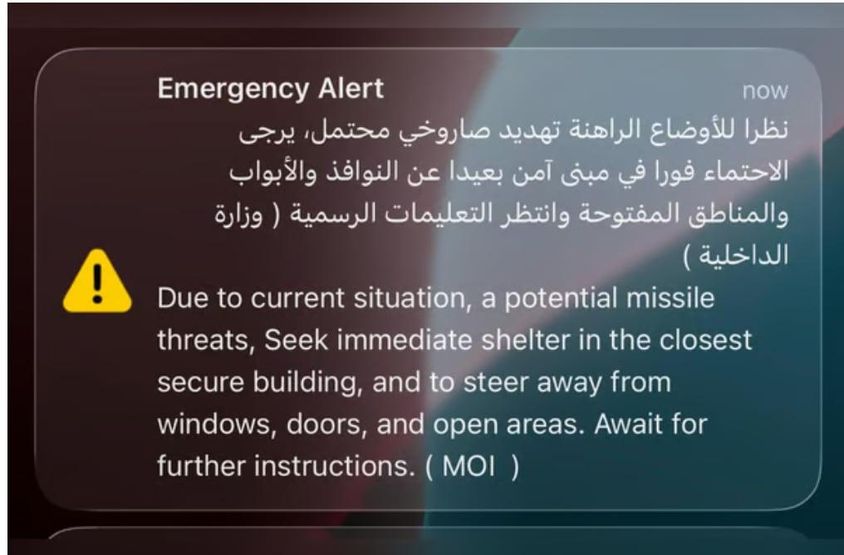
Emergency Phone Alert after Midnight: How a City Responds to Missile Threat?
The Moment the Phone Rings
It is 12:30 AM. The city is asleep, most lights are out, and the streets are quiet. Then suddenly, the phone rings. It’s not a message or a call, but a sharp, unusual alert sound. A short, concise text appears on the screen: emergency alert. According to the notification, there is a possible missile threat due to the current situation, and one should immediately find shelter in the nearest safe building. People should stay away from windows, doors, and open areas, and wait for further instructions.
Such a message is not merely information. It transforms the perception of reality in an instant. What was a typical night just seconds before suddenly becomes a potential danger zone. People sit up in bed, look around, try to process the text, and make a decision: what to do instantly?
The Role of Digital Alert Systems
Behind these types of notifications is a complex technological and security infrastructure. Modern cities, especially in strategically important regions, employ advanced mobile alert systems capable of delivering information to millions of devices in seconds. This is not a traditional SMS but a so-called cell-based alert that reaches every active device in a specific geographical area.
In the case of Dubai, this is particularly crucial as the city is not only an economic and tourist hub but also a regional logistics and financial center. In such a place, fast, centralized communication can be life-saving. The goal is not to incite panic but to provide immediate, clear action instructions.
The alert text is intentionally short. It contains no detailed explanation, no background information. In such a scenario, clarity and speed are of the essence. Seek shelter. Stay away from windows. Wait for further instructions.
The Psychological Impact
The psychological burden of a midnight alert is significant. The human brain operates differently at night. Awoken from semi-sleep, the sense of danger can be much more intense than during the day. The combination of uncertainty, lack of information, and unknown outcome can easily trigger anxiety.
Nevertheless, it is also observed that in societies where residents regularly receive information about safety protocols, reactions are more disciplined. People know where they need to go, what to do, and what not to do. Preparedness reduces the likelihood of chaos.
Dubai has emphasized risk management and crisis communication significantly in recent years. The city's infrastructure, modern building structures, and central control all aim to minimize damage and injury in the event of a threat.
What Does a 'Safe Building' Mean?
One key sentence in the alert states to immediately go to the nearest safe building. But what does this mean in practice?
In a modern metropolis, most residential and office buildings have reinforced concrete structures that offer a level of protection against external impacts. Indoor, windowless rooms—such as bathrooms, corridors, stairwells—generally provide more protection than living rooms with panoramic windows or balconies.
The instruction to 'stay away from windows' is particularly important because a blast wave from an explosion can easily shatter glass surfaces, and shards can cause serious injuries. Abiding by such basic safety rules can significantly reduce risk.
City Operations in Such Times
When such an alert is activated, multi-level coordination begins in the background. Airspace monitoring systems, defense units, emergency services, and communication centers work simultaneously. The aim is twofold: managing the threat and continuously informing the public.
For Dubai, the technological background is exceptionally advanced. The city’s intelligent systems can process real-time data and integrate it into decision-making processes. This means that the alert does not stand alone but is part of a complex security chain.
For the public, however, this is mostly seen as a message appearing on their phone. The rest happens in the background—quickly, orderly, unnoticed.
Community Reactions
Following such events, social media platforms quickly fill with questions and experiences. Who heard an explosion? Did anyone see a trail of light in the sky? Was it a real threat or a precautionary alert?
This digital dialogue can help as well as harm. It can assist because people share information and reduce uncertainty. However, unverified rumors can also incite panic.
Therefore, it is crucial for everyone to rely on official channels and wait for further instructions. The alert text also refers to this: wait for further information. This requires discipline and patience, but in crisis situations, this is the safest behavior.
A City's Resilience
One of the most important characteristics of modern metropolises is resilience, or the ability to adapt. It is not a question of whether an unexpected event can happen, but how the system and society react to it.
In recent decades, Dubai has repeatedly proven its ability to quickly adapt to changing circumstances—be it economic challenges, global crises, or regional tensions. The digital alert system is part of this preparedness.
A notification arriving at 12:30 AM can be a startling experience, but it also indicates that the system works. It monitors, senses, and communicates in time.
The Importance of Calmness
In such situations, the most crucial factor is calmness. The alert's purpose is not to heighten fear but to prevent. Immediate shelter seeking, staying away from windows, and waiting for further instructions are all steps that serve personal safety.
When the next notification arrives—whether about the threat being gone or further measures—the city slowly returns to normalcy. The night's silence may no longer be the same as before, but the experience strengthens the communal awareness: a modern city is not just shiny skyscrapers and luxury projects, but also an invisible safety net that activates immediately when necessary.
The midnight alert is a reminder that stability is not a self-evident state but a continuously maintained balance. In maintaining this balance, technology, organization, and the disciplined cooperation of the population play key roles.
If you find any errors on this page, please let us know via email.


