Historic Launch: Tickets Vanish for UAE's New Train
Historic Launch: Tickets Vanish for UAE's New Train
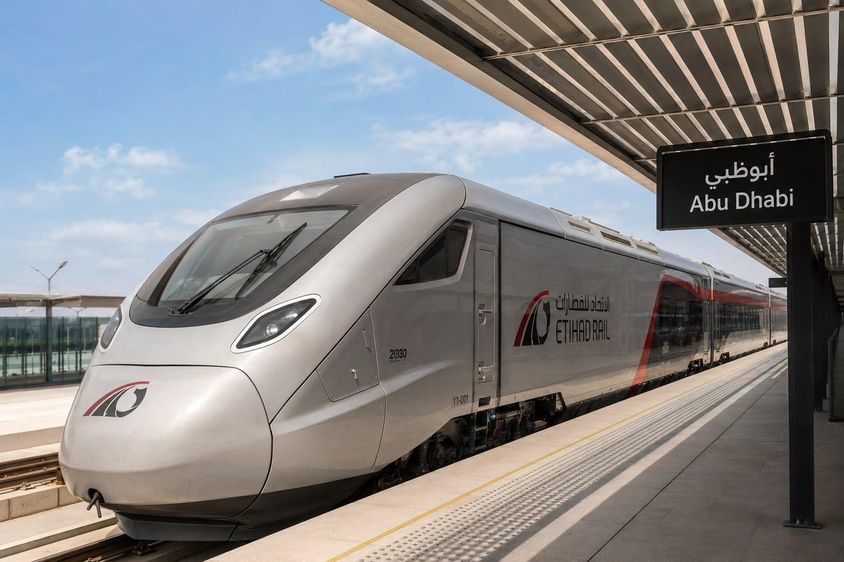
One of the most significant moments in the history of UAE transportation is approaching: on June 30, the introductory phase of Etihad Rail's passenger service between Abu Dhabi and Fujairah begins. Just one day after the announcement, a significant portion of tickets for the first trains have already been sold out, highlighting how long the country's residents have anticipated a travel option that includes trains, in addition to cars, buses, or airplanes, for longer distances between the emirates.
The Etihad Rail project has been one of the UAE's most exciting infrastructural developments for years. The goal of the railway network is not simply to provide a new transportation option for passengers, but also to long-term connect the country's most important cities, industrial centers, ports, and logistic areas. However, the focus is now on the commencement of passenger services rather than freight, which for many will mean their first-ever train journey within the UAE.
The first passenger traffic section begins on June 30
In the introductory phase, Etihad Rail will launch passenger trains between Abu Dhabi and Fujairah. The route is particularly interesting because it connects two regions with very different vibes: the politically and economically significant capital region and Fujairah, one of the most important emirates on the eastern coast. This connection could be attractive not only from a tourism perspective but also in terms of everyday transportation, business trips, and family visits.
The launch of passenger services marks a significant milestone, as railway in the UAE has been primarily known in the public consciousness as a freight and strategic logistics development. The current launch, however, directly impacts residents and travelers. Anyone buying a ticket for the early days doesn't just try out a transport service but becomes part of the moment when the country's passenger railway truly begins.
Tickets selling out almost immediately
Following the opening of ticket sales, the interest was immediately apparent. Reports indicate several trains for the first two days quickly filled up, especially those departing from Abu Dhabi. On June 30, both available classes for the 8:19 AM and 1:53 PM departures from Abu Dhabi station have sold out. Limited seats are left for the 6:39 PM evening departure.
This is remarkable because June 30 falls on a weekday, where typically lower interest might be expected, but the novelty factor has outweighed everything. For the first passengers, the train journey will not just be practical transportation but also an experience and a memory. Many residents of the UAE have been following the progress of Etihad Rail for a long time, so it's understandable that many want to be on board on the first day.
Strong interest from Fujairah as well
Tickets are selling quickly not only from the Abu Dhabi direction. Three trains depart from Fujairah daily: at 5:34 AM, 10:59 AM, and 5:58 PM. For the 10:59 AM departure on June 30, both classes have sold out, with limited seats remaining on the morning and afternoon trains.
This shows that residents of the eastern coast are also eagerly looking forward to the new opportunity. Fujairah holds a unique position on the UAE map: geographically located further from the central areas of Dubai and Abu Dhabi, yet it's an important port city, tourist destination, and residential area. A convenient rail connection can significantly improve its accessibility for those regularly traveling between the two regions.
Introductory price: Tickets from 55 dirhams
During the initial period, tickets are available at an introductory price starting at 55 dirhams. This price can be particularly appealing for those who want to try the new service without paying a high amount for a first journey. The system offers three fare packages: Saver, Value, and Flex. Saver is the lowest-priced option, Value is available for an additional 10 dirhams, and Flex for an extra 20 dirhams.
These three fare packages are expected to offer varying flexibility to passengers. The lowest-priced ticket might suit those confident in their departure time, while the more flexible options might appeal to those with changing travel plans. This model fits well with modern transportation services, where passengers don't just buy a seat but certain levels of comfort and flexibility as well.
These prices are only valid for a limited time. Therefore, those wishing to travel during the introductory period should book their places in advance. Tickets can be purchased up to four weeks prior to travel via the Etihad Rail website or mobile application.
Finding a ticket on weekends may be even harder
The first weekend promises to be particularly sought after. On Saturday, July 4, two trains operate the route from Abu Dhabi: one at 8:19 AM and another at 6:39 PM. Seats for the morning train have already sold out, and a similar situation exists for trains heading in the opposite direction from Fujairah to Abu Dhabi.
This isn't surprising, as traveling on the weekend is more convenient for many than on weekdays. Families, groups of friends, and curious residents are more likely to try out the new train when they don't have to rush to work or school. The first weekend is therefore expected to not only be a transportation event but also a community experience.
Therefore, anyone who wishes to travel by train during the first days or the first weekend shouldn't delay booking. Given the interest, popular times may fill up quickly, especially the more convenient departure times.
Choice between Comfort and Premium class
Passengers can choose between two classes: Comfort and Premium. Comfort is expected to offer a general comfortable travel experience, while Premium might provide a higher level of comfort for those seeking a more special experience. Data for the first days indicate strong interest in both categories, with several trains fully booked across both classes.
This is also an important signal for Etihad Rail. Passengers are not just seeking the cheapest option; many are willing to choose a higher category if the travel experience is more special. For the first passenger trains, this is understandable: many see the journey as a memorable occasion, not simply a transportation task.
A new era in UAE transportation
The launch of Etihad Rail's passenger services represents more than a new schedule. It marks the start of a new era in UAE transportation. The country is already known for its modern highways, airports, metro services, and urban infrastructure, particularly in Dubai. However, intercity passenger rail in the country has been a missing element.
In the long run, the railway can offer several advantages. It can reduce the burden of car traffic, provide a convenient alternative for longer domestic trips, and offer a more sustainable transport option. Additionally, train travel is a more relaxed form of commuting for many: no need to drive, park, and travelers can rest, work, or simply enjoy the scenery along the way.
The route between Abu Dhabi and Fujairah can also provide a scenic experience. While the UAE is primarily associated with modern cityscapes, skyscrapers, and highways, its eastern part is more mountainous, nature-oriented, and has a completely different atmosphere. A train journey through this region can showcase the country from a new perspective.
Why is this important for residents?
For UAE residents, Etihad Rail is not just a tourist attraction. It could play a significant role in everyday life if the network gradually expands and connects more cities. Many people in the country live in one emirate but work, study, or conduct business in another. Currently, this often means driving, which can be tiring and time-consuming during peak times.
The railway can provide more predictable travel times, more comfortable commuting, and a new kind of mobility. It can be especially crucial for those not driving, those who don't want to maintain a car, or those simply seeking alternative options. A well-organized, modern rail service can be appealing to younger generations, families, older passengers, and tourists.
The rapid selling out of tickets signals that the demand is real. People are not only curious but genuinely want to use the system. This provides a good foundation for further expansion, as the success of a new transportation service is ultimately determined by passenger interest and regular use.
How to book tickets?
Tickets can be booked via the Etihad Rail website and mobile application. Passengers can choose their departure time, class, and fare package up to four weeks before travel. Given the current interest, it is advised to think flexibly: those who don't find a seat at the most popular times should consider another time of day or an alternative day.
In the first days, it's particularly important for passengers to check schedules, booking conditions, and station information in advance. As it’s a new service, many will be using the system for the first time, so it's advisable to arrive early, pay attention to passenger information, and not leave departure preparations to the last minute.
The first step of a national dream
The launch of Etihad Rail's passenger trains between Abu Dhabi and Fujairah is not just the opening of a new route. It's an indication that UAE transportation is taking a new step forward. The railway simultaneously represents modernization, sustainability, comfort, and connectivity within the country.
The fact that tickets for the first trains are selling out quickly shows that people are ready for this change. Many want to be among the first passengers because they feel it's a historic moment. Passengers on the first trains will not only be traveling between Abu Dhabi and Fujairah, but they will also be entering the first chapter of a new transport era.
The coming weeks will show how the public receives the service in practice, but the pre-launch interest is already a strong indication. Etihad Rail's passenger service is a spectacular, tangible result of one of the UAE's largest transportation developments, which could fundamentally change how we think about domestic travel in the long run.
If you find any errors on this page, please let us know via email.


