Hidden Worlds: New Spider Species Discovered
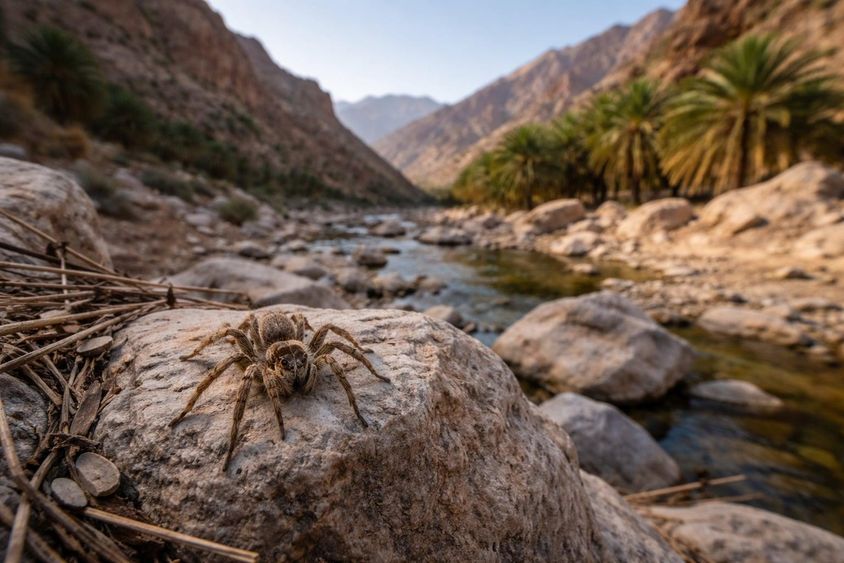
New Spider Species Discovered in Sharjah: Hidden Worlds Beyond the Desert
When thinking about the United Arab Emirates, many people immediately picture modern cities, skyscrapers, and luxurious lifestyles. This is especially true for Dubai, which has become a global symbol of innovation and economic development. However, there's another, less known side to the region: its rich and diverse wildlife, which still holds many undiscovered secrets. One recent example of this is the scientific breakthrough involving the identification of four new spider species in the Sharjah area.
The Significance of the Discovery in the Modern World
In the era of advanced technology, it's easy to assume that our planet is fully explored. However, reality paints a different picture. Nature still holds surprises, particularly in regions where extreme environmental conditions make research more challenging. The United Arab Emirates is such a place: deserts, mountains, and valleys alternate, and the climate is extreme.
In this environment, four previously unknown spider species were discovered, two of which were given special names. One is named after the Hajar Mountains, and the other expresses respect for the country. This has not only scientific but also symbolic significance, highlighting that the region's natural heritage is as crucial as its economic development.
Where Were the New Species Found?
The discoveries were made in various locations, which further emphasizes the richness of the biological diversity in the area. Researchers conducted studies in mountainous and valley ecosystems, identifying several key areas.
Two new species were found in the area known as Wadi Shees, while another was discovered near Wadi Al Helo. The fourth species was found in the Masafi region. These sites may not be the most well-known tourist destinations, but they play a crucial role in preserving natural wildlife.
This creates an interesting contrast with other parts of the region, such as the urban environment of Dubai, where urbanization prevails. The difference between these two worlds shows just how diverse the country is.
International Scientific Collaboration
The research was not the effort of a single country but was achieved through international collaboration, involving researchers across several continents. Such cooperation is increasingly important in modern science, particularly in fields like biodiversity research.
The results were published in a prestigious scientific journal, further enhancing the significance of the discovery. Such publications are important not only for the scientific community but also help direct the broader public's attention toward the importance of nature conservation.
Why Is Discovering New Species Important?
One might ask why identifying a few new spider species is such a breakthrough. The answer is complex but fundamentally lies in understanding natural systems.
Each new species is another piece of the puzzle describing how ecosystems operate. Spiders play an especially important role in regulating insect populations, thereby indirectly impacting the balance of the entire environment.
Discovering a new species can help better understand how a particular habitat works and how it responds to environmental changes. This is particularly crucial in a region where climate change and urbanization significantly impact nature.
Conservation and Sustainability
The discovery is significant not only scientifically but also from a conservation perspective. Documenting new species allows for more targeted protective measures to be developed.
The United Arab Emirates is increasingly emphasizing sustainability and the conservation of environmental resources. This effort aligns well with the global trend of balancing economic development with environmental protection.
In this context, the research conducted in Sharjah is not an isolated event but part of a longer-term strategy. The goal is for the region's natural values not only to be preserved but also actively contribute to scientific advancement.
Hidden Potential in the Desert
Many tend to underestimate the biological diversity of desert and semi-desert areas. The reality, however, is that these ecosystems are extremely complex and adaptable.
The discovery of new spider species supports this. Species living in desert environments often possess unique survival strategies that enable them to thrive in extreme conditions.
This adaptability is interesting not only from a biological perspective but can also provide technological inspiration in the future. In fields like biomimicry, ideas are often drawn from nature.
Future Research and Opportunities
The recent discovery is likely just the beginning. According to researchers, many unknown species may still be hiding in the UAE, especially in less explored regions.
Ongoing research and the application of modern technologies open new opportunities for science. Genetic analyses, drone surveys, and data-driven research can all contribute to gaining a more accurate picture of the region's wildlife.
This process is important not only for the scientific community but creates value for society as a whole in the long run.
Balancing Development and Nature
The United Arab Emirates holds a unique position: it is one of the fastest-developing regions in the world while also possessing significant natural values. The challenge is to harmonize these two factors.
The example of Dubai shows the direction of modern urban development and innovation. However, research in Sharjah serves as a reminder that the preservation of nature is just as important.
The key to the future could be to ensure that development does not occur at the expense of nature but rather alongside it, with respect for the natural environment. The discovery of new species is not only a scientific success but also a warning: there are still many things to discover and preserve.
Summary
The discovery of four new spider species in Sharjah aptly demonstrates that the world is far from being fully explored. The United Arab Emirates is not only an economic and technological center but also a region where nature still hides many secrets.
This realization can offer a new perspective on how we view the region. It's worth paying attention not only for the modern cities and luxurious lifestyles but also for its unique natural values.
In the future, we can expect more similar discoveries to come to light, further enriching our scientific knowledge and helping us better understand the world around us.
If you find any errors on this page, please let us know via email.


