Hessa Street Transformed: Dubai's Traffic Revolution
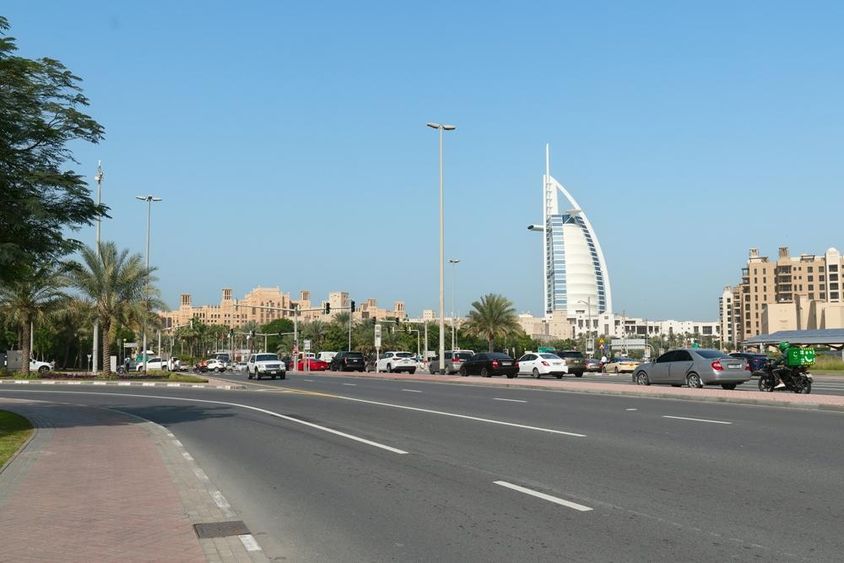
Faster Commutes, New Era: Hessa Street in Dubai Fully Transformed
The End of Everyday Traffic Jams
For a long time, one of Dubai's busiest traffic arteries posed a significant challenge for drivers. For many, the name Hessa Street was synonymous with congestion, unpredictable travel times, and daily stress. In recent years, the city's development, the emergence of new residential districts, and the growing population have placed increasing pressure on the road network, especially on crucial sections like this one.
However, a significant turnaround has occurred. The opening of the completely renovated and expanded Hessa Street marks an infrastructural development that fundamentally changes transportation in this area. For drivers, the former 15-minute travel time has been reduced to just 4 minutes, which means not only time savings but also an improvement in quality of life.
A Strategic Route in a New Role
Hessa Street is not just an average city road. It is one of the most critical connecting corridors in Dubai, linking multiple key areas. Residential zones like Al Barsha, Al Sufouh 2, or the Jumeirah Village Circle are directly connected to this route, thus the development impacts the daily lives of hundreds of thousands.
One of the project's most important outcomes is the drastic increase in capacity. The road previously accommodated about 8,000 vehicles per direction per hour, and this number has now doubled to 16,000 vehicles. This is not just a significant numerical advancement but is also palpable in practice: less congestion, smoother traffic flow, and more predictable transportation.
Technical Developments Behind the Scenes
Behind the spectacular results lies extensive engineering work. Significant expansions have been made along the entire length of the road, with four lanes available in all directions. A crucial aspect of the development was the complete redesign and reconstruction of key junctions.
For example, at the intersection of Sheikh Zayed Road and Hessa Street, a dual-lane overpass was constructed, providing a direct connection from one of the busiest highways to the city road. This solution not only speeds up but also makes transportation safer by reducing the number of intersecting traffic points.
Similar developments occurred at the intersections of First Al Khail Street and Al Asayel Street, where bridges were widened or new parallel structures were built. At the Al Khail Road junction, new ramps and exits ensure seamless passage, especially in high-traffic directions.
Urban Growth and Infrastructure Hand in Hand
Dubai's growth over the past decades has been exemplary, yet this growth also brings continuous challenges. The development of Hessa Street illustrates how the city responds to these challenges: with proactive planning and long-term strategy.
The number of residents in the affected areas will continue to grow in the coming years, likely exceeding 640,000. Serving such a population is unimaginable without appropriate infrastructure. The current investment not only addresses existing issues but also prepares the city for future needs.
The Second Phase: Even Greater Scale
However, the project does not stop here. The second phase of development has already begun, further expanding Hessa Street's capacity. This phase extends about 3 kilometers and includes new bridges and a tunnel.
The new infrastructure means more than 8,800 meters of bridge structures and nearly half a kilometer of tunnel, making traffic flow even more efficient. For the hundreds of thousands of residents in the affected areas, this will bring significant relief.
The goal is clear: to double capacity and drastically reduce travel time. Plans suggest the current 24-minute journey could be shortened to just 5 minutes, elevating urban mobility to a new level.
What Does This Mean for Daily Life?
Such developments have effects that go far beyond transportation. Shorter travel times mean more free time, reduced stress, and improved quality of life. From an economic standpoint, these improvements also come with substantial benefits: faster deliveries, more efficient logistics, and better accessibility all contribute to the city's competitiveness.
The renewal of Hessa Street also signals that Dubai remains committed to continuous development and innovation. The city not only responds to problems but thinks ahead and implements solutions that are sustainable in the long term.
A Forward-Looking Transportation Model
The current development is a clear example of how to tackle a city problem in a complex manner. This is not just about widening a road but about rethinking an entire transportation system.
The modern junctions, multi-level transportation solutions, and future expansions all indicate that Dubai is heading toward a future where transportation will be fast, efficient, and predictable.
The transformation of Hessa Street is not just the conclusion of a project but also the beginning of a new era. An era where urban transportation is no longer an obstacle but a real support for everyday life.
If you find any errors on this page, please let us know via email.


