Gold Struggles Amid Inflation and Strong Dollar
Gold Struggles Amid Inflation and Strong Dollar
Gold and other precious metals are experiencing particularly uncertain times in 2026. Investors are simultaneously trying to interpret easing inflation data, extreme oil price movements, geopolitical tensions, US interest rate prospects, and the impact of the still-strong dollar. These factors partly move the price of precious metals in opposite directions, which is why no clear trend has emerged in the gold market for an extended period.
Precious metals have become one of the weakest-performing commodity market sectors of the year. This is a particularly striking turnaround following the strong rise of the previous year when demand for gold and silver significantly increased. The prior surge has now been followed by a serious correction, during which not only gold but also silver, platinum, and palladium have suffered significant losses.
Significant Declines in the Precious Metals Market
Since the beginning of 2026, a comprehensive market index tracking the performance of precious metals has fallen by about 9.5 percent. Gold prices are down about 8.2 percent, while losses for silver, platinum, and palladium have all exceeded 20 percent.
However, it is worth evaluating the current weak performance over a longer time frame. Over the past twelve months, gold prices are still about 18 percent higher, while silver has shown more than a 44 percent increase. This indicates that the current decline was preceded by an extremely strong previous rally.
For investors, it is therefore not easy to decide whether the current movement is just a healthy price correction or the start of a longer downtrend. The answer may largely depend on which factor among inflation, interest rates, energy prices, and the dollar will become predominant in the coming months.
Conflicting Economic Effects
The price of precious metals is currently shaped by two competing economic narratives. One suggests that the gradual easing of inflation and geopolitical uncertainty could create a favorable environment for gold. Lower inflation could reduce the likelihood of further US interest rate hikes, while international conflicts generally increase demand for assets considered safe havens.
According to the other narrative, rising oil prices, high bond yields, and a strong dollar may continue to exert significant pressure on precious metals. Gold and silver do not pay interest, so in a high yield environment, US government bonds and other interest-bearing assets may become more attractive to investors.
The strengthening dollar is also unfavorable for gold since precious metals are typically quoted in US dollars. When the dollar appreciates, gold becomes more expensive for buyers using other currencies, which can reduce international demand.
Inflation Data Provided Short-Lived Relief
Recent US consumer and producer inflation data initially had a positive impact on precious metals. Due to the easing price pressures, the market assigned a lower probability to the US Federal Reserve tightening monetary policy in the short term.
As a result, gold and silver prices began to rise temporarily, but the positive movement did not prove long-lasting. Oil prices turned upward again, while escalating military tensions in the Middle East triggered renewed inflation fears.
Investors are concerned that persistently high energy prices could again increase transportation, production, and logistics costs. This could slow the decline in inflation and force central banks to keep interest rates high for a longer period.
The Dual Impact of Oil Prices on Gold
In the short term, rising oil prices are generally unfavorable for precious metals. Higher energy costs can raise inflation expectations, keep government bond yields high, and support the dollar's exchange rate. These processes increase the opportunity cost of holding gold.
In the longer term, however, a severe energy price shock could have completely different consequences. If oil remains at elevated price levels, it could restrain economic growth, worsen government budget situations, and increase concerns about the sustainability of debt.
In this scenario, the role of gold as a store of value could once again be enhanced. Investors often turn to precious metals when concerned that rising national debt, financial system uncertainty, or the erosion of currency purchasing power threatens their traditional investments.
Thus, while rising oil prices may exert pressure on gold in the short term, a prolonged energy and economic crisis could later generate significant demand for it.
Geopolitical Tensions Did Not Spark a Safe-Haven Rally
According to traditional market approaches, military conflicts, political uncertainty, and international tensions generally support gold prices. However, in the current situation, this usual correlation does not work clearly.
Investors are now paying more attention to US interest rates, bond yields, and the dollar than to traditional safe-haven demand. As a result, despite geopolitical tensions, no sustained buying wave has emerged in the precious metals market.
Gold is currently about 29 percent below its annual peak, while silver has lost nearly 50 percent compared to its highest price in 2026. These figures clearly show how quickly market sentiment has changed from the previous period's optimism.
Prices Have Reached Important Technical Levels
In addition to short-term economic news, long-term technical signals are receiving increasing attention. Gold and silver are approaching price levels that have repeatedly served as pivotal turning points in the past.
Gold is testing a long-term rising trend line established since 2016. Holding such a technical level could indicate that the multi-year upward structure has not yet broken, and the current decline may provide a longer-term buying opportunity.
Silver is approaching a price zone that has served as significant resistance multiple times between 1980 and 2024. Once previous resistance levels are exceeded, they often act as support, so market participants are watching to see if buyers appear in this area.
Technical levels alone do not guarantee a reversal, but they can provide important information about the price levels at which long-term investors may begin to rebuild their positions.
Not All Commodity Markets Are Weak
While precious metals are performing poorly in 2026, the broader commodity market picture is much more complex. More than half of the examined commodities still move in a positive long-term trend based on the relationship between the 50- and 200-day moving averages.
In the short term, however, the commodity market is becoming increasingly fragmented. Some agricultural products, such as grains, coffee, and cocoa, are showing improving momentum, while the situation is much more uncertain in the oil and precious metals markets.
This suggests that the general rise in commodities may continue, but there can be significant differences in the performance of individual products. It is therefore no longer sufficient for investors to decide whether the entire commodity market is rising or falling.
Increasingly important is the examination of the physical supply of the specific product, the development of inventory levels, the structure of futures prices, and the evaluation of regional supply risks.
Dubai's Gold Market May Be Affected by Uncertainty
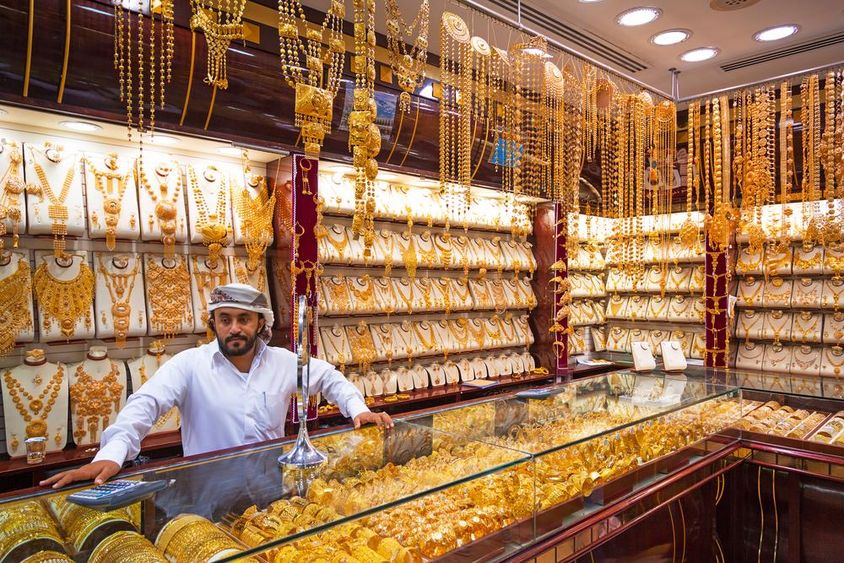
Dubai is one of the world's most renowned gold trading centers, so international price movements directly appear on the local market as well. The world market price, the strength of the dollar, and investor demand all influence the prices at which gold bars, investment coins, and jewelry can be obtained.
Significant price fluctuations may change the decisions of the population and tourists buying in Dubai. A more severe downturn could increase jewelry and investment purchases, especially if buyers consider the current price level as a long-term opportunity.
Meanwhile, a strong dollar may make purchasing more expensive for tourists coming from non-dollar-based countries. Therefore, local traders' sales are determined not just by the world market price of gold but also by the exchange rate of various currencies against the dollar.
Crucial Months Ahead
The upcoming period could be decisive for gold and silver. A weakening dollar, falling US bond yields, and milder interest rate prospects could again increase demand for precious metals.
Conversely, persistent inflationary pressure, rising energy prices, and prolonged high interest rates could cause further losses. The impact of the geopolitical situation could depend on whether conflicts lead to short-lived market fears or a prolonged energy and economic crisis.
Gold and silver are currently near key technical levels. The coming months may reveal whether these levels mark the foundation for another long-term rise or merely a temporary stop during a deeper correction.
Uncertainty is currently greater than a clear market direction. Gold remains an important store of value, but its short-term performance is now primarily determined not solely by geopolitical fears but by the interconnected movements of the dollar, interest rates, oil prices, and inflation.
If you find any errors on this page, please let us know via email.


