Gold Prices Soar, Then Stabilize in Dubai
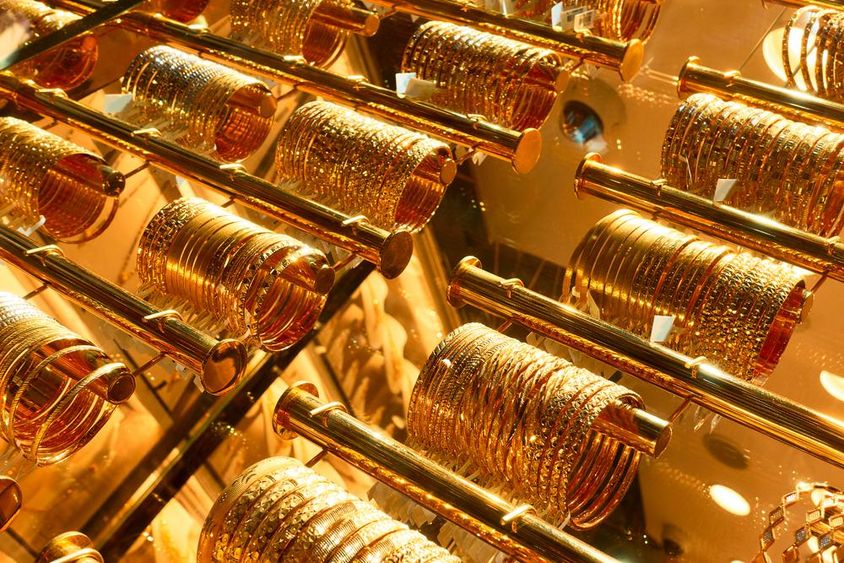
Gold Price Movements in Dubai: Sharp Rise Followed by Cautious Correction
After a sudden surge, stabilization
In recent days, the price of gold has shown remarkable movement in the Dubai market. Within just 24 hours, its value per gram rose by nearly 8 dirhams, which is considered a notable change even in international financial markets. Following this rapid increase, a slight correction occurred, demonstrating how sensitively gold reacts to global economic and geopolitical events.
In the middle of the week, the price of 24-karat gold was around 581.5 dirhams per gram, still higher than the opening prices of the previous days. Different grades of gold, such as 22K, 21K, 18K, and 14K, followed a similar pattern: stabilizing after the rise but not falling significantly. This suggests that fundamental demand remains strong.
What influences gold prices?
Gold prices are affected by several factors, but currently, the geopolitical situation is at the forefront. International tensions, particularly uncertainties surrounding the Middle East, traditionally increase the demand for so-called "safe haven" assets. Gold is considered one of these assets as it can retain its value during crises.
The recent price increase is partly attributed to the possibility of new diplomatic negotiations emerging in the region. Such developments have a dual effect: they can reduce market tensions on the one hand, but in the short term, they can also increase uncertainty until the outcome of the talks becomes clear.
The role of the dollar and interest rates
Gold prices are significantly influenced not only by geopolitics but also by the financial environment. The recent dollar depreciation and decline in bond yields have created a favorable environment for gold. When yields are lower, gold—which does not pay interest—becomes a more competitive investment.
Simultaneously, the future of monetary policy is a crucial factor. If markets anticipate that central banks will pursue looser policies, it generally supports gold prices. In the current situation, inflation expectations and interest rate trajectories are closely intertwined with movements in the gold market.
Energy prices and inflation outlook
Interestingly, oil market developments also affect gold. Recently, the decrease in oil prices has eased inflation fears, temporarily restraining further rises in gold prices. When inflationary pressures diminish, demand for gold may also lessen because one of its main roles is as protection against inflation.
However, this effect is not one-directional. If energy prices begin to rise again, investors may quickly turn back to gold. This dynamic relationship makes the gold market particularly exciting yet unpredictable.
Investor sentiment and capital flow
The movements of investment funds also reveal a lot about market sentiment. Recently, it has been observed that capital previously outflowing from gold-based investment products has started to return. This suggests that some investors are once again viewing gold as a safe haven.
Purchases by central banks also provide stable support for prices. These institutions think in long-term strategies and often increase their gold reserves to diversify their foreign exchange reserves. This demand is less sensitive to short-term market fluctuations, having a stabilizing effect.
Movements of other precious metals
Not only gold, but silver also showed significant movement. The price of silver rose nearly 10 percent in a short period, indicating that investors are turning to precious metals more broadly. Silver often follows gold's trend but with greater volatility, producing even more forceful movements.
This parallel rise reinforces the view that this is not an isolated phenomenon but part of a broader market reaction to global events.
What to expect in the near future?
In the coming period, the development of gold prices will primarily depend on the outcome of geopolitical negotiations. If diplomatic efforts are successful, it could reduce uncertainty, moderating demand for gold. However, a potential failure or renewed tensions could quickly set prices on an upward path again.
Additionally, there will be heightened attention on economic data, especially inflation indicators. These directly influence monetary policy decisions, which play a crucial role in determining gold prices.
Summary: A sensitive balance in the market
The current situation of gold exemplifies the complex factors shaping global markets. A slight decline following a rapid rise does not necessarily indicate a trend reversal; rather, it is part of a natural correction. The interest in precious metals remains strong in the Dubai market, providing a solid foundation for prices.
For investors, this period requires increased attention. Gold remains a key player in an uncertain economic environment but significant short-term fluctuations can be expected. Where the price goes next will largely depend on developments in global political events and economic data.
If you find any errors on this page, please let us know via email.


