Gold Prices Poised to Hit $6000 Soon?
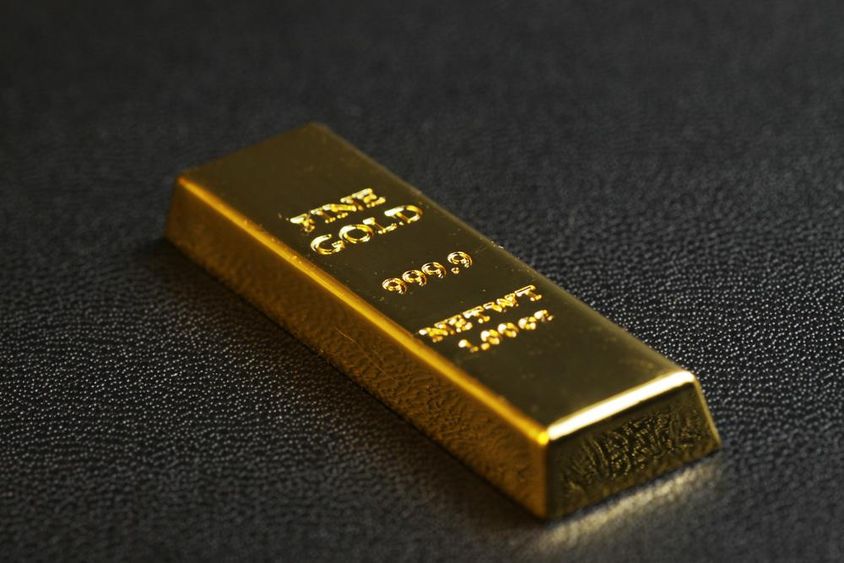
Gold's New Target: Why $6000 is the Talk of the Town?
In recent months, the gold market has experienced movements that have captured the attention of even seasoned investors. The price of the precious metal climbed close to historic peaks in a short period before retreating with a spectacular correction. Despite this, most global financial institutions and analysts do not regard this retreat as a trend reversal. On the contrary, there are increasing forecasts suggesting that gold's next major wave could reach the $6000 level.
Correction After Peaks
At the beginning of the year, gold prices approached the $5600 per ounce level, which was considered a historic record. However, following this, a decline began due to the combined effect of several factors, with prices correcting to around $4850–4900. This movement may appear alarming to many, but in financial markets, such a degree of increase naturally follows.
Behind the decline primarily lies the strengthening of the dollar and the rise in bond yields. When the interest rate environment remains high, gold, which pays no interest, becomes less attractive in the short term. This was accompanied by inflation data suggesting that central banks may begin to cut rates later.
Why Didn't Gold Collapse?
The key question is why, with so many negative factors affecting gold, hasn't the price fallen further. The answer lies in deeper, structural processes.
Gold’s current movement is not the result of a classic supply-demand cycle. It reflects much more the change in trust towards the global financial system. In recent years, the world economy has accumulated increasing amounts of debt while the money supply has significantly expanded. In the long run, this weakens the value of traditional currencies, driving capital towards alternative value-preserving assets.
In this environment, gold is beginning to behave like a monetary asset again, not just a raw material.
Dubai's Role in the Physical Gold Market
Dubai is in an especially unique position in this global process. The city has long been one of the most important gold trading hubs, where demand for physical gold quickly responds to price movements.
Recently, as prices fell, buying interest immediately appeared in the local market. The price of 24-carat gold hovers around 600–605 dirhams per gram, which is lower than previous peaks. This has provided an attractive entry point for many buyers.
Both tourists and local residents take advantage of such corrections, providing a stable foundation for the exchange rate even amidst financial market uncertainties.
The Peculiar Relationship Between Oil and Gold
Interestingly, gold is currently not responding as strongly to geopolitical tensions as it did before. While conflicts in the Middle East are escalating and oil prices have risen above $110, gold has not triggered a classic safe-haven rally.
This is because some investors are focused more on inflation, turning to energy markets. High oil prices increase inflation expectations, strengthening the dollar and bond yields—these negatively impact gold in the short term.
This is a new market dynamic where gold is no longer the automatic response to every crisis but moves as part of a more complex macroeconomic system.
The Real Story: Trust and the Monetary System
However, in terms of long-term prospects, what happens in the global financial system is far more important. The rise in gold is a kind of revaluation resulting from concerns about financial stability.
The global money supply has grown enormously, while gold reserves remain limited in comparison. If the monetary system were even partially to move towards a gold standard, this would result in a dramatic price increase.
Some calculations suggest that even if only one percent of global financial assets flowed into gold, it would have a significant impact on the price. This alone could be enough for the exchange rate to reach new heights.
Central Banks and Silent Accumulation
Another important trend is occurring in the background: the continuous purchasing of gold by central banks. Emerging economies, in particular, are striving to reduce dollar dependence and diversify their reserves.
This process creates stable, long-term demand that does not react to daily market fluctuations. Therefore, this cycle differs significantly from previous ones: gold is increasingly backed by institutional and strategic demand.
What Can We Expect in the Near Future?
In the short term, the gold market may remain volatile. Interest rates, inflation data, and the strength of the dollar will continue to be determining factors. Some investors will take profits, causing further fluctuations.
However, most analysts agree that the current decline is more of a consolidation phase, not the end of a trend. As macroeconomic pressures ease, gold could resume its upward trajectory.
In the next year, more and more forecasts are setting target prices between $5800–$6000, demonstrating how much market participants trust in the further strengthening of the precious metal.
Conclusion
At first glance, gold's current movement might seem contradictory: declining prices in a world filled with tensions. However, a much deeper transformation is indeed taking place.
Short-term factors, such as rates and the dollar's strength, temporarily pressure the price. However, long-term driving forces remain strong: increasing global debt, uncertain monetary policy, and the gradual erosion of trust.
Dubai continues to be a key player in this system, as demand for physical gold there immediately responds to market opportunities.
Thus, gold is not weakening but is being repositioned. The current correction is more a pause than a reversal. And if global trends continue, the $6000 level is no longer a distant dream but an increasingly realistic scenario.
If you find any errors on this page, please let us know via email.


