Gold Prices Plummet in Dubai
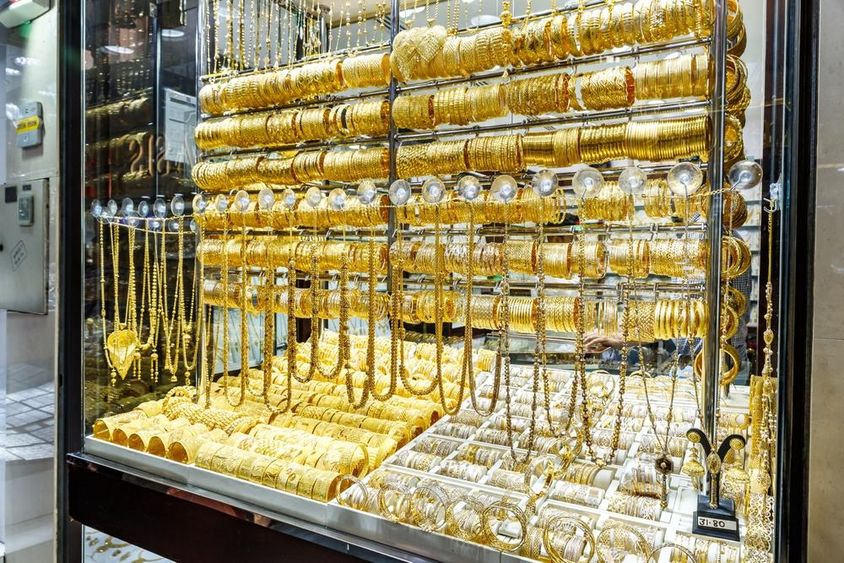
The Price of Gold Continues to Fall in Dubai
The gold market concluded Friday trading with another strong movement as the prices per gram continued to drop in Dubai, while the international market's per ounce price also weakened remarkably. Data from June 5 shows that the price of 24-carat gold decreased by nearly 12 dirhams per gram, a shift significant enough to catch the attention of buyers, investors, and jewelers alike. This movement is particularly interesting because gold is traditionally considered a safe-haven asset, expected to strengthen in times of geopolitical uncertainty.
The current market scenario, however, is more complex. The war situation in the Middle East, fears regarding oil supply, the allure of stock markets, bond yield levels, and capital withdrawals from gold funds are all impacting the price. As a result, gold may not behave in the short term as many would expect based on typical market reflexes.
Friday's Drop in Dubai Gold Prices
According to Dubai Jewellery data, the price of 24-carat gold dropped to 526.75 dirhams per gram on Friday, a decrease of 11.75 dirhams. This is a significant movement within a single trading day, especially in a market where daily price changes are directly reflected at jewelry store counters.
The price of 22-carat gold decreased to 487.25 dirhams per gram, while 21-carat gold traded at 467.25 dirhams. The price of 18-carat gold fell to 400.5 dirhams, and 14-carat gold to 312.25 dirhams per gram. These figures indicate that the decline affected not just investment gold but was felt across the entire jewelry market.
Dubai's gold market is particularly sensitive to such changes, as the city has long been one of the most important regional gold trading hubs. Tourists, local buyers, and those seeking gold for investment purposes all constantly monitor the prices. When such a drop occurs within a single day, it can prompt purchasing decisions, especially for those who had already planned to acquire jewelry or gold bars.
The International Market Is Also Under Pressure
The global gold price fell below $4,400 per ounce by Friday evening, trading around $4,358. This represents a 2.7 percent decline, a significant movement in international markets. Several interrelated factors are behind the weakening of gold prices.
One of the most significant factors is the shift among investors. Stock markets continue to offer an attractive alternative, while bond yields are at a level that lures many investors away from gold. Gold does not pay interest or dividends, so when bond yields are attractive, the relative advantage of the precious metal may diminish. In such cases, some investors may prefer assets that promise regular returns.
Another important factor is the capital withdrawal from exchange-traded funds linked to physical gold. When significant money flows out of these funds, it increases selling pressure and can drag down prices in the short term. This process has been particularly strong in the current market, contributing to gold's inability to stabilize.
Why Isn’t Gold Strengthening Despite War Tensions?
At first glance, it may seem contradictory that alongside severe geopolitical uncertainty in the Middle East, gold is not rising but falling. Traditionally, war situations, the vulnerability of supply chains, and political uncertainty generally increase the demand for safe-haven assets. In the current situation, however, other forces are at play.
Some market participants fear that the conflicts in the region will not end shortly, and the situation may continue to pressure the global economy. The fear is evident not only in the gold market but also in the oil, bond, and stock markets. If investors perceive that oil prices may remain high for a prolonged period, it could further escalate inflation risks.
Higher inflation risks alone could support gold, but if, simultaneously, interest rates and bond yields remain attractive, the picture becomes more complex. In this scenario, gold must compete not only with uncertainty but also with alternatives offering yields.
The Role of the Strait of Hormuz in Market Fears
One of the central elements of current analyses is the situation in the Strait of Hormuz. This maritime route is one of the world’s most important energy supply corridors, so any prolonged disruption could have a significant impact on the global oil market. If the strait were to remain closed for an extended period, it could cause significant supply problems and keep oil prices high.
High oil prices directly increase certain costs and can indirectly strengthen inflation expectations. This is also reflected in investment decisions. If the market anticipates that inflationary pressure will remain high, then expectations around central bank interest rate policy may also shift. This creates a dual-impact environment for gold.
On the one hand, inflation fears may increase interest in the precious metal, while on the other, a higher yield environment could weaken gold's appeal. Based on the current price movement, the market is pricing in the latter effect more strongly in the short term.
Buyers View Price Drops Differently Than Investors
In Dubai, the drop in gold prices is not bad news for everyone. Jewelry buyers and long-term private investors may see the decline as an opportunity. If someone is planning to buy gold for a wedding, as a gift, or for savings, a nearly 12-dirham per gram decrease can make a noticeable difference in the final cost.
Interest in jewelry stores typically increases on such days because many buyers specifically watch for price drops. On Dubai’s gold market, it’s common for buyers to decide based on daily rates, and if a more favorable price suddenly appears, it can promptly encourage purchasing.
The situation for investors is different. For them, not only is the current price important but also whether the drop is a temporary correction or part of a longer downtrend. For those in short-term positions, the current volatility could pose a significant risk. Long-term buyers, however, often view such weaknesses as entry points.
What Will Determine the Coming Days?
In the upcoming days, gold prices are likely to be influenced by the geopolitical situation, oil prices, bond yields, the dollar's movement, and investor capital flows. If no stable and credible agreement is reached in the Middle East, uncertainty may persist. However, this alone does not guarantee gold's strengthening, as the market currently receives conflicting signals from various directions.
Persistently high oil prices could trigger inflationary fears, which is a supportive factor for gold in the long run. At the same time, high bond yields and the strong allure of stock markets could continue to draw capital away from the precious metal. Consequently, short-term price movements may remain highly volatile.
For buyers in Dubai, the key question will be whether prices stabilize after Friday's decline or whether another drop follows. It often happens in the gold market that a larger daily movement is quickly followed by a correction, but it is also possible that the market continues to search for a new equilibrium level.
A Cautious Market, More Sensitive Pricing
The price drop on June 5 demonstrates that the gold market is currently particularly sensitive to global risks. Investors are not only watching the war news but also observing how the oil market responds, the direction of yields, and whether capital continues to flow out of gold funds.
In Dubai, the price of 24-carat gold at 526.75 dirhams per gram is already a level that can be noteworthy for many buyers. However, the decline does not automatically mean that prices will remain at this level permanently. In the current environment, a single geopolitical announcement, an oil market turn, or financial market reaction can quickly change the direction.
Gold continues to remain a key asset during uncertain times, but this current example shows that even as a safe-haven asset, it doesn't always move upward in a straight line. Market sentiment, yield environment, oil prices, and global money flows together shape the price. Dubai's gold market reflects all this almost immediately in the daily gram rates.
If you find any errors on this page, please let us know via email.


