Gold Prices Drop Below Psychological Threshold
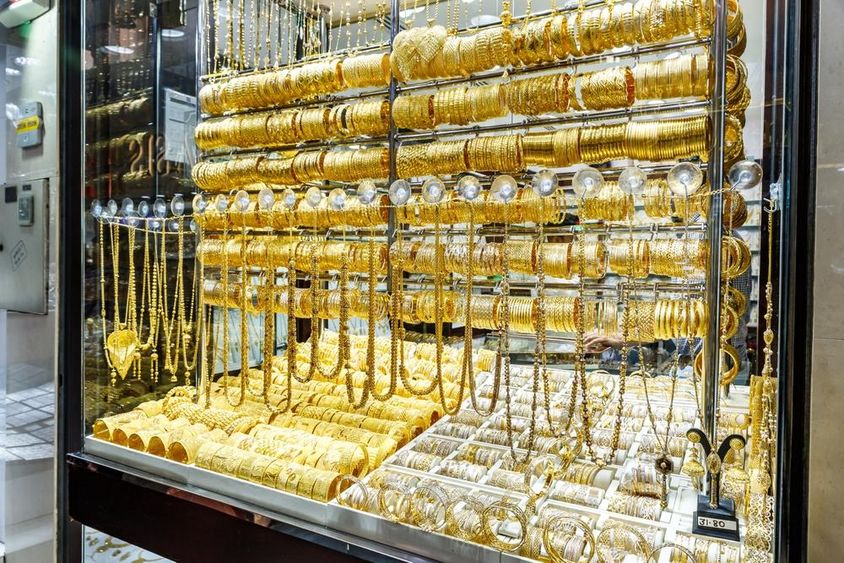
Gold Price Remains Below 500 Dirhams
On the gold market of the United Arab Emirates, the price decrease that began last week continued on Monday morning. The price of 24-carat gold, the highest purity, was at 488.75 dirhams per gram at the market opening, remaining below the psychological threshold of 500 dirhams. This is a significant change compared to the closing price on Friday, when the same type of gold was valued at 496.50 dirhams per gram.
The decrease affected not only the 24-carat gold. The 22-carat variety opened at 452.50 dirhams per gram, 21-carat gold at 434 dirhams, and the 18-carat version at 372 dirhams on Monday. The price development is of particular importance for residents, tourists, jewelry buyers, and investors in Dubai, as gold trading is a pivotal area of the city's economic and commercial life.
24-Carat Gold Remains Below 500 Dirhams
The fall of the 24-carat gold price below 500 dirhams gained significant attention mainly because this level has become a kind of psychological threshold in recent times. Although a difference of a few dirhams may not fundamentally alter purchasing decisions on its own, surpassing or approaching round price levels usually impacts market sentiment.
Some buyers might see the price drop as a favorable opportunity, especially if they had previously planned to purchase jewelry or acquire gold for investment purposes. However, others might wait, expecting further price drops due to international market uncertainties.
On Dubai's gold market, the gram price of precious metals is not the only factor that matters. The final price of jewelry can be influenced by the craftsmanship fee, the cost of designing the jewelry, and the store's own pricing. Therefore, the decline in the international gold price does not always immediately or fully appear in the selling price of jewelry.
The Global Gold Price Also Weakened
The local gold price in the United Arab Emirates closely follows the movements of international precious metal markets. On Monday morning at 9:10 local time, the spot gold price was around 4070.49 dollars per ounce. This represented a 0.41 percent decrease.
The price of silver also weakened. The precious metal traded at 58.5 dollars per ounce, corresponding to a 0.91 percent decline. The greater percentage drop in silver suggests that investors have become more cautious about precious metals while monitoring the evolution of the global economic environment.
The price of gold and silver is driven by several factors simultaneously. Investors evaluate inflation prospects, interest rate expectations, changes in energy prices, bond market yields, the strength of the US dollar, and geopolitical uncertainties. These factors often act in opposing directions, so the gold price can show significant movements in a short time.
Despite several adverse impacts, gold has remained resilient
The precious metal has faced several market influences recently, which typically exert downward pressure on its price. Oil and fuel prices have risen, expectations for stricter US interest rate policy have strengthened, and bond yields have increased.
Higher bond yields are usually unfavorable for gold. Gold does not pay interest, so when investors can achieve more attractive yields with bonds or other interest-bearing instruments, demand for the precious metal may decrease. A similar effect can arise from the strengthening of the US dollar, as gold traded in dollars becomes more expensive for buyers using other currencies.
Despite these factors, the gold price hasn't plummeted as much as might have been expected based on the adverse conditions. The international price found support near the 4050 dollars level, followed by a minor rebound when the rising trend in the US dollar and bond yields eased.
This may suggest that there is still significant demand for gold. Some investors continue to view the precious metal as a safe asset, especially during times of geopolitical tensions, inflation risks, and economic uncertainties.
After rapid sales, consolidation may have begun
Based on recent market movements, gold may have entered a phase where the rate tries to stabilize after forced and panic-driven sales. This does not mean that gold will immediately return to its previous upward path, but it may indicate that sellers are finding it increasingly difficult to push the price to sustainably lower levels.
During a consolidation period, the price usually moves within a defined range. The market searches for a new equilibrium while investors await the next significant economic data and central bank decisions. Such periods can last several days or weeks, often preceded by a larger directional shift.
In the current situation, the international price level around 4050 dollars can serve as important support. If gold remains above this level for a prolonged period, it may reinforce the view that the major selling wave has already passed. However, if the price clearly breaks through this level, further declines may follow.
Inflation and Energy Prices May Play a Crucial Role
The next significant move in gold may largely depend on the evolution of inflation. Persistently high oil prices can increase transportation, production, and operational costs, which may eventually appear in consumer prices. If inflation strengthens again, there could be greater pressure on the US Federal Reserve to raise interest rates or maintain them at a high level for longer.
Initially, a stricter interest rate policy is usually unfavorable for gold, as it increases the attractiveness of interest-bearing investments. However, long-term persistent inflation and economic uncertainty may again increase demand for the precious metal. Therefore, rising energy prices can represent both negative and positive impacts on the gold market, depending on which risk is considered more important by investors.
Geopolitical tensions can also support the gold price. During critical times, many investors seek assets that are less dependent on the economic performance or financial system of a single country. Gold traditionally belongs to this category.
Labor Market Data May Reduce Interest Rate Hike Expectations
Investors are currently focused on the US labor market. Weakness appearing in employment data may reduce the likelihood of a near-term interest rate hike. If the economy starts to slow, the central bank may become more cautious, as another rate hike could further curb corporate investments and consumption.
Weaker labor market data generally push down bond yields and the US dollar. This could create a more favorable environment for gold. However, the market evaluates each new economic data point separately, so a single report rarely determines the direction of prices for a longer time.
Therefore, the next inflation, employment, and economic growth data can be pivotal. From these, investors will try to deduce whether another interest rate hike is expected, or if the central bank will opt to wait.
What Could the Price Drop Mean for Buyers in Dubai?
For those living in Dubai and tourists visiting the city, the current price level could present a more favorable buying opportunity than at Friday's close. For a large quantity of 24-carat gold products, even a few dirham difference per gram can lead to noticeable savings.
Before purchasing, it is advisable to compare offers from several stores. In addition to the daily listed gold price, it is important to check the craftsmanship fee, possible discounts, buyback conditions, and documents verifying the purity of gold. For investment purposes, other factors may be important in buying gold bars and coins than when purchasing jewelry.
The 24-carat gold price level below 500 dirhams can be appealing, but it does not guarantee the market's bottom has been reached. Prices can still be rapidly influenced by economic data, interest rate expectations, and international events.
Gold's Next Direction Remains Uncertain
Despite the Monday morning price drop, the gold market continues to show resilience. The gram price of 24-carat gold at 488.75 dirhams is significantly below the 500 dirhams threshold, but the international price has so far maintained key support levels.
In the coming period, inflation, energy prices, the US labor market, bond yields, and the dollar's strength collectively may determine the direction. An unfavorable economic data point could weaken the dollar and support gold, while persistent inflation and stricter interest rate policy could introduce new pressure on the precious metal.
On the Dubai gold market, prices could continue to draw keen attention in the coming days. For buyers, a level below 500 dirhams might represent an opportunity, but for investors, patience and careful monitoring of economic data might remain the most important strategies.
If you find any errors on this page, please let us know via email.


