From Small Fishing Village to Industrial Power
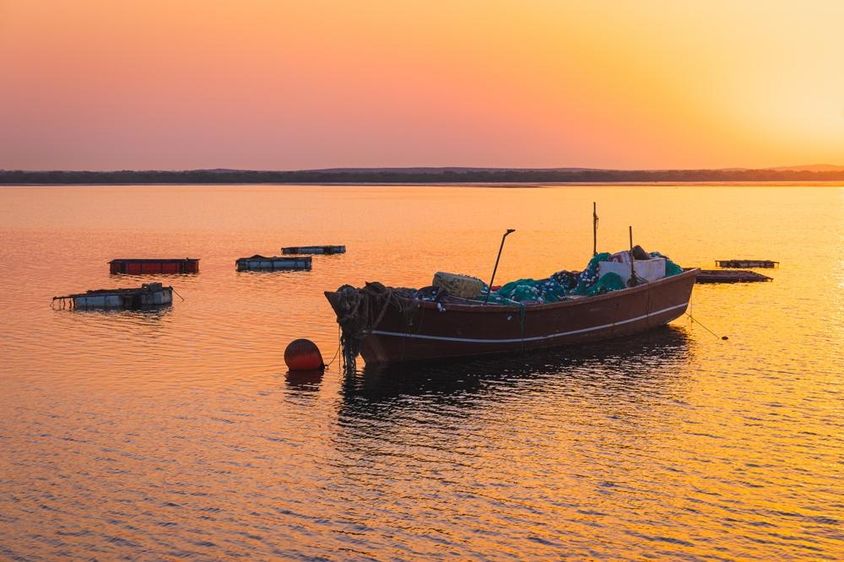
From Fishing Village to Industrial Hub: The Transformation of Khor Khuwair
In the northern part of the United Arab Emirates, at the upper edge of Ras Al Khaimah, on the coast of the Arabian Gulf, lies a place now known for its industry, harbors, and vast quarries. This place is Khor Khuwair. However, looking back a few decades, we see a completely different picture: an isolated, quiet coastal settlement where life was dictated not by the economy but by nature.
A Life Without Salaries
About eight decades ago, Khor Khuwair was just a small community. Barely a hundred people lived there, far from any development or infrastructure. Jobs in the modern sense didn’t exist, nor did salaries or modern services. People’s daily livelihoods completely depended on their own work.
Fishing, date cultivation, and livestock farming formed the basis of life. Every day was about survival, where the weather, seasons, and the state of the sea determined how much food would be on the table. Community members couldn’t rely on external help; what they achieved, they had to create through their own efforts.
Transportation and Isolation
Travel during this period posed unique challenges. There were no constructed roads or modern transport networks. People traveled in wooden boats powered by sails or made their way to surrounding areas on camels and donkeys.
A trip to what is now considered nearby cities like Dubai or Sharjah could take several days. The journey's duration was not determined by hours but by the wind and weather. This isolation, however, not only posed difficulties but also fostered a sense of independence within the community.
The Khor as the Heart of Life
The “khor,” or the bay, was not just a geographical feature but the heart of the settlement. Fishing took place here, people met here, and goods were exchanged here. Since there were no markets or shops, the coastal area fulfilled these roles.
The local economy was based on barter trade. Coastal residents exchanged fish for clay, eggs, or palm products from the mountains. This system ensured the community’s survival and formed strong bonds between people living in different areas.
Simple but Adaptive Lifestyle
Houses were simple but served their purpose. They were built from stones and mud, often using materials sourced from nearby mountains. Multiple generations lived together in the same house, sharing the available space and resources.
Life was closely adapted to the seasons. In summer, families built temporary shelters from palm leaves on the coast to enjoy the cooling sea breeze. In winter, they retreated to more solid houses made of mud and palm trunks, providing protection from the colder wind.
Water and Food: The Greatest Values
Acquiring drinking water and food often required considerable effort. Residents could be on the road for weeks seeking suitable water sources or gathering seasonal produce. Every resource was invaluable, and nothing went to waste.
This environment fostered a mindset where frugality and cooperation were vital survival tools.
Signs of First Changes
In the 1960s, the first signs of modernization slowly appeared. The arrival of cars elevated mobility to a new level, even though infrastructure remained limited. The settlement began growing, with smaller neighborhoods developing from the previous few houses.
Despite the population growth, life still revolved around traditional activities. Fishing and trade remained central, and the khor’s role didn’t change.
The Arrival of Industry: A Turning Point in History
The largest change occurred in the mid-1980s when industry arrived on Khor Khuwair’s shores. The previously untouched landscape suddenly took on a new role: industrial facilities began appearing near the mountains.
An early industrial site that handled large pipes and shipped them by sea already foreshadowed the future. This development not only brought economic change but steered the settlement’s development in an entirely new direction.
The Birth of a Port and Industrial Center
Over time, the natural bay transformed into a modern port. Larger and larger ships arrived, and the area gradually became connected to regional and international trade. The number of industrial facilities steadily increased, and the coastline completely transformed.
New economic opportunities radically changed life. Formerly labor-based livelihoods were replaced by industrial production and organized economic activity.
One of the World’s Largest Quarry Centers
Today, the name Khor Khuwair is synonymous with vast limestone quarries and industrial production. Companies operating in the area extract tens of millions of tons of raw materials annually, used worldwide for construction projects.
This development is significant not only locally but has also become influential globally. The port and industry together represent an economic force that far surpasses the former small fishing village.
Remembrances of the Past in the Present
Though the landscape has completely transformed, the memory of the past endures. For those who remember the early days, Khor Khuwair is not just an industrial hub but a story of perseverance, adaptation, and unity.
The khor, once the center of life, still exists today, even if its role has changed. This bay reminds us of a time when everything was about living in harmony with nature.
Balancing Between Past and Future
Khor Khuwair’s history exemplifies how a community can adapt to changing circumstances. After beginnings shaped by nature, it was industry that brought development, opening up entirely new possibilities.
Yet, the place’s identity hasn’t been lost. The past and present exist side by side, giving Khor Khuwair its unique character. A place where quiet coastal life meets modern industry, and where behind development, the community’s story always runs deep.
This story is not only about the transformation of a settlement but also demonstrates how perseverance and adaptation can create an entirely new future—even in the most isolated places.
If you find any errors on this page, please let us know via email.


