Foggy Daze: UAE Shrouded in Dense Mist
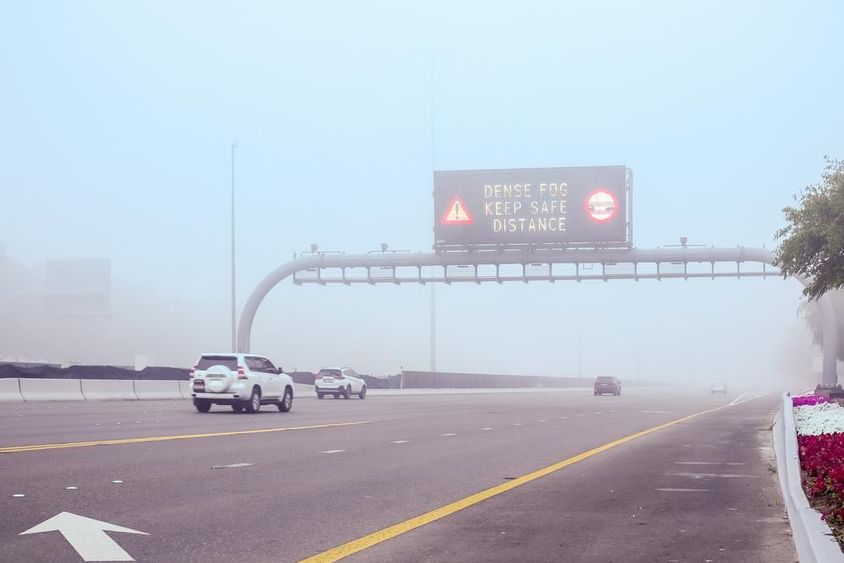
Near-Zero Visibility: Dense Fog Shrouds UAE All Week
In the United Arab Emirates, this week's mornings paint a different picture from what is typically expected in the region. The horizon disappears, building outlines blur, and traffic slows down. Visibility in several areas approaches zero, with the dense, heavy fog posing significant challenges for commuters and residents living their everyday routines. The cityscape of Dubai, usually characterized by clear skies and distinct outlines, is now concealed under a grey, veiled layer.
During morning rush hour, a line of crawling vehicles formed on major highways. Drivers advanced cautiously at a snail's pace through the fog, while school buses and office-bound workers had to account for significantly longer travel times. The usual pace was replaced by heightened awareness and patience.
What Causes the Extraordinary Fog?
The phenomenon is underpinned by typical yet intense weather factors. Calm, almost entirely windless weather and the high-pressure system dominating the region create ideal conditions for fog formation. When the air near the surface cools while the atmosphere remains stable at higher levels, moisture condenses, leading to dense fog.
These stable atmospheric conditions are particularly common towards the end of winter. In the UAE, winter officially lasts until March 21st, and foggy episodes are frequent during the change of season. The delicate balance of temperature and humidity during this time easily shifts in a direction that favors the development of visibility-reducing fog.
The current period does not feature a one-off event: similar conditions have occurred on successive mornings, and forecasts suggest that the hazard may persist in the coming days.
Dubai Morning in a Fog Veil
Dubai residents awoke to a grey, hazy sky. The city’s iconic skyscrapers partially or completely disappeared behind the vapor layer. The usually crystal-clear, sunshine-filled metropolis more closely resembled the ambiance of a northern port city.
Traffic jams quickly materialized on major thoroughfares. Drivers sometimes could only see a few dozen meters ahead, significantly increasing the importance of reaction time. Despite the slower pace, congestion was inevitable as everyone simultaneously tried to adapt to the extreme conditions.
Other emirates' inland areas were also affected, requiring increased caution due to similar visibility conditions, especially in the early morning hours.
Transport and Daily Life Challenges
Fog is not just an aesthetic phenomenon but a real risk factor. The drastic reduction in visibility increases the chance of accidents, especially on high-speed road sections. Chain-reaction collisions often occur on highways if drivers do not maintain appropriate following distances.
Children heading to school, morning commuters, and delivery vehicles all face the same problem: uncertain visibility conditions. Public transportation schedules may also be modified, as safety always takes precedence.
Marine transportation can also be affected by dense fog, particularly when it is accompanied by strengthening northwesterly winds in the afternoon. While the wind's strengthening reduces the likelihood of fog formation, it can make sea conditions more unsettled.
Temporary Cooling, Followed by Warming
A change is outlined for the latter part of the week. Cloud formation is expected, and the rearrangement of air masses will commence. Although fog can still form, the likelihood will no longer be as high as in the past days.
The temperature will gradually begin to rise; however, there may be a brief period of mild cooling when the northwesterly winds return. This alternating trend is typical during the transition between seasons: winter has not yet fully released its grip on the region, but spring is already making its proximity felt.
From early March, a gradual warming is expected once again. The arrival of more stable, warmer air masses reduces the probability of fog formation, bringing back the clear, sunny weather characteristic of the region.
Seasonal Transition and Recurrent Patterns
Such foggy periods are not considered extraordinary in the UAE. Similar atmospheric patterns frequently recur during transitional periods. The combination of stable high-pressure systems and weak air movement almost prescriptively leads to the formation of dense fog.
The current situation is more noteworthy for its intensity than its nature. The term “monster fog” aptly captures the experience of feeling like driving inside a cloud. Despite the modern infrastructure and advanced transport systems of cities, nature reminds us that technology cannot fully override the power of weather.
Patience and Adaptation
Adaptation is the keyword for the upcoming days. Earlier departures, reduced speeds, greater following distances, and increased attention all contribute to safe driving. For residents, the fog is not just an inconvenience but a reminder that the period of seasonal transition can be less predictable.
Dubai and the rest of the UAE will soon revert to their familiar, sunny selves. Until then, mornings remain quieter, slower, and somewhat more mystical. Behind the grey veil lies the usual dynamism, which will fully reemerge with the rise in temperatures.
Thus, this foggy period is not merely a meteorological event but a transitional state between winter and spring. A brief chapter in the year's cycle, reminding the bustling everyday life in the United Arab Emirates to pause and exercise caution.
If you find any errors on this page, please let us know via email.


