Flexible Return: School Bus Fee Reductions
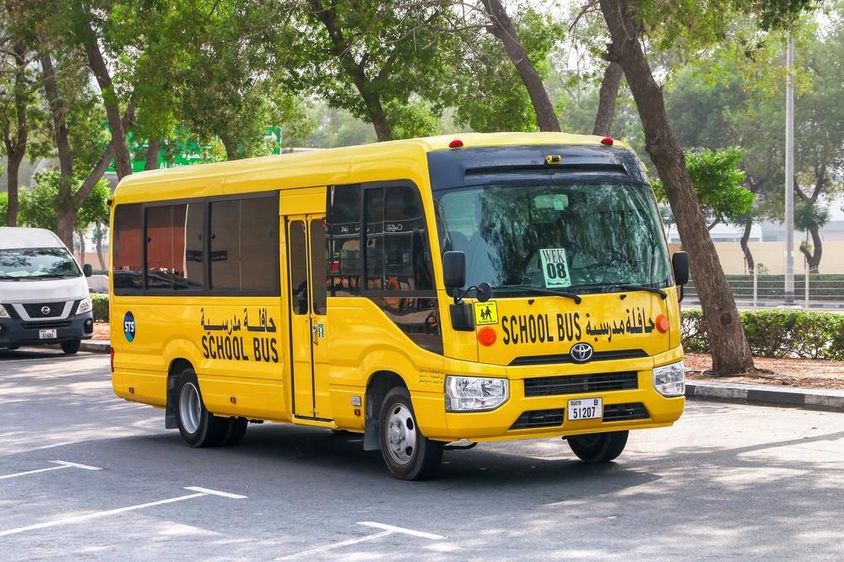
Flexible Return: Reduced School Bus Fees and Gradual Reopening in the UAE
The education system of the United Arab Emirates has entered another crucial transitional phase: schools are gradually returning to in-person education while some institutions still operate via remote learning. This hybrid period not only transforms the method of learning but also the associated services – particularly school transportation. Recent announcements indicate that service providers are striving to adapt to changing circumstances and ease the financial burdens on families.
Gradual Return to Classrooms
For seven weeks, many students learned exclusively online, leaving school buses entirely unused. This period not only posed challenges for students and teachers but also for transportation providers, whose operations were significantly impacted by the sudden drop in demand.
From April 20, however, several schools reopened, allowing students to return to classrooms. Not all institutions returned simultaneously, as some continue with remote learning, resulting in a balanced, continuously changing system. In such an environment, flexibility is particularly important – both in education and related services.
Significant Fee Reduction for April
One of the most important announcements concerned the reduction of school transportation fees. A major provider introduced a uniform 60% fee reduction for April, considering that the service was only partially utilized.
This step not only provides financial relief for parents but also signals that providers are aware of the extraordinary period and are attempting to respond accordingly. The decision is based on the understanding that school bus services operate on an annual basis, but actual usage has now deviated significantly from the norm.
Management of Prepaid Fees
Many families had already paid transportation fees for the academic year or part of it. Providers thus decided to treat the already paid amounts as credits, which will be deducted from future bills.
This solution offers multiple advantages. It does not require a separate refund process and ensures that families do not lose money for services not utilized. Moreover, from an administrative standpoint, it offers a simpler and quicker solution.
Challenges of the Annual Model
School transportation in the UAE traditionally operates as an annual service aligned with the academic calendar. This means fees are not calculated per day or week of use but are spread over a longer period.
This model provides stability for providers, allowing for fleet maintenance, staff training, and continuous operation of safety systems. However, in such extraordinary circumstances, when usage suddenly drops, flexible adaptation is necessary.
The current fee reduction and credit system reflect this flexibility. Providers are trying to balance operational costs with customer interests.
Operational Challenges and Solutions
One of the biggest challenges of the gradual return is the unpredictability of demand. Not all students return at once, and schools reopen at different times. This poses significant planning tasks, especially regarding routes and capacity utilization.
However, providers are not operating in unfamiliar territory. They face similar situations at the beginning of every academic year and after breaks, possessing systems and experiences that allow for quick adaptation.
Flexible route planning, continuous communication with schools and parents, and the use of real-time data all contribute to ensuring that the service operates smoothly.
Safety and Preparedness
Providers emphasize that safety remains a primary concern. Vehicles, personnel, and systems are fully prepared to receive students.
Modern school buses are equipped with monitoring systems, drivers and attendants receive special training, and strict protocols ensure student safety. This is particularly important during a time when parents are more sensitive to risks.
Towards Usage-Based Billing?
Some educational groups have already introduced usage-based billing for the transitional period. This means fees are calculated based on actual days of use.
This approach offers even greater flexibility and better aligns with the current situation. However, in the long term, it is questionable whether such a model is sustainable, as the service fundamentally relies on fixed costs.
What Does This Mean for Families?
Current measures clearly convey a positive message to families. The fee reduction, credits, and flexible billing all demonstrate that the system can adapt to changing circumstances.
However, it is important to note that this is a transitional period. As schools fully return to face-to-face education, services are also expected to revert to normal operations.
Establishing a New Balance
The UAE's educational and transportation system once again proves its ability to respond quickly to challenges. The current situation has not only brought difficulties but also an opportunity to rethink operational models.
In the future, greater flexibility might play a more prominent role, and services may better align with actual usage. However, stability and reliability will remain crucial.
This transitional period is therefore not just about returning, but also about establishing a new, more adaptable system that can be beneficial for both families and providers in the long term.
If you find any errors on this page, please let us know via email.


