Ferrari's Bold Move: Dubai Impact Explored
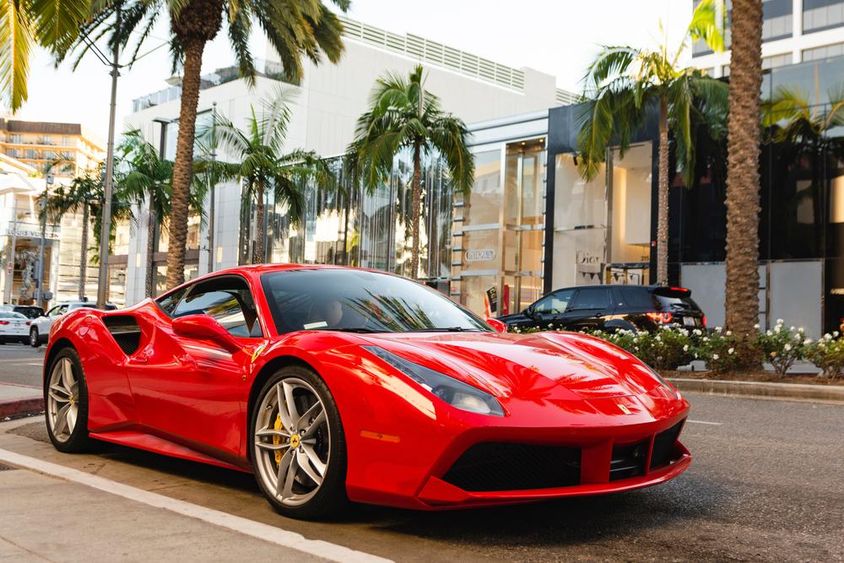
Ferrari Delivery Suspension: Impacts on Dubai and Luxury Market?
An Unexpected Decision in the Luxury Car World
The luxury car market is generally stable, predictable, and resilient against short-term economic or geopolitical changes. Hence, the decision for Ferrari to temporarily halt deliveries in the Middle East has sparked significant interest. This is not a usual market reaction but a move driven by complex logistical and strategic considerations. It's especially intriguing from Dubai's perspective, where luxury cars are not just status symbols but integral to a lifestyle.
At first glance, the decision might seem excessive; however, a closer examination of the underlying processes quickly elucidates the need for such a radical step.
Logistical Risks: When Routes Matter More Than Demand
The core issue is not a decrease in demand but the safety of transportation. Sea routes, particularly around the Red Sea and the Strait of Hormuz, currently pose significant risks. These routes are crucial for global trade, so any disruptions immediately trigger a chain reaction.
For Ferrari, traditional sea transport has been cost-effective and well-planned so far. However, the current situation has forced the manufacturer to seek alternative solutions. While air transport might be faster and safer, it is three to four times more expensive, significantly altering the business balance.
This factor is particularly important for a brand where there is already a high proportion of custom configurations and extras. A Dubai customer does not simply order a car but a personalized experience where every detail matters.
Dubai's Role: Small Volume, Huge Profit
While the Middle East contributes less than 5 percent to Ferrari's global sales, the region's significance extends far beyond this number. Dubai, for example, is one of the most important markets for premium and limited-series models.
Here, the key is not the sales volume but the profit per vehicle. Customers often choose unique colors, special interiors, rare materials, and exclusive options. This kind of customization significantly increases the final value of the cars, making the region exceptionally profitable for Ferrari.
Thus, the suspension of deliveries is not simply a logistical decision but a conscious risk management step. The manufacturer prefers to wait rather than jeopardize shipments or significantly increase costs.
Market Reaction: Sensitive Market, Quick Response
The decision also had immediate consequences on financial markets. Ferrari's shares dropped by more than 3-4 percent in a short period across both European and American trading venues.
This shows how sensitively investors react to news affecting the luxury market. Although the Middle East's volume is low, the high profit means that any such change is immediately reflected in stock prices.
Investors not only focus on the current situation but also on the precedent it sets. If such a strong brand has to rein in its deliveries, it indicates that global supply chains are still vulnerable.
Domino Effect in the Luxury Industry
Ferrari's move is not an isolated phenomenon. Other luxury brands, like Maserati and Bentley, are also considering or have partially made similar decisions. This means we are not speaking about a unique problem but a broader industry challenge.
The luxury car market is particularly sensitive to such changes since manufacturing and delivery processes often take a long time and are highly customized. A single disruption can delay deliveries by months.
In Dubai's case, this could also mean a temporary reduction in showroom offerings, while waiting lists grow longer. Paradoxically, this might even enhance the sense of exclusivity, often yielding positive effects in the luxury market.
Changing Consumer Behavior
The current situation might also impact consumer decisions. Dubai customers are used to quick and seamless service, so a longer waiting period might introduce new factors into the purchasing process.
Some might wait it out, while others might turn to alternative brands or choose from available models. However, brand loyalty to Ferrari is very strong, so it is likely that most buyers will wait for the situation to settle.
This is especially true for limited-series models, where accessibility is already restricted, and timing is often a secondary consideration.
What Can Be Expected in the Upcoming Period?
Ferrari has clearly indicated that it is continuously monitoring the situation and will make further decisions accordingly. This means that the resumption of deliveries primarily depends on the stabilization of the logistical environment.
Should sea routes become safer, it is expected that normal operations will resume quickly. However, until then, air transportation remains a limited solution due to significantly higher costs.
From Dubai's perspective, this is a transitional period that brings challenges but also highlights the city's role in the global luxury market. The fact that such a decision has such an impact on the region clearly demonstrates Dubai's continued key role in this segment.
Summary: More Than a Shipping Problem
The temporary suspension of Ferrari deliveries goes far beyond a simple logistical issue. It highlights the vulnerabilities of global supply chains, the peculiarities of the luxury market, and Dubai's prominent role.
Although it leads to short-term disruptions and uncertainties, it’s likely that the market will adapt and return stronger in the long run. The demand for luxury doesn't disappear; it merely temporarily transforms.
Thus, the current situation is not just a challenge but also a test for manufacturers and the market. How one responds to this scenario could long-term define their position in the global luxury industry.
If you find any errors on this page, please let us know via email.


