Etihad Rail Ushers in New UAE Travel Era
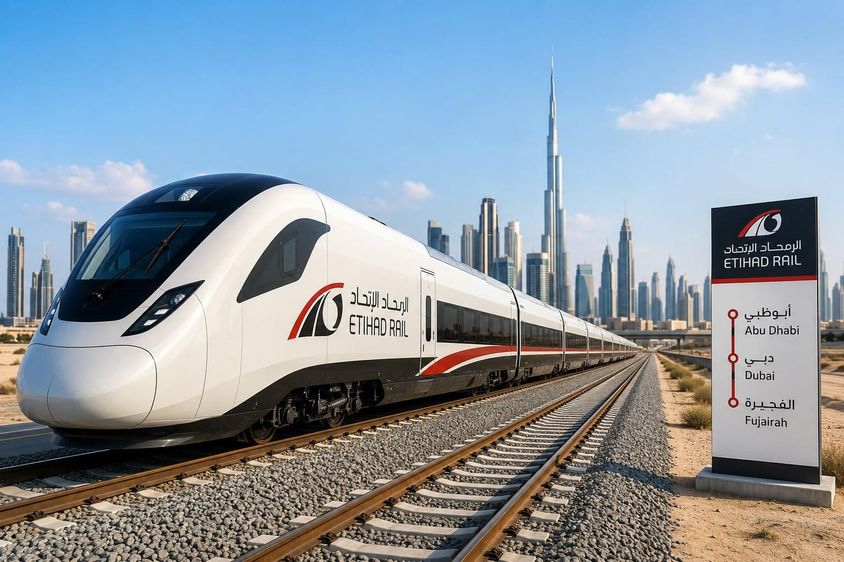
Etihad Rail Ushers in New UAE Travel Era
The UAE's transportation infrastructure is reaching another historic milestone with the gradual launch of Etihad Rail's passenger service in 2026. In the first phase, Abu Dhabi, Dubai, and Fujairah will be connected, which could radically transform daily commuting and significantly impact the country's economic and social functions. In recent years, the UAE has initiated numerous large-scale developments to modernize transportation, yet the Etihad Rail project represents an entirely new era.
The introduction of the rail network is a long-awaited development in the country, particularly because the UAE has so far primarily relied on highways and air transport for intercity connections. Now, an alternative emerges that could be faster, more sustainable, and more convenient for millions of people.
Gradual Launch Starting in 2026
According to official communications, passenger transport will be rolled out in stages, based on a carefully planned schedule. The first phase will begin by linking Abu Dhabi and Dubai, with the network extending towards Fujairah along the country's eastern coast.
The decision about which routes to launch first was not made randomly. The planning considered population density, travel demands, and the importance of inter-emirate connections. This is especially significant for the UAE, where hundreds of thousands commute daily between Abu Dhabi and Dubai for work, education, or business.
Once the system is fully developed, it is forecasted to transport approximately 36.5 million passengers annually by 2030. This impressive number underscores the substantial role envisioned for rail in the country's future.
Strategic Role of Designated Stations
A list of the first 11 station locations, which link several key regions of the country, had been previously announced. The stations include Al Sila, Al Dhannah, Al Mirfa, Madinat Zayed, Mezairaa, Al Faya, Mohammed Bin Zayed City, Jumeirah Golf Estates, Sharjah University City, Sakamkam in Fujairah, and Al Dhaid.
The placement of stations was preceded by careful analysis. The goal was to be as close as possible to inhabited areas while providing efficient connections between major economic centers. This is particularly important for Dubai and Abu Dhabi, where traffic congestion has been a significant challenge for years.
The Jumeirah Golf Estates station, for example, could play a crucial role in the future, as Etihad Rail could meet the Dubai Metro red line and the planned Gold Line network here. This would allow passengers to easily switch between long-distance rail and urban metro.
Dubai's Transport System Could Completely Transform
Dubai already boasts one of the world's most advanced urban transport systems, yet Etihad Rail could add a new dimension to travel. Currently, many travel by car between Abu Dhabi and Dubai, which creates considerable highway congestion during peak hours.
The introduction of rail could reduce road pressure while offering faster and more predictable travel. A modern rail network could benefit not only residents but also business operations. The UAE's economy heavily relies on mobility, logistics, and international connections, so a nationwide rail system could further strengthen the country's competitiveness in the long term.
Linking Dubai Metro and Etihad Rail is especially important from a future urban planning perspective. The new connection points could make it easier for passengers to travel to different parts of the country without using a car.
Modern Trains and Premium Travel Experience
Etihad Rail focuses not just on speed and efficiency but also on the travel experience. The trains will feature modern interior designs, complete Wi-Fi coverage, and individual power sockets at every seat.
The regular schedule aims to make travel predictable and comfortable. This is especially essential for business travelers who commute daily within the emirates.
In the first phase, a total of 13 trains will be in operation, each capable of carrying up to 400 passengers. According to the latest information, most trains have already arrived in the UAE and successfully passed international safety and quality tests.
The aim of the development is for the UAE's rail system to meet the standards of the world's leading networks from the start. Modern technology, automated systems, and high-level safety standards all serve this purpose.
More Than Just Trains
One of the most interesting aspects of Etihad Rail is that the project is not only about tracks and stations. The aim is to create an entire transportation ecosystem that includes bus links, taxis, parking, and other transport options.
An international transportation company with significant experience in operating rail networks in Europe and the Middle East will also participate in operating the system. Part of the collaboration involves not only professional operation but also the training of personnel and the development of service standards.
This is important because, in the long term, the UAE does not simply want to create a railway line but a system that becomes a natural part of daily life.
Fujairah's Importance Could Significantly Increase
Connecting the eastern coast is a particularly interesting development. Fujairah has previously been important mainly for its port and logistics role, but through Etihad Rail, it can become more directly connected with the economic centers of Abu Dhabi and Dubai.
This could also create new opportunities for tourism. Due to the mountainous landscapes, coastline, and calmer environment, Fujairah is becoming an increasingly popular destination for UAE residents and tourists alike. The fast rail connection could significantly increase the number of visitors.
Additionally, the development could impact the real estate market. Areas that were previously considered farther from Dubai or Abu Dhabi could become more accessible through rail.
One of the Most Important Projects for the UAE's Future
Etihad Rail's passenger network is much more than a transportation investment. It is a strategic project that could transform the UAE's operations in the long term. The country's goal is to create a more modern, sustainable, and better-connected economy where people can move faster and more comfortably between the emirates.
For Dubai, the project is particularly significant, as it could further strengthen its role as a global business and tourism hub. The new rail system also fits into long-term development plans aimed at reducing traffic congestion and prioritizing sustainable mobility.
Thus, 2026 is not just another year for the UAE, but the beginning of a new era in transportation.
If you find any errors on this page, please let us know via email.


