Etihad Rail: Transforming UAE Travel Times
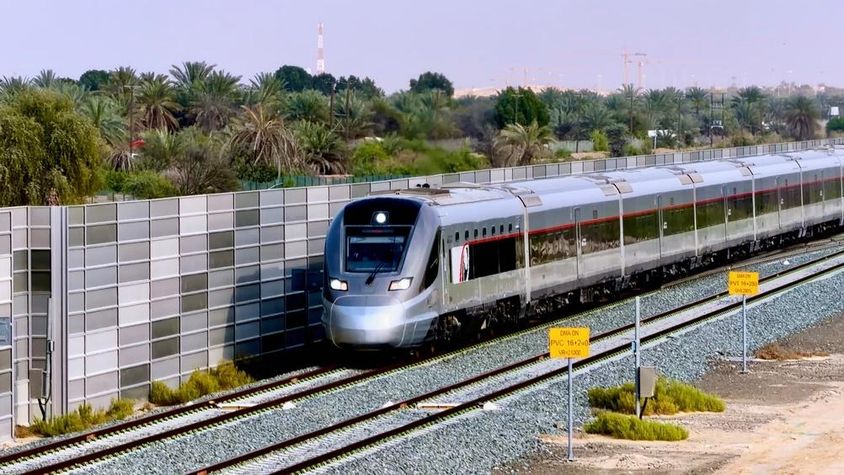
Etihad Rail: How Much Time Can Passengers Save?
Transportation in the United Arab Emirates has long been primarily car-centric. Those wishing to travel between emirates typically used a personal car, took the bus, or opted for a taxi, chauffeur service, or ride-sharing solution. While this system was convenient for many, it wasn't always fast, predictable, or accessible to everyone. The launch of the Etihad Rail passenger service is thus not just a new transport option but a significant change in the country's daily life.
The crucial question, of course, is whether the new railway connection actually saves time for passengers. The short answer is yes, particularly on routes where there hasn't been a fast and direct public transit connection. The main advantage of the railway is not only that it can be faster than a car or bus on several routes but also more predictable. Travel time by car heavily depends on traffic, accidents, road closures, parking, and the exact starting and ending points. In contrast, the train offers fixed travel times between stations, which is especially important for daily commuters, students, workers, and business travelers.
The route between Abu Dhabi and Fujairah exemplifies why Etihad Rail could be so significant. By train, the journey takes about 1 hour and 45 minutes. The same trip by car typically takes around 2 hours 20 minutes to 2 hours 32 minutes, meaning the train can offer a 35–45 minute time saving even to drivers. The difference is most striking for those using public transport. With the bus, the trip can currently take between 5 hours 14 minutes and 5 hours 45 minutes, including transfers and wait times.
This is significant because there hasn't been a comfortable, direct public transit connection between Abu Dhabi and Fujairah. For those who didn't want or couldn't use a car, the long bus journey often wasn't a real alternative. The train could change this. The direct rail link between the two cities may interest not only tourists but also those traveling between the capital and the eastern shore for study, work, family visits, or regular errands. Transforming a more than five-hour trip involving transfers into less than two hours by train is a completely different proposition.
The Abu Dhabi to Dubai connection also receives special attention. When service towards Dubai starts, the train journey between the two cities is expected to take 57 minutes. By car, the journey in good traffic conditions takes about 1 hour 15 minutes but can easily extend to 1 hour 45 minutes or more during peak hours or in case of accidents. The bus trip can take up to 2 hours, depending on where the passenger starts, which bus stop they use, and how long the transfer takes.
The Dubai to Abu Dhabi route is particularly significant because it's one of the country's primary transportation corridors. Many passengers travel it for work, meetings, university, the airport, or family occasions. The car trip can be comfortable but only as long as there's no congestion, no roadwork, no accidents, and parking can be quickly arranged at the destination. The train is appealing here not just because of travel time but also for making travel more predictable. A 57-minute, station-to-station journey represents a significant improvement for many, especially when schedules are tight, and there is no room for traffic unpredictability.
Train travel offers a faster option than the bus, but it may not always be more convenient or cheaper. It all depends on how far the passenger lives from the starting station, how they get there, and how easy it is to continue their trip to the final destination. The railway can truly become a strong alternative if the stations are well-connected to city transit, taxis, buses, metro services, shuttles, and pedestrian pathways.
The railway can also significantly change the Dubai to Fujairah route. The train journey could take around 69 minutes after services towards Dubai commence. By car, the same route generally takes over 90 minutes, and by bus, it can be around 2 hours 15 minutes, stretching close to 3 hours on busier days or with waiting times. This means Fujairah could become much closer to Dubai's residents, at least in terms of time.
This change isn't just about commuting. Fujairah and the eastern coast are destinations for many weekend trips, family visits, or business engagements. Transforming a previously long car journey into a little over an hour on a train could change people's habits. More might choose not to drive, avoid undertaking driving duties, and skip the concerns of parking. This is especially appealing to those who dislike driving long distances, don't own a car, or simply prefer a more comfortable, relaxing trip.
The true test of the railway, however, won't just be the travel time between stations. Passengers care about how long it takes door-to-door. A train can be very fast between two stations, but if the starting station is far from home or if it's hard to continue traveling at the destination, the overall travel time may be less favorable. That's why the first and last mile question is crucial.
Etihad Rail pays special attention to this. Passengers can use the travel planner available in the app to see how to get to the departure station and continue their journey after arriving. Available options in the app and on the website may include taxis, e-hailing services, buses, shuttle services, metro connections, and walking routes, depending on what connections are available at the given station.
In Abu Dhabi, for example, a 10 dirham shuttle bus service will connect the Mohamed bin Zayed City station with key points in the capital. This is important because for the train to truly be competitive, passengers shouldn't have to organize complicated logistics just to reach the station. The shuttle service can be a cheaper and more predictable solution for those who don't want to use a taxi or driving service every time.
Ride-sharing and ride-hailing integration could also be a vital part of the new system. The goal is to make drop-off and pick-up around stations smoother, have designated pickup and drop-off points, and manage traffic even during peak periods. In the next phase, it's conceivable passengers could book a train ticket and connecting ride within a single app. This would be a truly modern, unified transportation experience.
One of Etihad Rail's biggest promises is not just speed but predictability. Car travel will continue to play a significant role in the United Arab Emirates and remain a comfortable choice on many routes. However, the railway offers a new option for those who don't want to drive, don't want to sit in traffic, or want to plan their travel time more accurately.
The largest time savings are expected on routes where public transit has been long, involved transfers, and has been uncomfortable. Between Abu Dhabi and Fujairah, this difference is particularly striking. Between Dubai and Abu Dhabi, the railway could transform the quality of daily commutes because for many, a fixed travel time could be worth more than a few minutes of theoretical car advantage in good traffic.
Overall, the Etihad Rail passenger service is a significant step in transforming the country's transportation. Not everyone will immediately switch from cars to trains, and the train won't be the better choice on all routes in every respect. But where time, predictability, and direct connection matter, the railway can become a very strong alternative. The true success will depend on how smoothly the buses, shuttles, taxis, e-hailing solutions, and city transit connections linked to the stations work. If this comes together well, Etihad Rail could bring not just faster travel but a whole new transportation mindset to the everyday lives of the United Arab Emirates.
If you find any errors on this page, please let us know via email.


