Entering the 6G Era: UAE's Digital Future
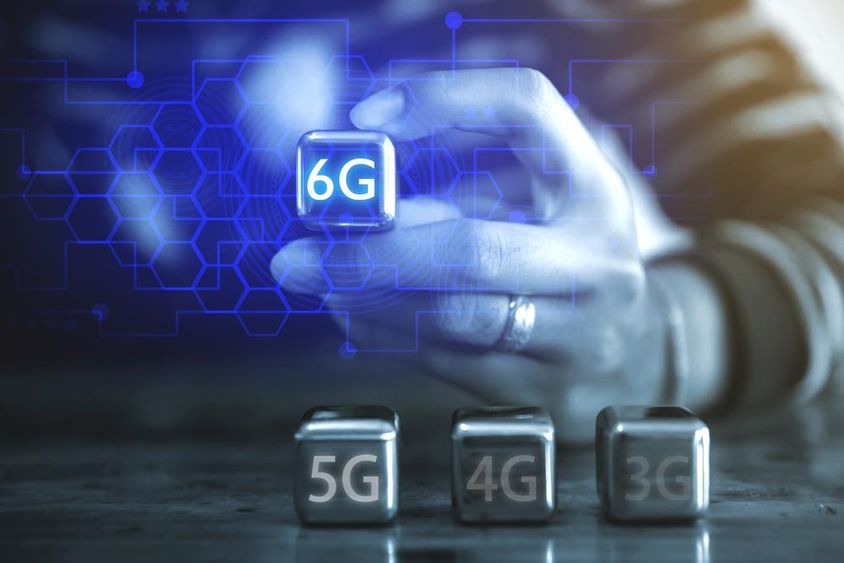
6G: At the Gates of a New Era - What to Expect in the UAE Before 2030?
While most of the world is only beginning to tap into the potential of 5G networks, the United Arab Emirates is already preparing for the next significant leap: 6G. Although the first pilot projects of the technology were successfully tested in the country as early as 2025, everyday users are likely to see the 6G icon appear on their phone screens around 2030.
However, this does not mean that developments are not progressing dynamically in the background. According to the current technological leadership, 6G will bring a revolutionary new dimension in speed, reliability, bandwidth, and sensory-integrated connectivity.
Why is 6G special, and how is it different from 5G?
6G is not just another number in the evolution of mobile networks. While the primary goal of 5G was faster data transmission and minimal latency between devices, 6G strives for the integration of technological ecosystems. New networks will not only connect devices, but will also be able to sense their environment, react to it, and process information locally.
This can be particularly important in areas such as vehicle-to-vehicle communication, surgical robotics, or smart factories, where reaction time must be within a fraction of a second. The "faster than instant" response time is not just a slogan but a real technological vision that will impact everything from industrial processes to personal communication.
When is 6G expected to become widespread?
Expectations suggest that global standards for 6G will take near-final form by 2028. This stage will be crucial as only unified standards worldwide can ensure the seamless operation of technology and interoperability between regions. Commercial networks can start subsequently, and end-users may begin using devices supporting 6G around 2030.
This long timeline does not indicate shortcomings in the technology, but rather the importance of ecosystem maturity – devices, applications, software, and usage scenarios. No unstandardized technology can succeed without the right environment.
Dubai's role in 6G development
For years, Dubai has been one of the most innovative implementers of the smart city concept, so it is not surprising that it stands at the center of 6G developments and strategies. The city’s leadership clearly understands that in the digital future, the speed of services is not enough: their reliability, security, and social accessibility are also crucial. Therefore, planning related to 6G is already part of state and corporate innovation programs today.
Due to the UAE’s unique geopolitical position, it occupies a special position between the eastern and western technology blocks. While the country collaborates with American companies, such as cloud service providers and processor manufacturers, it remains open to the Chinese technology sector as well. This duality allows the region to act as a mediator in the unification of global standards, which is one of the biggest challenges of 6G.
The digital future is not in one hand
The governance of the digital future is not concentrated in the hands of a single player or government. Today’s digital economy operates as a multiparty model: states, platforms, standard-making bodies, technology companies, and of course, users participate in it. The rollout of 6G cannot happen differently: cooperation, trust, and global consensus are essential.
It is especially important that developing countries are not left out of this change. Fragmentation of different technological standards would only increase access costs and hinder inclusion. However, a unified global standard would make progress accessible to everyone.
Social impacts: financial inclusion and AI awareness
6G promises not just a technological, but a social revolution as well. Innovations such as digital wallets, micro-loans, or digital identification could bring breakthroughs for population groups without access to physical bank branches. This is already observable: workers who previously had no bank access can now manage their finances through mobile applications.
At the same time, a new skill will also become indispensable: the conscious and effective use of AI tools. The generation who can exploit the opportunities provided by AI will gain an advantage. Those who do not adapt, especially if their work is repetitive, may easily be replaced by technology.
Summary
6G is not just a simple network upgrade but a herald of a new digital era. The UAE, led by the city of Dubai, is actively shaping this new world: not only by building technological infrastructure but also by serving as a mediator in the process of global standardization. In the coming years, the appearance of the 6G logo will not be the most important milestone, but rather the transformation that this technology brings – beyond networks, to every layer of society.
If you find any errors on this page, please let us know via email.