Emirates Rewards Staff with Record Bonuses
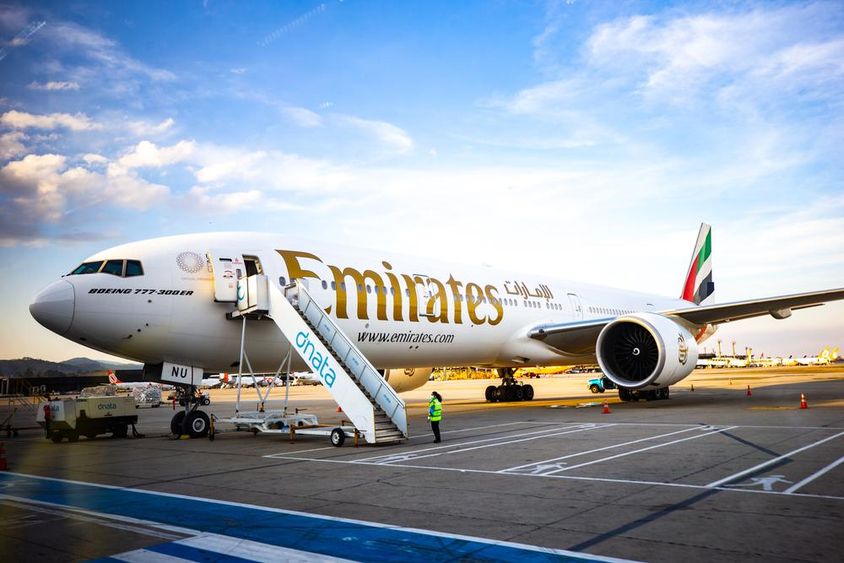
After Record Profit, Emirates Employees in Dubai Receive 20-Week Bonus
The Emirates Group has once again proven that Dubai's aviation sector is capable of quickly returning to a growth trajectory even after the toughest periods. The company delivered one of the biggest surprises in its history by announcing a 20-week salary bonus for employees following record profits. Employees were initially expecting a much lower, performance-based bonus of around 13 weeks, so the announcement reverberated significantly in Dubai and in the international aviation industry as well.
Behind this reward lies not just outstanding financial results, but also the survival of a particularly challenging period. Employees of Emirates and dnata have endured months marked by regional conflicts, airspace restrictions, supply chain issues, and rising fuel costs, all of which complicated operations. In spite of these challenges, Emirates remains one of the world's most profitable airlines, which is an achievement in itself.
Dubai's economy demonstrates strength once more
Dubai's economy has repeatedly come under pressure due to global events in recent years, but one of the emirate's greatest strengths has always been its rapid adaptability. The current results of the Emirates Group underline this yet again.
According to the company, the first 11 months of the financial year saw strong growth; however, by early March, a situation emerged causing unprecedented challenges for aviation. Airspace security issues, flight diversions, and operational disruptions placed considerable pressure on Emirates’ core operations.
Nevertheless, the company managed to stabilize its operations. By the end of March, nearly 58% of capacity was restored, marking an incredibly swift recovery from a crisis of such magnitude. The cargo division played a particularly crucial role during this period, delivering essential shipments between various points in the United Arab Emirates and the region.
For Dubai, Emirates is not merely an airline; it is one of the most critical engines of the city's economy. Tourism, trade, business travel, and international relationships heavily rely on the Emirates network. Consequently, the record profit extends beyond the company’s own achievements, symbolizing the stability of the entire emirate.
Rewarding employee perseverance
The 20-week bonus is exceptional partly because Emirates’ leadership openly emphasized that the reward is not solely linked to financial performance. The decision was driven by employee crisis management, perseverance, and commitment.
According to the company, during the most difficult weeks, employees had to respond extremely quickly to the constantly changing situation. Re-planning flights, handling passengers, implementing security measures, and managing logistical challenges all imposed immense burdens.
Emirates particularly highlighted that employees maintained the company’s operations and helped thousands of individuals return home, participated in organizing business trips, and ensured urgent cargo deliveries. This approach significantly contributed to Emirates maintaining its global position.
In Dubai, airline employees have traditionally worked under a strong corporate culture, but a bonus of this magnitude is exceptionally rare, even by local standards. The news quickly spread in social media and the business sector, with many seeing it as evidence of Emirates holding a confident long-term vision.
2025-2026: A year of records
According to the leadership of Emirates, the company broke almost every financial record during the recently closed financial year. This includes revenue, pre-tax profit, and cash reserves.
Multiple factors contributed to the record results. One of the most important was the strengthening of international travel demand. Dubai remains one of the world's busiest transit hubs, and due to Emirates’ extensive network, the company could profit from the revival of global tourism.
Additionally, the premium travel segment remained extremely strong. Demand for business and first class tickets continued to grow, especially on routes between Europe, Asia, and North America.
The cargo business also performed exceptionally well. The Emirates freight division ensured continuous operation despite regional uncertainties, generating significant revenue for the company.
Growth rather than critics
The Emirates leadership remains optimistic about the future. According to the company, many have previously written off Dubai and the Emirates Group during past crises, but the emirate has emerged stronger each time.
This outlook is particularly important now as geopolitical tensions persist in the region. Rising insurance costs, increasing fuel prices, and supply chain issues continue to present challenges for the industry.
Nevertheless, Emirates continues its fleet expansion program. The company is preparing to receive new aircraft while its existing fleet’s modernization program is progressing continuously. This is crucial as the airline anticipates long-term growth.
Dubai’s airport and Emirates operations are practically interdependent. Normalization of flight numbers and the introduction of new capacities are expected to further strengthen Dubai's position in global aviation.
Emirates remains one of Dubai’s strongest symbols
Emirates' history is closely intertwined with Dubai's development. The airline not only transports tourists but has also become one of the most important elements of the city's international image over the past decades.
The current record profit and 20-week bonus demonstrate that the company still possesses an extremely stable financial background. This is particularly important during a period when the global aviation sector faces numerous uncertainties.
Emirates' success also indicates that Dubai remains capable of quickly responding to international challenges. The city’s economy is highly diversified, yet aviation continues to play a key role in it.
The reward for employees sends a strong message to the labor market as well. Emirates communicates that perseverance and loyalty during difficult times hold value in the long term. This approach may contribute to the company remaining one of the most attractive workplaces in the aviation industry.
If you find any errors on this page, please let us know via email.