Emirates Handles Mid-Flight Emergency Smoothly
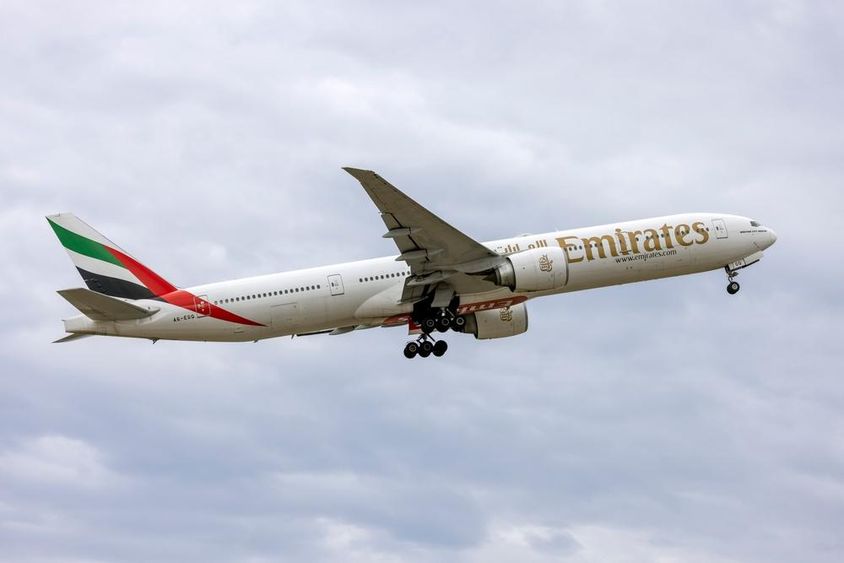
Unexpected Twist in the Air: Emirates Flight Returns to Dubai Due to Technical Issue
One of the best-known airlines of the United Arab Emirates has once again demonstrated how to professionally handle an unexpected aviation event. An Emirates flight (EK929) from Dubai to Cairo was forced to redirect its course on January 4, 2026, after one of the onboard air conditioning system elements malfunctioned, causing cabin pressure loss. During the incident, the aircraft crew safely returned the plane to Dubai Airport following all necessary protocols.
What exactly happened onboard?
The Emirates Boeing 777-200 aircraft detected the cabin pressure issue shortly after takeoff, while in Saudi Arabian airspace. Due to the sudden pressure drop, oxygen masks automatically deployed, ensuring passengers' breathing safety. The pilots immediately began descending and lowered the aircraft to an altitude of 9,000 feet, a safer level for handling pressure differences.
The onboard crew and pilots managed the situation with exemplary calmness and professionalism, reinforcing Emirates' reputation in aviation safety. The flight returned to Dubai, where an engineering team took control to inspect the aircraft.
What happened to the passengers?
An Emirates spokesperson confirmed that the passengers were transferred to another aircraft. A Boeing 777-300 was put into service to continue the journey to Cairo. The replacement flight arrived at the Egyptian capital's international airport around eight hours late, but fortunately, no injuries occurred, and all passengers reached their destination safely.
Emirates expressed regret for the inconvenience caused but reiterated that the safety of passengers and crew is their primary concern. Following the technical issue that caused the malfunction, the affected aircraft underwent a thorough engineering inspection.
This wasn’t the only case recently.
Interestingly, a similar incident occurred a few days earlier. On December 31, 2025, the last day of the year, an Emirates flight (EK002) from London to Dubai was also forced to turn back. The plane took off from Heathrow Airport at 13:40 (GMT), and shortly after takeoff, the pilots noticed a technical fault. The flight returned to London, landing at 16:28 – after over an hour of fuel-burning circling.
The return also occurred with strict adherence to safety protocols, and all passengers and crew left the aircraft safely. During the incident, Heathrow Airport's emergency vehicles were on standby but were fortunately not needed.
Why are these incidents important?
Aviation, despite the most modern technologies and experienced crews, carries certain risks. What is particularly noteworthy about Emirates is that they handle such unexpected situations with high professionalism and transparency. The airline not only responded quickly and safely but also provided full information to passengers and the public.
According to passenger feedback, the crew remained calm and supportive throughout, significantly reducing the chance of panic. Communication and flexibility enabled passengers to reach their destination despite the difficult situation.
What can we learn from all this?
Such incidents highlight that choosing an airline is about more than just fares and schedules. Compliance with safety regulations, technical preparedness, and the competence and responsiveness of the crew are equally important, if not more so. Emirates has repeatedly shown that it can handle the most unexpected challenges.
This case also underscores that air travel remains one of the safest ways to travel – especially when flying with an airline that prioritizes passenger safety not just in marketing, but in practice.
Conclusion
The return of the Emirates flight from Dubai to Cairo was handled in an exemplary manner. The emergency caused by the loss of cabin pressure was expertly managed by the crew, and passengers were safely transported to their destination on another aircraft. Emirates has once again reinforced its position among the world's most reliable airlines.
Due to the complex systems of modern aircraft, technical failures can rarely occur; however, the way such cases are handled is what truly distinguishes an average service provider from an excellent one – and in the case of Emirates, this was never in question.
(Source of the article is based on a statement from Emirates airline.)
If you find any errors on this page, please let us know via email.


