Emirates Halts Dubai Flights Amid Airspace Closure
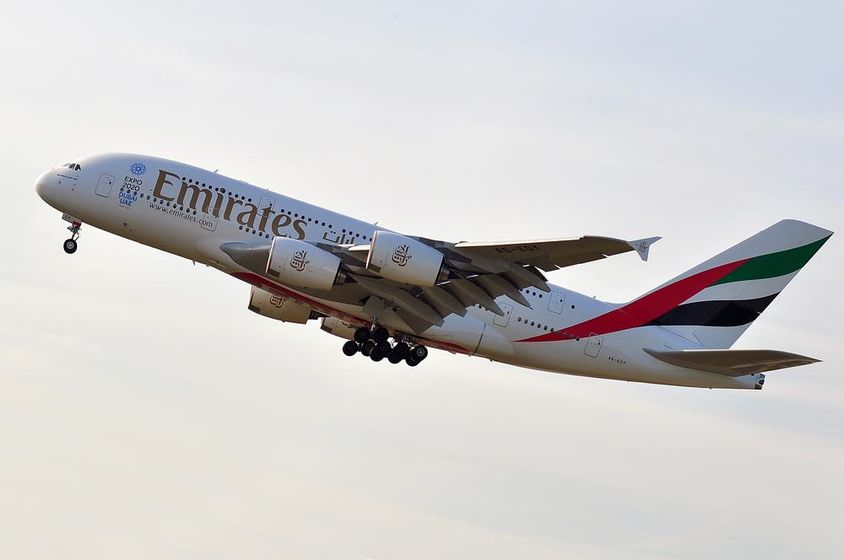
Emirates Temporarily Suspends Dubai Flights
Emirates has announced the temporary suspension of all its flights departing from and arriving in Dubai until 3:00 PM on March 3. The decision is driven by the closure of regional airspaces, significantly impacting aviation in the area. According to the airline, the measure is a precautionary step aimed primarily at ensuring the safety of both passengers and staff.
The announcement has caused significant waves among the global traveling public, as Dubai is one of the world's busiest aviation hubs. A significant portion of transit traffic flows through this city between Europe, Asia, Africa, and Australia. The temporary halt of operations for an airline of this size has consequences that are felt not only locally but also globally.
Impact of Regional Airspace Closures on the Area
The airspace closures affecting multiple countries have triggered a chain reaction in the Middle East. When a country temporarily restricts or closes its airspace, alternative routes quickly become congested. At these times, airlines are compelled to cancel, reroute, or delay flights. The situation particularly affects aviation hubs that play a strategic role in intercontinental traffic due to their geographical location.
Dubai is precisely such a hub. The city's geographical position allows it to connect a significant portion of the world with just one stop. When uncertainty or restrictions arise in the neighboring countries' airspace, it immediately affects flights departing from and arriving in Dubai. The current measure reflects this reality: regional instability directly impacts global mobility.
Safety Above All
The airline emphasized that the decision was made solely for safety reasons, not for economic or operational considerations. One of the fundamental principles of modern aviation is to act preventively even at the slightest risk. The safety of aviation relies on an extraordinarily complex system, in which airspace stability is a crucial factor.
When the airspaces of multiple countries become affected, planning flying routes becomes complicated. Air traffic control, insurance regulations, and international aviation safety protocols all contain strict provisions for situations involving armed conflict, military activity, or other extraordinary events in the area. In such instances, suspending flights is considered a responsible and prudent decision.
Disruptions Affecting Thousands of Passengers
Naturally, the temporary halt of flights causes significant inconvenience to travelers. Many would have been traveling on business trips, family visits, or long-haul transfers through Dubai. The period leading up to March 3 could have been particularly busy, so the cancellations affect thousands of people worldwide.
In such cases, the major concern for passengers is the possibility of rebooking and refunds. International aviation regulations clearly define the procedures to be followed in these situations. Airlines generally provide options for free modifications or full refunds when flight cancellations occur due to extraordinary circumstances beyond their control.
Dubai's Vulnerability as a Global Hub
Over recent decades, Dubai has strategically built itself up as one of the world’s most important aviation centers. Modern infrastructure, advanced airport services, and a global network have all contributed to the city becoming a key player in international traffic.
However, this central role also implies a certain vulnerability. Any geopolitical tension in the region instantly impacts flight routes. The current situation highlights the extent to which global mobility depends on regional stability. Uncertainty in a single region can temporarily disrupt intercontinental connections.
Economic and Logistical Consequences
Aviation does not solely involve passenger traffic but also significant freight transport. The suspension of Dubai flights affects air cargo as well, which may impact international supply chains. Perishable goods, urgent shipments, industrial parts are all items frequently transported by air across various parts of the world.
Such a decision can result in short-term bottlenecks, delays, and cost increases. The global economy is extremely sensitive to these types of disruptions, particularly when a strategic hub's operations are halted.
What This Means for Travelers in the Coming Days
The suspension until 3:00 PM on March 3 is a time-limited measure, indicating that the airline is continuously monitoring the situation. If the regional airspace becomes safely usable again, traffic is expected to gradually resume. However, such a restart does not happen overnight: repositioning aircraft and crew, as well as rescheduling, takes time.
For passengers, continuous information is crucial in such situations. Following current updates, monitoring rebooking options, and considering alternative routes are particularly important.
The Issue of Uncertainty and Trust
The foundation of modern aviation is trust. Passengers book tickets when they are confident that the route is safe and the flight operates predictably. Although these temporary suspensions may cause concern, they also demonstrate that airlines do not take unnecessary risks.
The message of the decision is clear: safety precedes business interests. This can strengthen passenger trust in the long term, even if it involves short-term inconveniences.
Conclusion
The temporary suspension of Emirates flights in Dubai is a consequence of regional airspace closures. The decision clearly demonstrates how intertwined global aviation is with geopolitical stability. Due to Dubai's central role, such measures are felt worldwide.
While this creates uncertainty and disruption for passengers, the step unequivocally emphasizes the precedence of safety. The key question in the coming days will be when and under what conditions the region's airspace becomes fully usable again. The adaptability of the global transportation network is once again being tested as the world’s attention focuses on events in the region.
If you find any errors on this page, please let us know via email.


