Emirates Breaks Financial Records Amid Conflict
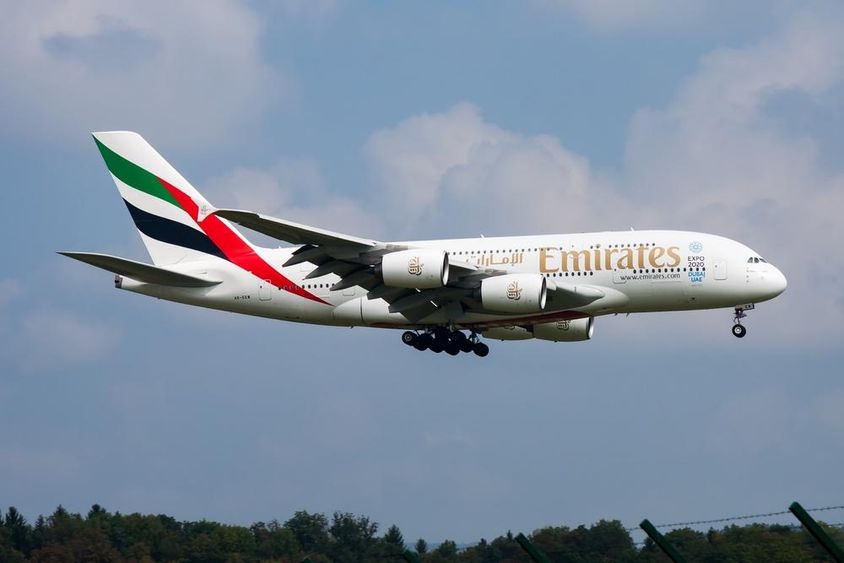
Emirates Group Achieves Record Profit Amid Middle East Tensions
The Emirates Group has once again proven itself to be one of the strongest and most stable players in the global aviation market. The Dubai-based conglomerate reported record pre-tax profits for the 2025-2026 financial year, despite significant regional tensions and disruptions to air travel affecting the final month of the year. The conflict in the Middle East, which erupted between the United States, Israel, and Iran, caused substantial uncertainty in the region, yet could not halt Emirates' growth.
Over the financial year ending on March 31, Emirates Group achieved a pre-tax profit of 24.4 billion dirhams, marking a 7 percent increase compared to the previous year. The group's revenue rose to 150.5 billion dirhams, while its cash reserves reached 59.6 billion dirhams. These results not only demonstrate the company's stable operations but also affirm that Dubai continues to be one of the most vital global centers for international trade, tourism, and aviation.
Stable Operations Despite the War Situation
One of the most significant challenges of the financial year was the regional conflict that erupted at the end of February. The United States and Israel carried out military actions against Iran, which responded with missile and drone attacks towards the United Arab Emirates and other Gulf countries. The conflict led to the cancellation or rerouting of several flights, creating uncertainty in regional aviation.
Despite this, Emirates responded quickly to the situation. The company maintained operations, optimized routes, and minimized losses. The airline's crisis management capabilities once again proved outstanding, especially given the Middle East's air traffic sensitivity to geopolitical events.
The leadership of Emirates Group emphasized that the fundamentals of the business model remained unchanged. Safety, innovation, service quality, and global partnerships continue to be the central pillars of the company's operations.
Dubai Remains a Global Aviation Hub
One of the key messages of the results is that Dubai's strategic role has not weakened despite the conflicts. The city remains one of the busiest transit points between Europe, Asia, and Africa, underscored by Emirates’ successes.
The Dubai-based airline is no longer just a regional player but one of the world's most recognized premium brands. Emirates' brand value, according to the latest estimates, increased by 27 percent, exceeding $10 billion. This growth is primarily driven by the strengthening demand for premium travel, notably the rise in demand for first-class and business class.
Dubai airport continues to play a key role in the long-haul international flight market. Emirates' network spans several continents, and a significant portion of passengers still travels through Dubai for connections between Asia, Europe, and America.
The Airline Achieved Record Profit On Its Own
The Emirates airline itself achieved historic results. The company reached a post-tax profit of 19.7 billion dirhams, surpassing the previous year’s record. A 15 percent net profit margin represents exceptionally strong performance in the aviation industry, especially during a period when many airlines are still grappling with geopolitical and economic challenges.
The airline's annual revenue grew to 130.9 billion dirhams. Although the number of passengers slightly decreased by about 1 percent, Emirates still transported more than 53 million passengers in a single financial year. The seat occupancy rate was 78.4 percent, which remains a robust metric.
The profitability was partly aided by favorable currency trends in certain key markets, which improved the profit by several hundred million dirhams.
The Role of Fuel Prices and Fleet Management
The majority of the airline’s costs continued to come from fuel and personnel expenses. Fuel accounted for 29 percent of operating costs, reflecting a slight decrease compared to the previous year. The moderation in average fuel prices helped Emirates’ financial results, even as the number of flights increased.
A particularly important factor was the modernization and management of the fleet. Emirates currently operates a fleet of 277 aircraft with an average age of 10.8 years. The company invested significant amounts in new aircraft, technologies, and infrastructure. Total investment amounted to nearly 18 billion dirhams in the past financial year.
The airline is still awaiting the arrival of new Boeing 777X models, which could play a crucial role in the gradual phase-out of older Airbus A380s. During the conflict, it was these A380 aircraft that were the first to be temporarily grounded as demand decreased on certain routes.
Emirates’ Financial Reserves Are Outstanding
One of the greatest strengths of the company is still its massive cash reserves. The 59.6 billion dirham reserve provides significant protection against unexpected events like fluctuations in fuel prices, geopolitical conflicts, or even another global economic slowdown.
Financial stability is particularly important in the aviation sector, as company operations can be rapidly affected by world political events. However, Emirates currently possesses a financial background that allows for long-term planning and ongoing investments.
The group also announced a future investment program worth 340 billion dirhams, focusing on new technologies, fleet expansion, and service developments.
Dnata Also Demonstrated Stable Performance
Dnata, part of the Emirates Group, also remained profitable, although its profits slightly decreased due to rising tax rates. The company achieved a post-tax profit of 1.3 billion dirhams. Dnata is a key player in ground handling, cargo logistics, and airport services, and its performance also reflects the state of the global travel market.
Strong Outlook in an Uncertain Region
The Emirates Group's results show that Dubai remains an extremely resilient economic and transportation hub, even in an unstable Middle Eastern environment. The airline’s stable financial background, premium brand value, and global network enable it to remain a dominant player in international aviation.
One of the most critical questions for the coming years will be how the region’s geopolitical situation evolves and when the next-generation aircraft arrive. However, it is already clear that the Emirates Group has not only survived the uncertain period but has closed one of the strongest financial years in its history.
If you find any errors on this page, please let us know via email.


