Electric Vehicle Charging Revolution in Dubai
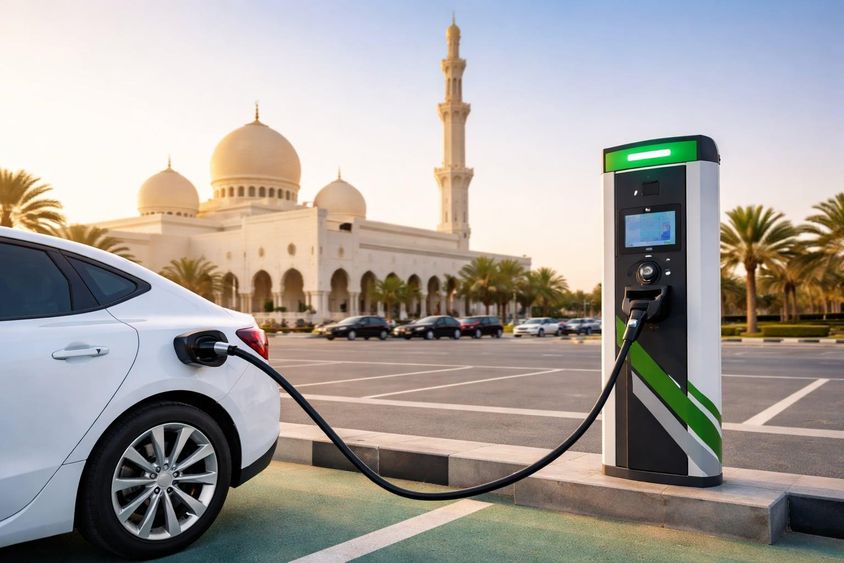
Electric Future Next to Dubai's Mosques
Dubai is once again leading the way in seamlessly integrating modern technology and everyday life. The development of electric car charging has been ongoing in the city, but now a new, unusually practical location is in focus: the parking lots of mosques. This step is not merely a convenience enhancement but part of a broader, mindful strategy that emphasizes sustainability and smart urban functionality.
The Intersection of Religious and Technological Infrastructure
At first glance, it may seem surprising that mosque parking lots are becoming the new pillars of the electric charging network. However, on deeper consideration, the decision is quite logical. Mosques are located throughout the city, are easily accessible, and handle heavy daily traffic, creating an ideal foundation for infrastructure that serves both locals and visitors.
The new initiative's goal is not to create an entirely new system, but to expand the existing, well-functioning network with locations that naturally integrate into the city's rhythm. Charging thus becomes not a separate program, but an activity that blends into daily life.
Long-Term Collaboration and Stable Operation
The development is supported by a years-long collaboration, ensuring the system is built not just quickly, but permanently and reliably. Agreements related to the operation and development span several years, indicating this is not an experimental project but a serious, long-term investment.
This is particularly important for a technology where user trust plays a key role. The spread of electric cars can only accelerate if the charging infrastructure is predictable, stable, and continuously available.
More Than Just Charging Stations
The project goes beyond merely installing some charging posts in parking lots. The goal is to create a complex system that includes the installation of modern, high-performance chargers, continuous maintenance, and smart operation.
For users, this means no guesswork about whether a charger is working, available, or how long it will take to charge the car. Using a digital app, the availability of charging points becomes trackable in real-time, significantly reducing uncertainty.
Intelligent payment solutions also serve convenience. The aim is to establish a fast, secure, and transparent system so charging does not add stress for users.
Energy Management on a New Level
One of the most important yet less visible elements of the development is energy management. Modern charging stations not only provide electricity but can also optimize energy usage.
This is particularly crucial in a city where energy demand is continuously increasing. Smart systems are capable of balancing demand, reducing peak time impacts, and overall making energy use more efficient. This is a significant advance not only economically but also environmentally.
Extended Network Across the City
The development taking place in mosque parking lots is not an isolated project but part of a broader plan. The expansion of the charging network is already underway at various busy, popular locations throughout the city.
The aim is to achieve coverage that ensures, wherever someone is in the city, they can easily find charging opportunities. Parks, beaches, and community spaces – all are locations where charging naturally fits into everyday activities.
In the first phase, dozens of high-performance chargers will be installed to quickly and efficiently charge cars. This is especially important for those who do not have home charging options.
What This Means for Everyday Users
One of the biggest winners of these developments are the motorists themselves. The use of electric vehicles has already been gaining popularity, but one of the major deterrents was the uncertainty of the charging infrastructure.
With the new system, this issue significantly decreases. Charging becomes more accessible, predictable, and faster—this is not just a matter of convenience but also contributes to more people switching to electric cars.
The parking lots of mosques are particularly advantageous in this respect, as the time spent there is often sufficient for a partial or even full charge.
Practical Implementation of Sustainability
Dubai has long aimed to become more sustainable not just with spectacular developments but with real, functional solutions. The expansion of the electric charging network is precisely such a step.
These are not theoretical goals but concrete measures that have a direct impact on everyday life. Emissions reduction, increased energy efficiency, and technological innovation are all elements that appear simultaneously in this project.
Towards a New Urban Model
The charging network implemented in mosque parking lots is an interesting example of how to rethink a city's functionality. Instead of developing new areas, it's about using existing infrastructure more efficiently.
This approach could be crucial in the long term. The cities of the future might not necessarily be larger or more spectacular, but will operate more smartly. Projects like this point precisely in that direction.
In this case, Dubai is not just following global trends but actively shaping them. Rethinking electric car charging, involving community spaces, and employing intelligent systems all indicate the city takes the future seriously.
Conclusion
Installing electric charging stations in mosque parking lots might initially seem like an unusual idea but is actually a highly logical and forward-looking step. It serves convenience, sustainability, and technological advancement all at once.
The project clearly shows that real innovation is not always spectacular but often appears in the small but important aspects of daily life. These are precisely the developments that bring about real change in the long run.
If you find any errors on this page, please let us know via email.