El Nino: Will UAE Face Extreme Weather?
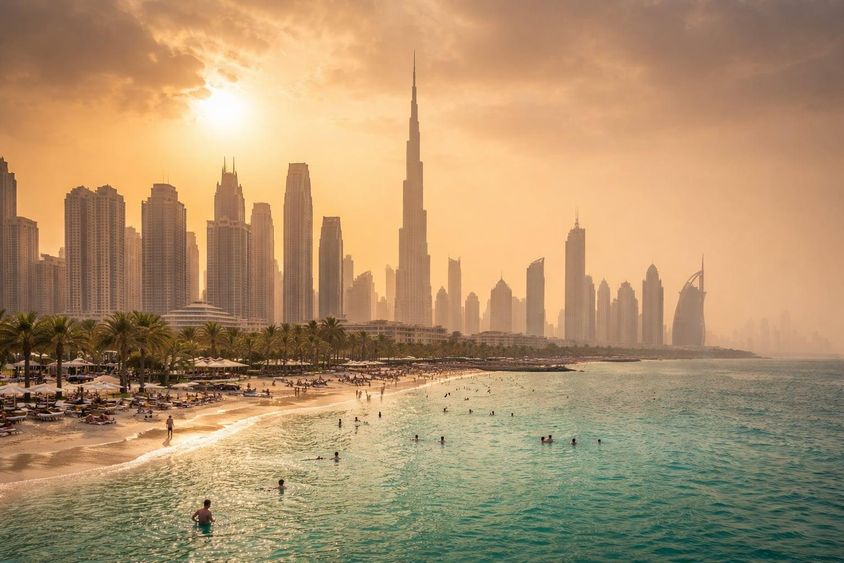
El Nino's Return: Will UAE Face Hotter, More Humid Summers?
Climate patterns have garnered increasing attention over recent years, particularly in regions where weather extremes have direct impacts on daily life. This holds especially true for the UAE, and specifically Dubai, a region already notorious for its extreme temperatures. According to the latest global models, the summer of 2026 may be even more intense: more and more signs indicate that the El Nino phenomenon will return, significantly influencing the region's weather.
What is El Nino, and why is it important?
El Nino is a natural climate cycle associated with rising sea temperatures in the equatorial Pacific Ocean. Although it may seem geographically distant from the UAE, its effects are felt globally. The phenomenon typically occurs every two to seven years, bringing significant changes to atmospheric flows.
During El Nino, the trade winds weaken, pushing warm waters eastward, creating a chain reaction affecting global weather. Consequently, some regions experience increased rainfall, while others face drought. Global temperatures may also rise, further reinforcing warming trends.
Why might the 2026 event be particularly strong?
Current forecasts suggest that El Nino could begin to form between May and July 2026, with a high likelihood of persisting until the end of the year. Models give a roughly 61 percent probability for a prolonged phenomenon.
Several important factors lie behind this. Warm water temperatures are already rising in the deeper layers of the Pacific Ocean, one of the most reliable precursors to El Nino development. Additionally, a weakening of equatorial winds has been observed, which also favors this process.
There's a possibility that the event could reach what is known as a "super El Nino" level, typically characterized by an anomaly of about +2°C. Although this is still uncertain, if it occurs, its impact on both global and regional weather patterns could be significantly amplified.
What does this mean for the UAE and Dubai?
One of the most important effects in the region could be a rise in temperatures and humidity. Dubai is already famous for its hot and humid summers, but these levels could climb further due to El Nino.
Higher humidity is particularly taxing on the human body. Not only does temperature matter, but also the "heat index," which deteriorates drastically with increased humidity. This means the air feels much hotter than the actual measured temperature.
Simultaneously, a weakening of the northwesterly summer winds is also expected, further reducing natural air movement. This could result in stagnant, heavy air, particularly in coastal areas.
Regional impacts: more moisture and variable rainfall
One interesting consequence of El Nino is its influence on the Indian monsoon system. If the monsoon weakens, some of the moisture may shift westward, increasing humidity levels in the Arabian Sea region.
This may indirectly affect the UAE and Dubai's environment, as increased moisture content in the air accentuates humidity. At the same time, this process might improve precipitation chances in certain parts of the region, particularly in autumn.
For Yemen and Oman, this could mean more favorable rainfall, while in the UAE, there might be occasional, intense showers.
Autumn and winter outlook: more rain, more active weather
According to current forecasts, El Nino's impact may strengthen significantly during the autumn months. During this period, there is a higher chance that upper atmospheric troughs and rain-bringing systems will reach the Arabian Peninsula more frequently.
This could be particularly significant for northern and eastern areas, but it may also impact Dubai's weather. This period could be characterized by more cloud cover, more frequent rain, and more volatile weather than usual.
If this coincides with a positive phase of the Indian Ocean Dipole, rainfall amounts could increase even further. Although a rare combination, when it occurs, it can cause significant weather anomalies.
Potential for tropical systems and cyclones
El Nino affects not just temperature and rainfall but also the formation of tropical systems. Cyclone activity could see an increasing chance in the Arabian Sea region, especially in the autumn months.
This does not mean Dubai faces direct threats, but the region's weather dynamics may become more active. Such systems' indirect impacts – like high winds, dust storms, or rainfall – could reach parts of the UAE.
Global impacts reflecting back on the region
El Nino brings significant changes on a global scale. It can weaken the Atlantic hurricane season while causing more rainfall in parts of the Americas. Disruptions in the Indian monsoon may also indirectly affect the Middle East.
Additionally, the phenomenon can contribute to further rises in global temperatures, which can affect as far as 2027. This is particularly important for already hot regions like the UAE.
What does this mean in daily life?
For Dubai residents and those living in the UAE, this primarily means adaptation. Even hotter and more humid summers could place increased stress on healthcare systems, energy infrastructures, and daily life.
An increase in demand for air conditioning is expected, driving up energy consumption. Additionally, the timing of outdoor activities may become even more critical, especially during daytime hours.
Potential autumn rains, however, could have positive effects, such as improving air quality or benefiting water reserves.
Conclusion
The year 2026 promises to be exciting weather-wise for the UAE and Dubai. The return of El Nino likely brings hotter, more humid summers while increasing the chances of precipitation and active weather systems later in the year.
While precise impacts are yet to unfold, it is already evident that the region must prepare for more extreme conditions. El Nino is not just a distant oceanic phenomenon but a global force capable of significantly altering Dubai's weather.
Source: CNN
If you find any errors on this page, please let us know via email.


